5-Night Camel Safari in the White Desert: 6-Day Egypt Desert Adventure

5-Night Camel Safari in the White Desert: 6-Day Egypt Desert Adventure

A 5-night camel safari in the White Desert is not simply another sightseeing tour from Cairo. It is a slow, immersive desert journey designed for travelers who want to spend several days moving through Egypt’s Western Desert by camel, sleeping beneath open skies, sharing meals at desert camps, and experiencing the landscape at a completely different pace from a standard 4×4 safari.

Most visitors experience the White Desert in one or two days.

They drive from Cairo to Bahariya Oasis, transfer into a 4×4 vehicle, visit several major desert landmarks, spend one night camping, and return.

That is an excellent option when time is limited.

A five-night camel expedition is something else entirely.

Instead of moving quickly between famous stops, you become part of the desert rhythm.

You wake with sunrise.

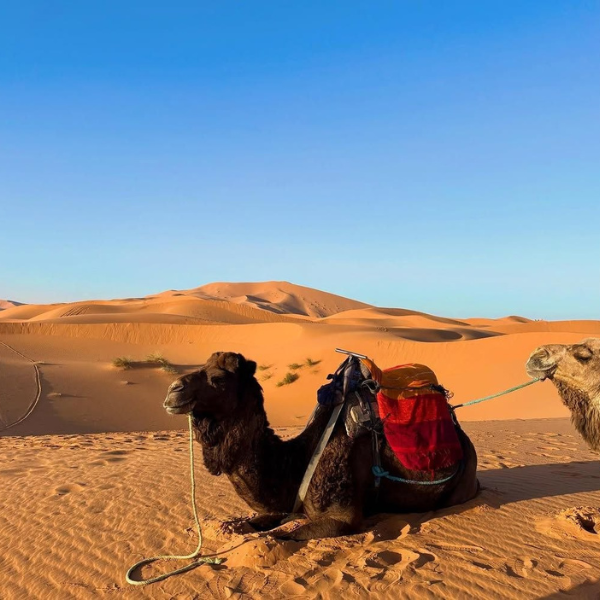
You travel slowly across dunes and open plains.

You stop when the sun becomes stronger.

You eat in the desert.

You watch the landscape change hour by hour.

And every evening, another camp is established beneath a sky far removed from Cairo’s city lights.

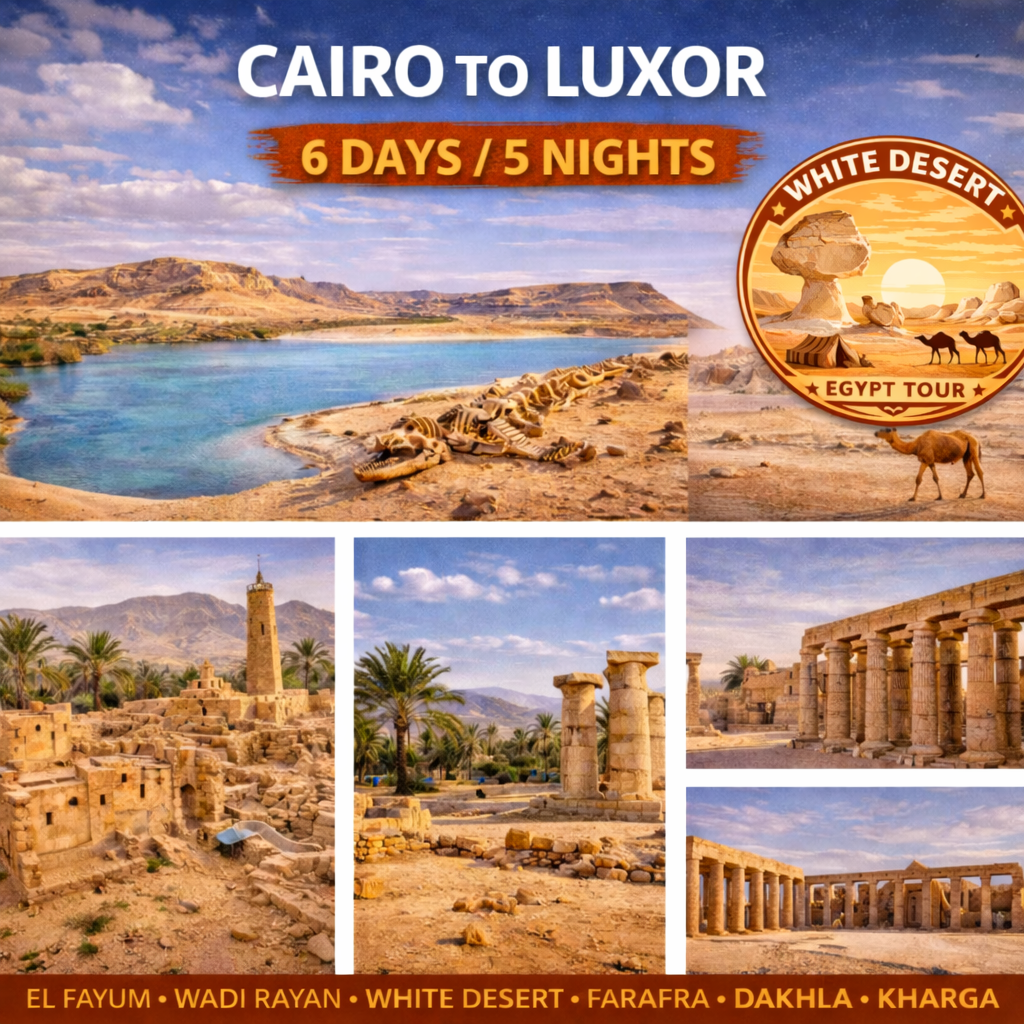
The current 5-Night Camel Safari in the White Desert offered by White Desert Egypt Tour lasts 6 days and 5 nights, starts and ends in Cairo, travels through Bahariya Oasis, and combines a camel caravan with traditional desert camping. The current tour includes an experienced desert guide, camel caravan and riding equipment, meals during the trek, camping equipment, drinking water, and desert camps.

This guide explains exactly what a multi-day White Desert camel safari is like, who it suits, what happens each day, what to pack, how difficult the experience is, and how to decide whether five nights in the desert is right for you.

Quick Answer: What Is the 5-Night White Desert Camel Safari?

The current trip is a 6-day / 5-night desert expedition from Cairo.

You travel from Cairo toward Bahariya Oasis, meet your desert guide and camel caravan, and then begin a multi-day journey through remote Western Desert landscapes.

During the expedition you experience:

  • Camel trekking
  • Desert walking
  • Sand dunes
  • Rocky plains and valleys
  • Remote camps
  • Sunrise and sunset
  • Traditional desert meals
  • Bedouin-style hospitality
  • Stargazing
  • Several nights away from towns and hotels

No previous camel-riding experience is required for the current program, and travelers can walk beside the camels when they prefer rather than remaining in the saddle continuously.

If you’re still learning about camel travel generally, read our broader Camel Tour White Desert Egypt Guide first.

Why Explore the White Desert by Camel?

There are faster ways to explore the Western Desert.

That is exactly the point.

A 4×4 vehicle lets you cover long distances quickly. A camel safari deliberately removes that speed.

Traveling by camel allows you to notice details that become easy to miss from inside a vehicle:

the texture of the desert floor, the changing shapes of distant rock formations, animal tracks in the sand, the movement of the light, and the almost complete absence of urban sound.

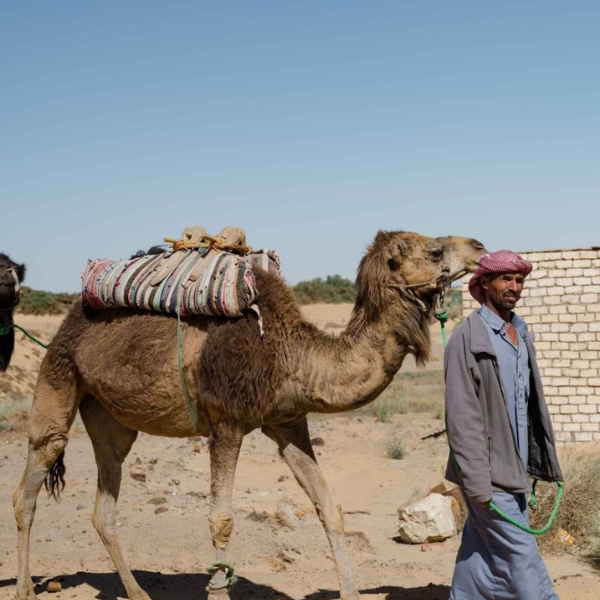
A camel caravan also gives access to the desert as a journey rather than a series of stops.

On a conventional safari you often think:

Where are we going next?

On a camel trek, the movement itself becomes the experience.

That difference is why a five-night safari appeals particularly to travelers interested in slow travel, trekking, photography, camping, nature, and extended time away from cities.

The White Desert: One of Egypt's Most Unusual Landscapes

Egypt’s White Desert Protected Area is one of the most visually distinctive parts of the Western Desert.

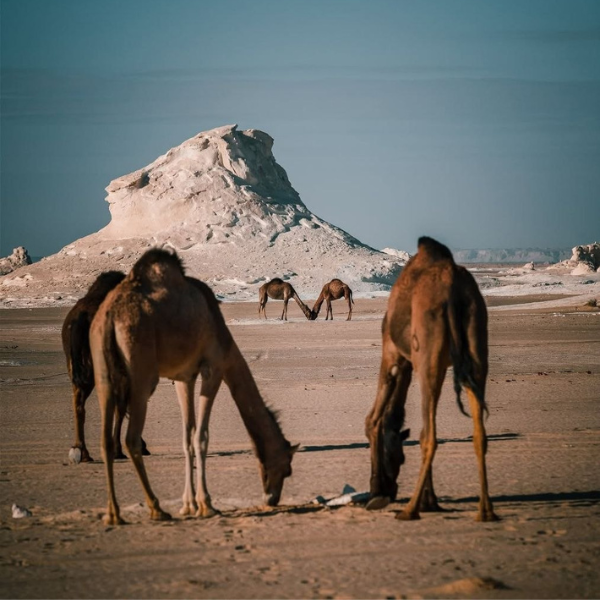
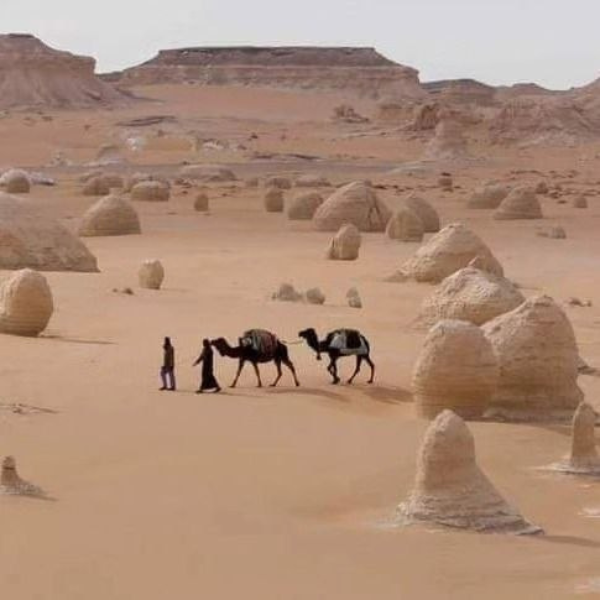
Its pale limestone and chalk formations have been shaped by long-term erosion into an extraordinary landscape of sculpted forms, cliffs, plains, and isolated rock formations.

Egypt’s Environmental Affairs Agency formally lists the White Desert as a protected area declared in 2002, covering approximately 3,010 square kilometers, and classifies it as a landscape protectorate.

The protected area contains more than famous white formations.

Official environmental documentation describes a wider landscape incorporating cliffs, dunes, wadis, small oasis habitats, and important desert biodiversity.

That wider environment is especially relevant on a camel expedition.

You are not simply entering the White Desert for two or three hours to photograph the most famous formations.

You are traveling through a broader desert ecosystem over several days.

For an introduction to the destination itself, read our complete White Desert Egypt Guide.

Where Does the Camel Safari Begin?

The journey begins from Cairo and continues toward Bahariya Oasis, one of the main gateways to this part of Egypt’s Western Desert.

Bahariya acts as the transition point between city travel and true desert travel.

Here, travelers meet the desert team and prepare for the expedition.

On a conventional White Desert safari, Bahariya is often where travelers transfer into a 4×4.

On a camel expedition, it is where the pace changes even more dramatically.

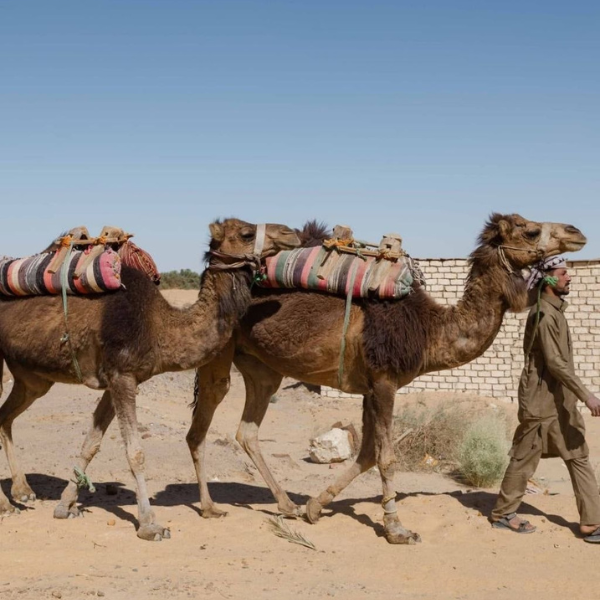
You meet the camel caravan, organize gear, receive guidance on riding and safety, and begin moving toward the open desert.

You can learn more about the oasis in our Bahariya Oasis Egypt Guide.

Day 1 – Cairo to Bahariya Oasis and the First Camel Ride

The first day is a transition between two worlds.

You leave Cairo and travel toward Bahariya Oasis.

As the city disappears, the landscape gradually becomes more open and arid.

After arriving in Bahariya, you meet your desert guide and camel caravan.

This introduction matters.

For many travelers, this will be their first experience riding a camel for any meaningful distance.

Your guide explains how to mount, sit comfortably, communicate with the animal, and dismount safely.

There is no need to arrive as an experienced rider.

The current safari is designed so beginners can participate, and travelers can alternate between riding and walking when desired.

The first camel ride is intentionally an introduction rather than an endurance challenge.

As the afternoon becomes cooler, you begin moving through the desert.

The transformation is immediate.

Road noise disappears.

The horizon opens.

Your caravan becomes the dominant movement in the landscape.

Toward sunset, the color of the desert begins changing from pale midday tones into deeper gold and orange.

The first campsite is then established.

Dinner is prepared in the desert, and the evening becomes your introduction to camp life.

For many travelers, this first night is when the expedition starts to feel real.

There is no hotel lobby.

No elevator.

No traffic below your room.

Only the camp, your companions, the desert, and the night sky.

What Is Desert Camping Like on a Camel Safari?

Camping is central to the experience.

The current tour provides camping equipment and traditional desert camps, with meals and drinking water included during the trek.

Do not imagine luxury glamping unless you specifically arrange an upgraded camp.

A traditional expedition is intentionally simpler.

The reward is direct contact with the desert.

Evenings often revolve around:

tea, food, conversation, campfire atmosphere where conditions allow, and watching the stars.

Some travelers prefer sleeping inside a tent.

Others may enjoy sleeping beneath the open sky when weather and camp arrangements make it appropriate.

If desert camping is one of the main reasons you’re considering this trip, also read our White Desert Camping Experience.

Day 2 – Deeper Into the Desert

The second morning normally begins early.

Desert sunrise is worth waking up for.

Before the sun becomes strong, the landscape often feels exceptionally quiet and cool.

Breakfast is prepared at camp, equipment is organized, and the caravan continues.

The terrain changes as the day progresses.

Rather than riding through identical sand for six days, travelers encounter different combinations of:

dunes, rocky ground, valleys, open plains, and geological formations.

The current itinerary specifically describes Day 2 as traveling through changing landscapes with time for rest, photography, and a shaded lunch stop before continuing later in the afternoon.

This daily rhythm becomes important.

You do not try to compete against the desert.

The hottest part of the day is approached differently from the cooler morning and afternoon.

A long rest is not wasted time.

It is part of desert travel.

How Many Hours Do You Ride a Camel Each Day?

There is no single fixed number of riding hours that applies to every departure.

Daily timing can depend on:

  • Weather
  • Temperature
  • Route
  • Group fitness
  • Camp locations
  • Traveler preferences
  • Desert conditions

This is why multi-day camel safaris should be treated as expeditions rather than theme-park rides with exact fifteen-minute schedules.

You should expect meaningful periods of camel travel each day, balanced by walking and rest.

If sitting becomes uncomfortable, you can walk beside the caravan.

In fact, many experienced desert travelers deliberately alternate between walking and riding.

That variety makes a multi-day trip considerably more comfortable.

Is Riding a Camel for Several Days Difficult?

It can be physically demanding, especially if you are not used to long periods in a saddle.

The first day or two may create soreness in your:

hips, thighs, lower back, and legs.

This does not mean you need to be an athlete.

But it does mean travelers should understand what they are booking.

This is not a passive sightseeing excursion.

You should be reasonably comfortable with:

  • Outdoor activity
  • Camping
  • Walking on sand
  • Several hours away from conventional facilities
  • Early mornings
  • Simple accommodation
  • Changing temperatures

The ability to walk beside the camel makes the trip more flexible than six days of continuous riding.

Day 3 – The Deep Desert Experience

By Day 3, something interesting happens.

The novelty wears off.

And that is when the deeper experience begins.

You are no longer constantly thinking about how to sit on the camel or where your bag is.

The routine becomes natural.

Breakfast.

Pack.

Travel.

Rest.

Walk.

Ride.

Camp.

Eat.

Watch the sky.

The current itinerary describes Day 3 as moving deeper into remote desert areas and learning about local desert knowledge, plants, traditional survival techniques, and aspects of nomadic life from the guides.

This is one of the strongest reasons to choose a multi-day trip rather than an overnight safari.

You gain time.

Time to ask questions.

Time to observe.

Time to understand why routes are chosen, how guides read the landscape, and how people have historically adapted to environments that may initially appear empty.

The Silence of the White Desert

People often describe the White Desert as peaceful.

On a five-night trek, you discover that “quiet” has levels.

A popular sunset viewpoint may feel quiet compared with Cairo.

A remote camp several days into a camel journey is another kind of silence entirely.

There may be no engines nearby.

No hotels.

No music.

No notifications unless your phone happens to have connectivity.

Just wind and occasional movement around camp.

For some travelers, that feels extraordinary.

For others, it takes a little adjustment.

If your idea of a vacation requires constant entertainment, shopping, restaurants, and nightlife, a six-day camel safari may not be your ideal trip.

If silence feels like luxury, it may be exactly right.

Day 4 – Oasis Landscapes and Bedouin Hospitality

By the fourth day, the itinerary introduces a change in scenery with an oasis-style stop.

The current tour describes travel toward a hidden desert oasis, with time for relaxation, exploration, photography, tea, and cultural interaction with the guides.

After several days of open desert, vegetation and water feel surprisingly dramatic.

This is one of the fascinating characteristics of Western Desert travel.

Small pockets of life can completely alter the atmosphere.

A palm or patch of vegetation that might barely register elsewhere suddenly feels significant.

Day 4 is also an opportunity to slow the journey again.

By this point you have already spent several days moving through the desert.

A longer rest makes the remaining expedition more enjoyable.

What Do You Eat During the Camel Safari?

The current program includes meals throughout the trek.

Specific menus can vary, and anyone with dietary needs should discuss them before departure.

Desert food is usually designed around practicality.

Meals need to survive transport and be prepared with limited infrastructure.

Depending on arrangements, travelers can expect straightforward meals based around ingredients such as:

rice, vegetables, bread, eggs, cheese, chicken or other proteins, fruit, dates, tea, and other suitable desert foods.

The experience of eating matters almost as much as the menu.

After several hours outside, a warm meal prepared in camp can feel remarkably satisfying.

If you have allergies, vegetarian requirements, vegan requirements, or religious dietary preferences, inform the operator before booking.

Do not wait until the caravan is two days into the desert.

Day 5 – The Long Camel Trek

The fifth day is described on the current tour as one of the longer camel-trekking days.

By now your body has adapted more to the saddle and walking rhythm.

The caravan crosses broad desert landscapes and dramatic dune environments, giving travelers a stronger sense of scale than they experienced on Day 1.

The slow pace becomes especially powerful here.

With a 4×4, a distant formation may become your next stop in minutes.

With camels, you see it for a long time.

It grows slowly on the horizon.

You approach it.

You travel alongside it.

Then eventually it disappears behind you.

This is how distance was experienced for centuries before engines transformed desert travel.

The evening camp on Day 5 is designed around one of the expedition’s final nights beneath the stars.

For travelers interested in astronomy and night photography, read our White Desert Egypt Stargazing Guide.

Stargazing During a White Desert Camel Safari

One of the great advantages of spending five nights outdoors is that you have several opportunities for clear skies rather than depending on one single evening.

Moon phase, atmospheric conditions, dust, clouds, and the specific camp location all affect what you see.

But being far from major urban lighting creates conditions that can be significantly darker than Cairo.

You may see:

  • Dense star fields
  • Bright planets depending on season
  • Constellations
  • Satellites
  • The Milky Way under suitable conditions and seasons

For photographers, a small tripod can be valuable.

But remember that every gram matters more on an expedition than it does on a hotel-based tour.

Bring equipment you genuinely expect to use.

Day 6 – Sunrise and the Return Journey

The final morning begins with another desert sunrise.

By Day 6, sunrise often feels different from the first morning.

You now know what it means.

You know how quickly the temperature changes.

You recognize the camp routine.

You may even be slightly reluctant to hear the sounds of equipment being packed.

After breakfast, the final camel section returns toward the starting area near Bahariya Oasis.

From there, the journey back toward Cairo begins.

The current tour starts and ends in Cairo, making the expedition a complete six-day experience rather than requiring travelers to arrange their own onward transport from the desert.

What Is Included in the 5-Night Camel Safari?

According to the current tour page, the program includes an experienced desert guide, camel caravan and riding equipment, all meals during the trek, camping equipment, drinking water, and traditional desert camps.

The tour page currently lists national park entrance fees, tips, alcoholic beverages, and airport transfers as not included, although airport transfers can be arranged on request. It also states that the trip can be customized with extra nights, camp upgrades, or private airport transfers.

Always confirm the inclusions again at the time of booking because pricing and operating details can change.

You can see the current details directly on the 5-Night Camel Safari booking page.

Who Is This Camel Safari Best For?

This trip works exceptionally well for a certain type of traveler.

It is especially suited to people who enjoy adventure but do not need adrenaline every minute.

The ideal traveler appreciates:

slow movement, camping, simple routines, silence, nature, photography, walking, and several consecutive nights outdoors.

It can be a particularly good choice for:

  • Adventure travelers
  • Couples seeking an unusual trip
  • Photographers
  • Hikers
  • Slow-travel enthusiasts
  • Experienced campers
  • People wanting a digital detox
  • Travelers who have already visited Egypt’s major cities

If you’re primarily interested in walking rather than riding, also compare this expedition with our White Desert Trekking Expedition Egypt and Best White Desert Walking Tour Itinerary.

Who Should Choose a Shorter White Desert Tour Instead?

Five nights is a commitment.

Choose a conventional shorter tour if:

you only have two or three free days, dislike camping, have significant mobility issues, want private hotel facilities every night, or mainly care about seeing the headline White Desert formations.

The White Desert Tour From Cairo is better for travelers who want the classic experience efficiently.

A 3 Days White Desert Tour From Cairo gives additional time without becoming a full expedition.

And the 4 Days White Desert Tour From Cairo sits between conventional safari and longer expedition travel.

Camel Safari vs 4x4 White Desert Safari

These are not competing experiences so much as different styles of travel.

A 4×4 safari prioritizes coverage.

You can see many famous locations efficiently and move between distant landscapes quickly.

A camel safari prioritizes immersion.

You cover less ground per hour but experience the landscape much more deeply.

Choose 4×4 if your priority is:

seeing maximum highlights, limited travel time, and easier physical conditions.

Choose camel trekking if your priority is:

slow travel, camping, walking, silence, and the journey itself.

Many travelers actually use both forms of transport during wider desert logistics.

The current 5-night trip lists a 4×4 desert safari vehicle as part of its transport setup while the core expedition is built around the camel caravan.

Camel Safari vs White Desert Trekking

Camel trekking and walking expeditions share many qualities.

Both slow the experience down.

Both require camping.

Both place you directly inside the landscape.

The major difference is carrying and movement.

On a camel safari, the caravan provides a traditional means of transportation and support, and you can alternate between riding and walking.

A trekking expedition places more emphasis on traveling under your own power.

If long-distance hiking is one of your passions, compare the current camel safari with the 4 Days White Desert Trekking Expedition.

Is the Camel Safari Suitable for Beginners?

Yes, according to the current program, prior camel-riding experience is not required. Guides provide instruction and assistance, and travelers can walk alongside the camels whenever they prefer.

But “beginner-friendly” should not be confused with “effort-free.”

The challenge comes from spending six days in an outdoor environment.

Even if camel technique is simple, you are still dealing with:

sun, wind, sand, cold evenings, basic camp facilities, and daily physical activity.

The trip is suitable for adventurous beginners who understand those conditions.

What Is the Best Time for a White Desert Camel Safari?

Temperature matters much more on a camel trek than on an air-conditioned sightseeing tour.

For most travelers, the cooler months provide the most comfortable conditions for extended outdoor travel.

Our detailed Best Time to Visit White Desert Egypt guide explains the seasonal differences.

Cooler daytime temperatures make riding and walking more pleasant.

However, desert nights can become cold.

The ideal packing strategy is therefore not “bring summer clothes because this is Egypt.”

It is layering.

What Should You Pack for Five Nights in the Desert?

For a long camel safari, packing light matters.

You need enough equipment for changing conditions without bringing a suitcase designed for a city hotel.

Useful items include comfortable lightweight clothes, warm evening layers, sun protection, sunglasses, walking shoes, head covering, personal medication, power bank, toiletries, wet wipes, camera equipment, and a small day bag.

The tour provides core camping equipment and drinking water according to the current program, so confirm what bedding and camp gear will be supplied before buying or carrying your own.

For a detailed checklist, read What to Pack for White Desert Egypt.

What Shoes Should You Wear?

Bring footwear you already trust.

A multi-day expedition is the wrong place to break in new hiking boots.

For walking sections, comfortable hiking shoes or sturdy walking shoes are preferable.

Some travelers also like sandals around camp.

Think in terms of two roles:

travel shoes for trekking and uneven ground, and camp footwear for relaxing after the day’s movement is finished.

What About Toilets and Showers?

This is one of the questions travelers sometimes feel awkward asking.

It should not be awkward.

You are camping in a remote desert.

Do not expect conventional hotel bathrooms every night unless a specific upgraded setup has been arranged.

Ask the operator before booking about the current sanitation arrangement and exactly what facilities are provided.

Anyone who requires daily private showers or conventional bathrooms may be happier with a shorter safari combined with oasis accommodation.

Knowing your comfort level before departure is much better than discovering it on Day 2.

Is There Phone Signal or Wi-Fi?

Connectivity should never be assumed in remote desert areas.

There may be periods without dependable mobile reception.

There is certainly no reason to book a camel expedition expecting continuous Wi-Fi.

Prepare accordingly:

download travel documents, maps, books, music, and essential information before departure.

Tell family or colleagues that you may be offline.

And perhaps allow yourself to enjoy it.

For many travelers, temporary disconnection becomes one of the highlights.

Can You Charge Your Phone and Camera?

Power access can be limited on remote camping journeys.

Bring:

  • Fully charged devices
  • Power banks
  • Spare camera batteries
  • Appropriate charging cables

Photographers should be especially careful.

Five nights of sunrise, sunset, landscape, and astrophotography can consume batteries quickly.

Ask before departure what charging options, if any, are available through the support setup.

Photography on a Camel Safari

A camel expedition creates photographic opportunities that conventional safari travelers rarely get.

Instead of arriving at a formation at noon because that fits the driving schedule, you may be living beside the landscape through multiple light conditions.

Excellent subjects include:

camel caravans against the horizon, sunrise camps, dune shadows, campfire scenes, white formations, footprints, guides at work, stars, and silhouettes during sunset.

For dedicated photographers, our White Desert Photography Tips guide is a useful companion.

Bring less equipment than you would for a vehicle-based trip.

One reliable camera and two useful lenses can be better than carrying a complete studio through the desert.

Is the White Desert Safe for a Multi-Day Camel Safari?

Desert expeditions should be undertaken with experienced local guides and proper planning.

Travelers should not attempt to reproduce a multi-day camel route independently simply because the landscape looks open and navigable.

Remote desert travel involves:

navigation, water management, weather, camp planning, communication, appropriate routes, and compliance with protected-area requirements.

Read our White Desert Egypt Safety Guide before your trip.

The White Desert is also a legally protected landscape, so responsible travel matters. Egypt’s environmental authorities list it as a protected area established in 2002.

Responsible Camel and Desert Travel

A camel safari should respect both the environment and the animals involved.

Travelers should choose operators that work with experienced handlers and treat the caravan as working animals rather than disposable tourism equipment.

You should also avoid:

leaving rubbish, damaging formations, removing rocks or fossils, driving outside responsible routes, or disturbing wildlife.

The White Desert is more than a backdrop for Instagram.

It is a protected natural landscape with geological and biological value.

A six-day expedition gives travelers an opportunity to appreciate that value more deeply than a quick roadside visit.

How Much Does a 5-Night White Desert Camel Safari Cost?

The current tour page does not publish one fixed permanent price.

Pricing depends on factors including group size, tour format, travel season, and customization.

This makes sense for an expedition because the logistics for one private traveler are different from those for a larger group.

When requesting a quote, ask exactly what is included.

Confirm:

Cairo transfers, meals, camels, camping equipment, drinking water, guides, 4×4 support, protected-area fees, and any optional upgrades.

The current page states that protected-area entrance fees are not included, so account for them separately unless your individual quotation says otherwise.

Can the Camel Safari Be Customized?

Yes.

The current tour is listed as private and customizable, with options to add extra nights, upgrade the camp, or arrange airport transfers.

Customization can be particularly useful for:

photographers, couples, private families, experienced trekkers, or travelers combining the expedition with other Egypt destinations.

For example, you might want to add additional Bahariya time before or after the trek.

Or combine the camel experience with other Western Desert locations.

Can You Combine the Camel Safari With Black Desert and Crystal Mountain?

The wider Bahariya–White Desert region contains several important landscapes, including the Black Desert, Crystal Mountain, and Valley of Agabat.

Whether specific locations fit your exact camel route depends on the customized itinerary and desert logistics.

Before departure, tell your operator which sites are priorities rather than assuming every White Desert tour follows exactly the same route.

Learn about the region beforehand through our guides to Black Desert Egypt, Crystal Mountain Egypt, and Valley of Agabat Egypt.

5-Night Camel Safari vs a 2-Day White Desert Tour

This is perhaps the easiest comparison.

Choose the 2-Day Tour If:

You have limited time, want the highlights, prefer 4×4 travel, want only one camping night, or are visiting Egypt for the first time with a packed itinerary.

Choose the 5-Night Camel Safari If:

The desert itself is one of the main reasons for your trip.

You want several nights outdoors.

You enjoy walking.

You want silence and slow travel.

You would rather experience fewer places deeply than many places quickly.

There is no universal “better” option.

They answer completely different travel needs.

Is Five Nights Too Long?

For the wrong traveler, yes.

For the right traveler, five nights can feel surprisingly short.

The first night is adaptation.

The next days establish the rhythm.

By the final evening, many people have only just become fully comfortable with life in the desert.

Ask yourself honestly:

Do you enjoy camping?

Can you live without a hotel bathroom?

Do you enjoy long periods of quiet?

Are you comfortable walking?

Do you prefer experience over convenience?

If most answers are yes, the length is probably one of the safari’s strengths rather than a disadvantage.

Why Book a Multi-Day Camel Safari Instead of a Normal Egypt Tour?

A traditional Egypt itinerary is incredibly rich but can also become intense.

Cairo.

Giza.

Luxor.

Aswan.

Museums.

Temples.

Transfers.

Flights.

Crowds.

A camel safari creates the opposite rhythm.

There are no monuments every twenty minutes.

No queues.

No tour buses.

No constant switching between hotels.

The landscape itself becomes the itinerary.

For travelers spending two or three weeks in Egypt, placing a slow desert journey between major historical destinations can completely change the character of the trip.

Book the 5-Night Camel Safari in the White Desert

If you want to experience the White Desert as a genuine journey rather than a quick excursion, five nights gives you something a conventional safari cannot provide:

time.

Time to adapt to camel travel.

Time to walk.

Time to talk with your guides.

Time to photograph the same landscape under different light.

Time to experience several sunsets instead of racing toward one.

Time to understand how different the desert feels after the vehicles disappear.

The current 5-Night Camel Safari in the White Desert is a 6-day / 5-night private, customizable journey beginning and ending in Cairo, with Bahariya Oasis, camel trekking, multiple desert camps, meals, water, camping equipment, and experienced desert guidance included in the present program.

For travelers who want something shorter before committing to a full expedition, compare it with our White Desert Tour From Cairo or the 3 Days White Desert Tour From Cairo.

But if your idea of luxury is silence, open horizons, five nights of stars, and waking up with nowhere to be except the desert, the camel safari offers one of the most distinctive ways to experience Egypt’s Western Desert.

Final Thoughts: Is the 5-Night White Desert Camel Safari Worth It?

A five-night camel safari will not suit everyone.

That is precisely why it can be so memorable.

This is not a mass-market sightseeing trip designed to show you twenty attractions before dinner.

It is a journey built around movement, simplicity, and landscape.

For six days, your priorities become surprisingly basic:

Where will we stop?

Where is the shade?

When will we eat?

What does the horizon look like?

Where will we camp tonight?

When will the stars appear?

That simplicity creates space to notice things that busy travel often removes.

The White Desert’s chalk formations become more than photo stops.

Bahariya becomes more than a transfer point.

Camping becomes more than accommodation.

And the camel becomes more than a novelty ride.

Together, they create a way of traveling through Egypt that feels deliberately slow and completely different from the country’s classic Nile Valley itinerary.

For travelers who genuinely love the outdoors, a 5-night camel safari in the White Desert can become not just the desert section of an Egypt trip, but one of the experiences they remember most.

The official environmental documentation confirms that the White Desert was declared a protected area in 2002 and highlights its exceptional limestone erosion landscapes, dunes, wadis, oasis habitats, and conservation importance.

White Desert Egypt Tour – 5-Night Camel Safari booking page
Egyptian Environmental Affairs Agency – White Desert Protected Area management document

White Desert Egypt Tour TripAdvisor reviews

star ratingA Serious Adventure, Done Properly - Having guides who were actually raised in the desert changed the whole experience for me. Their stories and knowledge weren't things you could get from simply reading a guidebook. You... read more

avatar thumb Mona7498
August 28, 2026

star ratingA Journey into the Heart of the Desert… and a Memory That Will Stay in My Heart for a Long Time. - There are places that you do not simply visit; they leave something of themselves inside you and the White and Black Deserts were one of the most beautiful places... read more

avatar thumb zoey7569
August 13, 2026

star ratingWhite Desert Tours - We would highly recommend Mohammad’s company for a trip to the White Desert. Very communicative and responsive throughout. The teams priority was to ensure clients had the best experience and... read more

avatar thumb nicksO5980PI
October 22, 2026

Leave a Comment

Your email address will not be published. Required fields are marked *