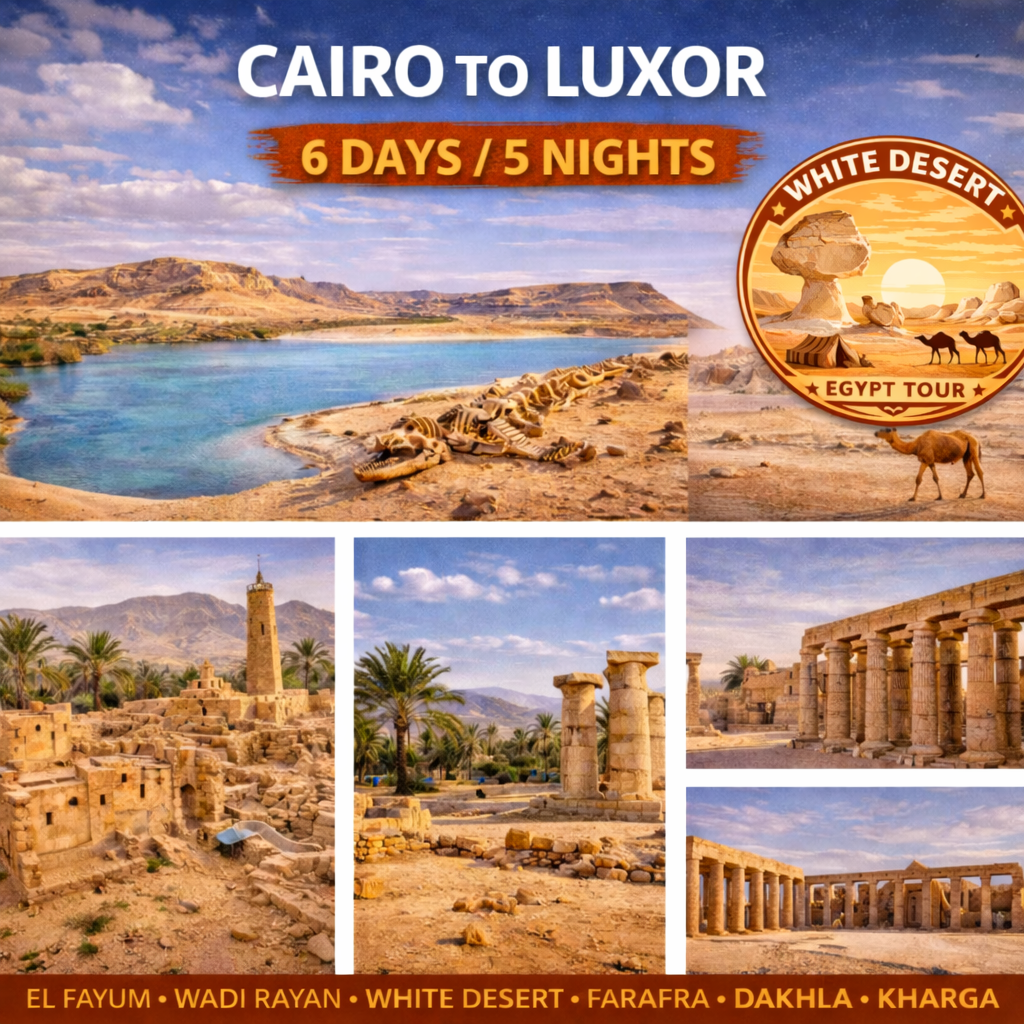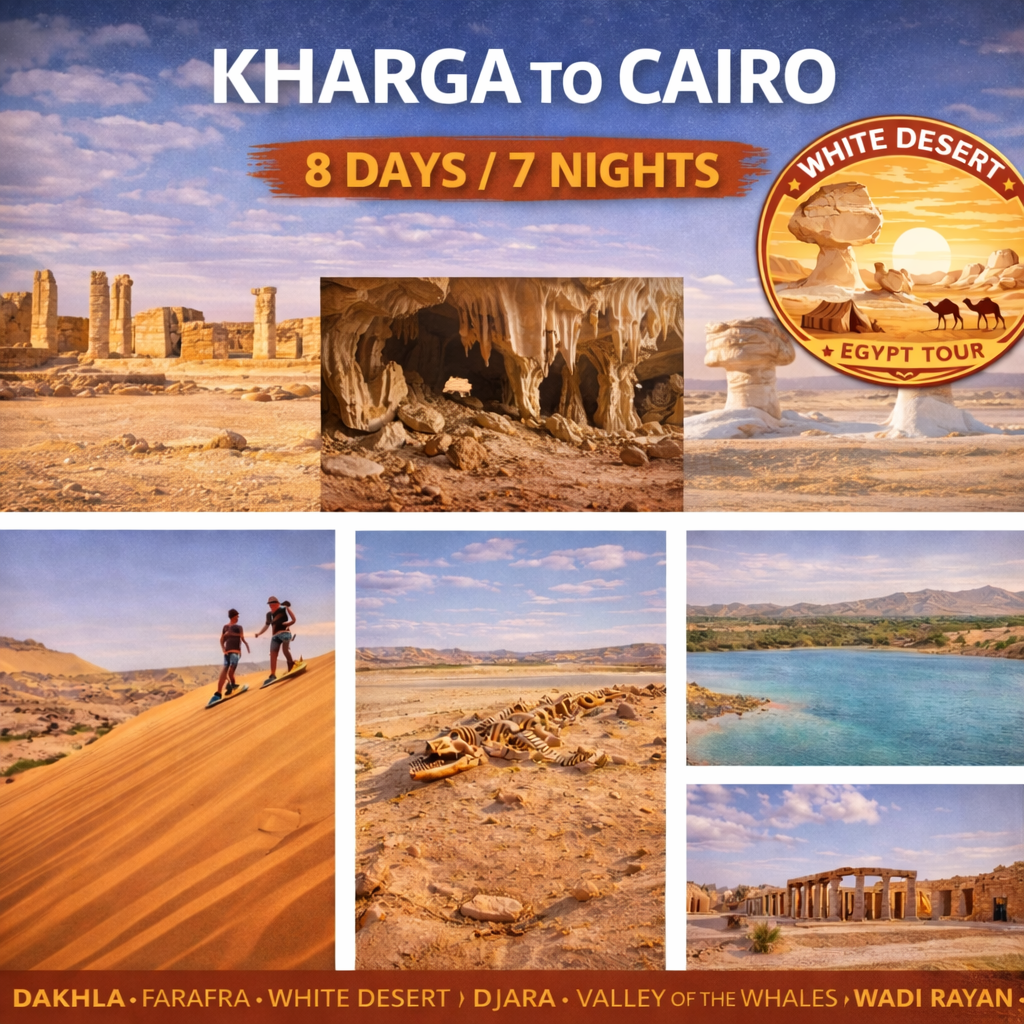
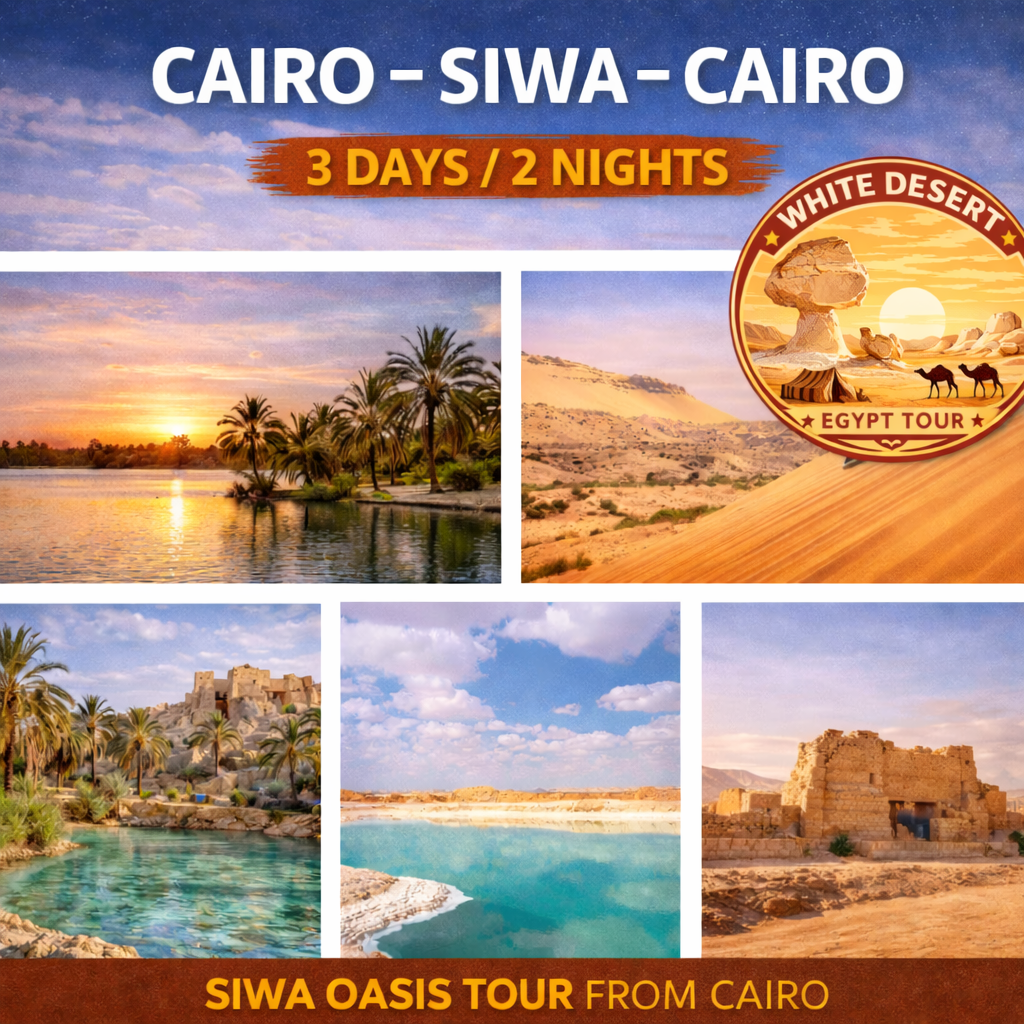
Tourism Slider
black desert
Black Desert
Black Desert
Don't miss this Bedouin life experience with a local Bedouin guide.

Black Desert Egypt: Complete Travel Guide, Bahariya & Desert Tours

The Black Desert Egypt is one of the most distinctive landscapes in Egypt’s Western Desert and one of the classic stops on the route between Bahariya Oasis and the White Desert.

At first sight, its name makes perfect sense.

Dark hills rise above golden and ochre desert plains, while black stones and iron-rich surfaces create a landscape completely different from the pale chalk formations travelers encounter later in the White Desert.

But the Black Desert is more interesting than simply being “the dark desert before the White Desert.”

Its landscape reflects the complex geology of the Bahariya region, where sedimentary rocks, iron-rich crusts and volcanic rocks occur together. Geological research from the Bahariya Depression documents both ferricrete-capped landforms associated with the Black Desert and Oligocene–Miocene basaltic intrusions and volcanic units elsewhere in the depression.

The area is also officially recognized as part of the natural heritage around Bahariya. Egypt’s State Information Service lists the Black Desert within the Bahariya Oasis Reserve, a protected area declared in 2010.

For most international visitors, the Black Desert is experienced as part of a White Desert safari from Cairo rather than as a standalone destination.

A typical route may combine:

Cairo → Bahariya Oasis → Black Desert → El Haize → Crystal Mountain → Valley of Agabat → White Desert → Desert Camping → Cairo

That contrast between landscapes is exactly what makes the journey memorable.

At White Desert Egypt Tour, the Black Desert is included in several multi-day Western Desert itineraries from Cairo, including our 2-day and 3-day White Desert tours.

Planning a desert trip from Cairo?

Explore all White Desert and Western Desert tours →

Where Is the Black Desert in Egypt?

The Black Desert lies in Egypt’s Western Desert near Bahariya Oasis.

Bahariya is the practical gateway for most travelers coming from Cairo. Rather than driving directly from Cairo to a single Black Desert entrance, organized itineraries typically travel first toward Bahariya and then begin the desert safari portion of the journey.

The Bahariya Depression itself lies in Egypt’s Western Desert and extends for roughly 90 kilometers along its main axis. Geological studies describe a landscape containing sedimentary formations, iron-rich rocks, faults, hydrothermal features and volcanic units.

For travelers, the geography is easier to understand as a sequence:

Cairo → Bahariya Oasis → Black Desert → deeper Western Desert attractions

Bahariya provides the transition between inhabited oasis landscapes and the remote desert.

The Black Desert is therefore often one of the first major natural landscapes travelers experience after leaving the oasis.

If you’re planning the complete route, read our Bahariya Oasis Egypt travel guide.

You can also use our White Desert Egypt map to understand how the main Western Desert stops relate to one another.

Why Is It Called the Black Desert?

The Black Desert gets its visual identity from the dark materials covering and capping many of its hills and surfaces.

From a distance, the landscape can appear as if someone scattered black powder and stones over golden desert terrain.

The geology, however, is more complicated than saying that every black hill is simply an extinct volcano.

Scientific studies of the Bahariya Depression document multiple geological components.

Some landforms contain ferricrete — hardened iron-rich crusts — similar to those associated with the Black Desert, while the wider Bahariya region also contains basaltic intrusions, basaltic flows and other magmatic volcanic rocks.

This creates variations in color and texture across the landscape.

You may see:

  • dark rock fragments covering sandy slopes;
  • black or dark-brown hilltops;
  • rust-red and iron-rich surfaces;
  • golden desert plains;
  • isolated hills standing above the surrounding terrain;
  • darker basaltic material in parts of the Bahariya region.

That combination is what gives the Black Desert its distinctive appearance.

The Geology of the Black Desert

One of the biggest opportunities for this page is answering something most tourism websites oversimplify:

Why does this part of Egypt look so different?

Bahariya has an unusually varied geological history.

Scientific research identifies sedimentary rocks ranging from Cretaceous to Eocene age across the depression, along with extensive iron mineralization, ferruginous crusts, faulting and later volcanic activity.

Researchers have documented both:

iron-rich sedimentary and weathering features, and

younger basaltic magmatic activity.

Some basaltic flows in the Bahariya region formed through fissure eruptions, while other volcanic rocks occur as intrusions.

This is important because the landscape visitors call the Black Desert is not one simple geological feature.

It is part of a much larger geological system.

Millions of years of deposition, mineralization, volcanic activity, fault movement, weathering and erosion helped create the contrasting terrain visible today.

For a traveler, you don’t need a geology degree to appreciate it.

But knowing that the scenery reflects several geological processes makes the journey far more interesting than simply stopping for photographs of “black mountains.”

What Does the Black Desert Look Like?

The first thing most travelers notice is the contrast.

Golden and beige desert surfaces are interrupted by hills covered in dark material.

Depending on the position of the sun, some slopes appear nearly black, while others take on brown, reddish or charcoal tones.

The landscape changes throughout the day.

Morning

Lower sunlight creates long shadows across the hills and makes the texture of the dark surfaces much easier to see.

Midday

The difference between the bright sky, pale sand and dark rocks becomes stronger.

This is excellent for dramatic contrast, although the light can be harsh for photography.

Late Afternoon

Warmer sunlight brings out brown, red and orange tones that may not be obvious earlier in the day.

It is one reason photographers should avoid thinking of the Black Desert as simply a five-minute roadside stop.

If photography is an important part of your journey, read our White Desert photography tips. Many of the same desert-light principles apply to the Black Desert.

What to Do in the Black Desert Egypt

The Black Desert is usually an exploration stop within a larger safari rather than an activity destination requiring an entire day.

That does not mean there is nothing to do.

  1. Explore by 4×4

A 4×4 safari is the most practical way to experience the wider Western Desert route.

Travelers usually transfer to suitable desert vehicles around Bahariya and continue through the Black Desert toward later stops.

Your current 2-day White Desert itinerary, for example, includes the Black Desert before El Haize, Crystal Mountain, Valley of Agabat and the White Desert.

The vehicle is not just transportation.

The transition from oasis roads to open desert is an important part of the experience.

  1. Stop at Panoramic Viewpoints

One of the best things about the Black Desert is the scale of the scenery.

From appropriate viewpoints you can look across open plains dotted with dark hills.

The lack of urban buildings makes it easier to appreciate the shape and scale of the landscape.

Take a few minutes without your camera as well.

Many travelers move too quickly between safari stops because they are focused on completing the itinerary.

The Western Desert is more rewarding when you occasionally stop and simply experience the silence.

  1. Take Short Walks

Depending on the route and local conditions, travelers may take short walks near selected viewpoints.

The terrain can be:

  • rocky;
  • uneven;
  • loose underfoot;
  • exposed to strong sunlight.

Good closed footwear is more appropriate than sandals for walking around rough desert surfaces.

Follow your guide’s advice about where to walk and avoid climbing fragile or unstable geological features.

  1. Photograph the Dark Hills

The Black Desert is an excellent location for landscape photography because it adds visual variety to a Western Desert trip.

Photographers can capture:

  • dark hills against golden sand;
  • wide desert panoramas;
  • 4×4 vehicles for scale;
  • travelers standing against distant ridges;
  • geological details;
  • transitions from the Black Desert toward paler landscapes farther south.

The Black Desert becomes particularly useful when creating a complete photo story of the journey.

Instead of returning from Egypt with only images of white chalk formations, you can show how dramatically the scenery changes across one desert route.

How Long Do You Need in the Black Desert?

Most travelers do not need a full day dedicated only to the Black Desert.

The area works best as part of the journey.

Depending on the itinerary, road conditions and stops, you may spend somewhere from a short sightseeing stop to a few hours in and around the Black Desert landscape.

The key point is this:

Do not judge the quality of a Western Desert trip by how many hours it spends in the Black Desert alone.

Its value comes partly from contrast.

You see the dark terrain.

Then the journey changes.

You continue toward other landscapes such as Crystal Mountain, the Valley of Agabat and finally the White Desert.

That sequence makes every destination feel more distinctive.

Black Desert and Bahariya Oasis

You cannot really understand the tourism route without understanding Bahariya Oasis.

Bahariya is where many White Desert trips from Cairo transition into the desert safari section of the journey.

The oasis has:

  • palm groves;
  • villages;
  • cultivated land;
  • springs;
  • archaeological sites;
  • desert access routes.

That creates an immediate visual transition.

You leave Cairo’s urban landscape.

Then you reach an oasis surrounded by arid terrain.

Then you travel into the Black Desert.

And eventually you reach the White Desert.

For travelers interested in seeing more than just the desert campsite, a three-day itinerary provides more time for Bahariya itself.

Our current 3 Days White Desert Tour from Cairo includes a fuller Bahariya component before the Black Desert and White Desert safari.

For destination information, read the full Bahariya Oasis Egypt guide.

Black Desert to Crystal Mountain

After experiencing the Black Desert, many classic routes continue deeper into the Western Desert toward Crystal Mountain.

That progression creates another dramatic geological change.

Crystal Mountain is much smaller in scale than the Black Desert, but it provides a distinctive stop because of its mineral-rich formations.

A typical safari does not treat either attraction as an isolated destination.

Instead, the journey links several landscapes together.

This is exactly how your 2-day and 3-day White Desert itineraries currently operate, both of which include the Black Desert and Crystal Mountain during the safari route.

Read our dedicated Crystal Mountain Egypt guide before your trip.

Black Desert to the White Desert

The contrast between the Black Desert and White Desert is probably the strongest visual element of the classic Bahariya safari.

The Black Desert is dark and rugged.

The White Desert is pale, open and filled with surreal chalk formations.

They almost seem like landscapes from different countries.

Yet travelers can see both on the same journey.

The White Desert is generally the destination where visitors spend more time because its route includes extensive formations and overnight camping.

The Black Desert acts as one of the major landscape transitions on the way.

For everything you need to know about the main destination, see our White Desert Egypt complete travel guide.

Black Desert vs White Desert: What's the Difference?

Travelers frequently search for Black Desert vs White Desert Egypt, but the best answer is not choosing one.

They offer different experiences.

Black Desert Egypt

Known for:

  • dark hills;
  • black and iron-rich rocks;
  • rugged terrain;
  • panoramic views;
  • short exploration stops;
  • landscape photography.

White Desert Egypt

Known for:

  • white chalk formations;
  • naturally sculpted rock shapes;
  • larger exploration areas;
  • sunset and sunrise;
  • desert camping;
  • stargazing.

Which is better?

If you can only choose a single major destination, the White Desert generally offers the more complete overnight experience because camping is such an important part of the route.

But that’s not how most travelers need to plan the trip.

The better option is usually:

visit both.

The Black Desert provides the contrast that makes arriving in the White Desert even more impressive.

For a detailed itinerary-focused explanation, read our Black Desert and White Desert tour from Cairo guide.

Can You Camp in the Black Desert?

Desert camping may be possible depending on the itinerary and current arrangements, but the Black Desert is not normally the main overnight camping location on our classic White Desert routes.

Most travelers continue deeper into the Western Desert and camp around the White Desert experience.

Your current 2-day itinerary reaches the White Desert by sunset and places the camping night there after visiting the Black Desert, El Haize, Crystal Mountain and Agabat.

That makes sense from an experience perspective.

You see the Black Desert during the safari.

Then you experience:

  • sunset;
  • dinner;
  • campfire;
  • stars;
  • overnight camping;
  • sunrise

in the White Desert portion of the journey.

If camping is one of the main reasons you’re considering a desert trip, read our complete White Desert camping guide.

How to Visit the Black Desert from Cairo

For most international travelers, Cairo is the main starting point.

However, the Black Desert should not be treated like a conventional Cairo day excursion.

The practical route normally goes through Bahariya Oasis.

A typical itinerary looks like:

Stage 1 — Cairo to Bahariya

Travel from Cairo toward Bahariya Oasis by road.

Stage 2 — Transfer to the Desert Safari

After reaching the oasis, travelers begin the desert portion of the journey using appropriate vehicles.

Stage 3 — Visit the Black Desert

The Black Desert becomes one of the first major landscape stops.

Stage 4 — Continue Toward the White Desert

Depending on the itinerary, the route may then include El Haize, Crystal Mountain, Agabat and other desert sites.

Stage 5 — Overnight Desert Experience

Most short tours include camping in the White Desert rather than returning to Cairo on the same day.

Our 2 Days White Desert Tour from Cairo follows this type of structure and includes the Black Desert as one of the main safari stops.

For detailed route planning, read how to get to the White Desert from Cairo.

Can You Visit the Black Desert on a Day Trip from Cairo?

Technically, the important question is not whether a vehicle can cover the distance.

It’s whether the trip makes sense.

For most international travelers, trying to travel from Cairo, visit Bahariya and the Black Desert and then immediately return to Cairo creates a long day dominated by driving.

You also miss the best reason to travel this far into the Western Desert:

the complete Black Desert + White Desert route.

A two-day itinerary is much more practical because it allows you to experience:

  • Bahariya;
  • Black Desert;
  • Crystal Mountain;
  • Agabat;
  • White Desert;
  • sunset;
  • camping;
  • stargazing;
  • sunrise.

If your available time is limited, compare your options in our White Desert itinerary: 2 days vs 3 days vs 4 days guide.

Best Time to Visit the Black Desert Egypt

Because the Black Desert is generally part of a larger Western Desert itinerary, the best season is closely connected to White Desert travel.

For many international visitors, October through April offers more comfortable conditions for outdoor desert exploration than peak summer.

The experience changes through the season.

October and November

These months can offer warm days with more manageable conditions than midsummer.

They are useful for travelers interested in photography, safari drives and camping.

December to February

Winter is popular for daytime desert exploration.

However, travelers should prepare for colder nights, particularly if the itinerary includes camping.

March and April

Spring can provide another good travel window before the strongest summer heat.

As always, current weather should be checked shortly before departure.

For a much more detailed seasonal breakdown, use our best time to visit White Desert Egypt guide.

What to Pack for the Black Desert

You do not need specialized mountaineering equipment for a standard organized Black Desert stop.

But you do need to prepare for an outdoor desert environment.

Useful items include:

  • comfortable closed footwear;
  • lightweight clothing appropriate for the season;
  • warmer layers for evening if camping;
  • sunglasses;
  • sun hat;
  • sunscreen;
  • personal medication;
  • small day bag;
  • camera or smartphone;
  • power bank;
  • protection for electronics from sand and dust;
  • personal toiletries;
  • sufficient water as arranged with your operator.

Avoid relying only on daytime Cairo temperatures when deciding what to wear.

The experience may include early mornings and nighttime camping, where conditions can feel considerably different.

For a complete checklist, see what to pack for White Desert Egypt.

Is the Black Desert Safe to Visit?

This section should not say simply:

“The Black Desert is safe.”

The Black Desert forms part of Egypt’s Western Desert, and current travel advice varies by nationality.

As of August 2026, the U.S. Department of State advises against Western Desert travel unless traveling with a professionally licensed tour company.

Travelers should therefore:

  • check current official travel advice for their nationality;
  • confirm current route and access requirements;
  • use an experienced, appropriately licensed tour operator;
  • follow instructions from Egyptian authorities;
  • travel in suitable vehicles;
  • remain with the agreed itinerary;
  • carry appropriate water and supplies;
  • expect limited connectivity in remote areas;
  • avoid restricted and border areas.

This is particularly important because conditions and access arrangements can change.

We should sell professional planning and local logistics, not make blanket safety promises.

For more details, read our dedicated White Desert Egypt safety guide.

Is a 4×4 Necessary for the Black Desert?

The larger tourism route includes both paved and desert sections.

Suitable 4×4 vehicles are used for the off-road safari component because travelers are moving through terrain that differs significantly from normal city or highway travel.

Both your current 2-day and 3-day White Desert itineraries describe the Black Desert within their 4×4 safari portions.

A visitor should not assume that renting an ordinary passenger car in Cairo is equivalent to joining a professionally planned desert safari.

Vehicle suitability is only one issue.

Remote travel also requires knowledge of:

  • routes;
  • supplies;
  • access conditions;
  • weather;
  • fuel;
  • timing;
  • communications;
  • local requirements.

Black Desert Photography Tips

The Black Desert is one of the best places on the classic safari route for creating visual contrast.

Use a Person or Vehicle for Scale

Wide desert landscapes can look flat in photographs without a recognizable subject.

A person or 4×4 helps show how large the hills and open spaces actually are.

Use the Contrast

Compose images containing both dark rock and pale sand.

This immediately communicates why the destination is called the Black Desert.

Photograph Layers

Look for:

foreground rock → middle-distance hill → distant horizon.

This creates depth.

Avoid Photographing Everything at Eye Level

When safe and appropriate, slight changes in viewpoint can dramatically improve landscape images.

Protect Your Camera

Sand and dust can quickly enter lenses and camera bags.

Try to minimize lens changes in exposed areas.

For more desert photography advice, read our White Desert photography tips.

Black Desert Tours from Cairo

The Black Desert is rarely sold as the main destination of a multi-day tour.

Instead, it is incorporated into White Desert and Western Desert safari itineraries.

That’s actually better for travelers because the value of the journey comes from seeing several dramatically different landscapes.

2 Days White Desert Tour from Cairo

This is the strongest option for travelers with limited time.

Your current itinerary includes the Black Desert along with El Haize, Crystal Mountain, Valley of Agabat and the White Desert before the camping experience.

View the 2-Day White Desert Tour from Cairo →

3 Days White Desert Tour from Cairo

Three days provides more time and a slower pace.

Your current itinerary includes Bahariya sightseeing followed by a 4×4 safari through the Black Desert, El Haize, Crystal Mountain and Agabat toward the White Desert.

Explore the 3-Day White Desert Tour from Cairo →

4 Days White Desert Tour

A longer itinerary works better for visitors who want the Western Desert to become a major part of their Egypt trip rather than a quick overnight excursion.

See the 4-Day White Desert Tour from Cairo →

Which Black Desert Tour Should You Choose?

Use this simple rule:

Choose 2 days if your Egypt itinerary is tight.

Choose 3 days if you want more time in Bahariya and a slower desert experience.

Choose 4 days or longer if photography, nature and the Western Desert are among the main reasons you’re traveling to Egypt.

You can compare your options in our best White Desert Egypt tours guide.

Black Desert Tour Cost

There is no single price specifically representing “the Black Desert.”

That’s because most visitors experience it as one stop within a larger tour.

The overall trip price may depend on:

  • number of days;
  • group size;
  • private or shared travel;
  • transportation from Cairo;
  • 4×4 safari arrangements;
  • camping;
  • meals and water;
  • accommodation;
  • route;
  • additional destinations;
  • season;
  • customization.

This is why comparing tours solely by price can be misleading.

One operator may quote a lower rate but include a much shorter experience, different transportation or fewer services.

When comparing options, check:

What is included?

How many days?

Is camping included?

Which destinations are visited?

Is the itinerary private or shared?

What transportation is used?

For a broader pricing explanation, read our White Desert Egypt cost guide.

Can You Combine the Black Desert with Djara Cave?

Yes.

Travelers who have more time can go beyond the standard Black Desert–White Desert route and continue toward deeper Western Desert destinations.

Your current 3 Days White Desert & Djara Cave Safari includes the Black Desert before continuing through El Haize, Agabat and later Djara Cave and the White Desert.

That itinerary is much better suited to adventure travelers who want more than the classic overnight route.

Read our Djara Cave Egypt guide or:

View the 3 Days White Desert & Djara Cave Safari →

Who Should Visit the Black Desert?

The Black Desert works particularly well for travelers interested in:

Nature

The unusual combination of dark hills and golden desert is unlike the scenery most first-time visitors associate with Egypt.

Photography

It provides visual contrast and variety within the same Western Desert trip.

Adventure

4×4 desert travel makes the journey feel completely different from sightseeing in Cairo or Luxor.

Geology

The Bahariya region contains an unusually diverse geological history involving sedimentary rocks, iron-rich formations, faulting and magmatic activity.

Couples

Private Western Desert itineraries can provide a quieter travel experience away from Egypt’s crowded cities.

Families

Families comfortable with long road journeys can enjoy the variety of landscapes, although the itinerary should match children’s ages and travel experience.

First-Time Desert Travelers

Because the Black Desert is included in classic White Desert itineraries, visitors do not need to plan a specialist geological expedition just to experience it.

Is the Black Desert Egypt Worth Visiting?

Yes — particularly when it is part of a White Desert safari.

The Black Desert is not usually the single attraction people fly to Egypt specifically to see.

That’s not its role.

Its strength is that it transforms the journey.

You begin with the greenery and settlements of Bahariya.

Then you see rugged dark landscapes.

Later you pass completely different geological features.

Finally, you reach the surreal white formations of the White Desert.

That progression makes a Western Desert safari much more interesting than traveling directly to one scenic location.

The Black Desert is worth visiting for:

  • geology;
  • scenery;
  • photography;
  • panoramic desert views;
  • 4×4 exploration;
  • the contrast with the White Desert;
  • the complete Western Desert journey.

Plan Your Black Desert & White Desert Tour

For most travelers, the best way to experience the Black Desert is not to book it as an isolated attraction.

Combine it with the wider route.

A classic short journey can include:

Cairo → Bahariya Oasis → Black Desert → El Haize → Crystal Mountain → Valley of Agabat → White Desert → Camping → Cairo.

Your current 2-day and 3-day tour products already follow this type of structure and include the Black Desert as a core safari stop.

Ready to explore Egypt’s Black and White Deserts?

View All White Desert & Western Desert Tours →

Or start with:

2 Days White Desert Tour from Cairo →

3 Days White Desert Tour from Cairo →

Contact White Desert Egypt Tour with your travel dates, number of travelers and preferred number of days to choose the right itinerary.

Black Desert Egypt FAQ

FAQ About Black Desert Egypt

Everything you need to know before visiting the Black Desert Egypt, including its geology, location, transportation, 4×4 safaris, photography and combining it with the White Desert.

The Black Desert is located in Egypt's Western Desert near Bahariya Oasis. Most travelers reach the area through Bahariya before continuing south toward Crystal Mountain and the White Desert.

The landscape gets its dark appearance from black and iron-rich material covering many hills and surfaces. Geological studies of the Bahariya region document ferricrete formations as well as basaltic magmatic rocks, so the area's dark geology is more complex than simply describing every hill as a volcano.

The wider Bahariya region contains basaltic volcanic and intrusive rocks, but it is an oversimplification to describe every Black Desert hill as a volcanic cone. Iron-rich ferricrete and other geological materials also occur in the landscape.

The Black Desert and White Desert are part of the same classic Western Desert safari route. Travelers normally visit the Black Desert first and continue toward Crystal Mountain, Agabat and the White Desert.

Yes. Most visitors travel from Cairo to Bahariya Oasis and then begin the 4×4 safari portion of the journey. The Black Desert is included in several White Desert tours from Cairo.

Most travelers visit the Black Desert as one stop within a longer safari rather than dedicating an entire day to it. Time varies by itinerary, but short walks, viewpoints and photography stops can usually be incorporated before continuing toward the White Desert.

A same-day Cairo return is generally not the best use of time because of the long overland journey. A two-day itinerary allows visitors to combine the Black Desert with the White Desert and an overnight camping experience.

Camping arrangements depend on the itinerary, but on classic White Desert routes the main overnight camp is generally farther south in the White Desert rather than in the Black Desert itself.

Typical activities include 4×4 exploration, short walks, panoramic viewpoints and landscape photography. Most travelers then continue toward Crystal Mountain, Agabat and the White Desert.

For many visitors, October through April provides more comfortable conditions for Western Desert travel than peak summer. Winter evenings can be cold, particularly when the itinerary includes camping.

The Black Desert is part of Egypt's Western Desert, so travelers should check current government travel advice and local access requirements. U.S. guidance currently states that Western Desert travel should only be undertaken with a professionally licensed tour company.

Suitable 4×4 vehicles are commonly used for the desert-safari sections of Black and White Desert itineraries. Travelers should use experienced operators familiar with the route and current conditions.

They provide different experiences. The Black Desert is known for dark hills and panoramic landscapes, while the White Desert is famous for chalk formations, camping, sunset, sunrise and stargazing. For most travelers, the best option is visiting both.

Yes. Its dark hills, golden terrain and open horizons provide strong landscape contrast, particularly when combined with photographs from the White Desert.

Yes, especially as part of a Black and White Desert safari. Its value comes from the dramatic landscape and the contrast it creates with the other geological areas along the route.

White Desert Egypt Tour TripAdvisor reviews

star ratingWhite Desert Tours - We would highly recommend Mohammad’s company for a trip to the White Desert. Very communicative and responsive throughout. The teams priority was to ensure clients had the best experience and... read more

avatar thumb nicksO5980PI
October 22, 2026

star ratingWhere Silence Speaks: Six days as a solo traveller - Surrounded by endless dunes, fascinating rock formations and a sky full of stars, my trip to the Black and White Desert was the perfect escape from everyday life.
I... read more

avatar thumb Meret G
October 26, 2026

star ratingHighly recommended! - We had a great time with Mohammed and his compagnon. The welcome was very warm and we had a great lunch at the house before going to the desert. Nothing... read more

avatar thumb 136michellez
October 14, 2026

🌟 Final Thoughts

The Black Desert Egypt is not just a destination — it’s an experience.
From its surreal landscapes to its peaceful nights under the stars, it offers something truly rare.

👉 Explore Black Desert tours with White Desert Egypt Tour