White Desert Egypt Geology: How the Chalk Rock Formations Were Created
At first glance, the White Desert in Egypt looks almost impossible.
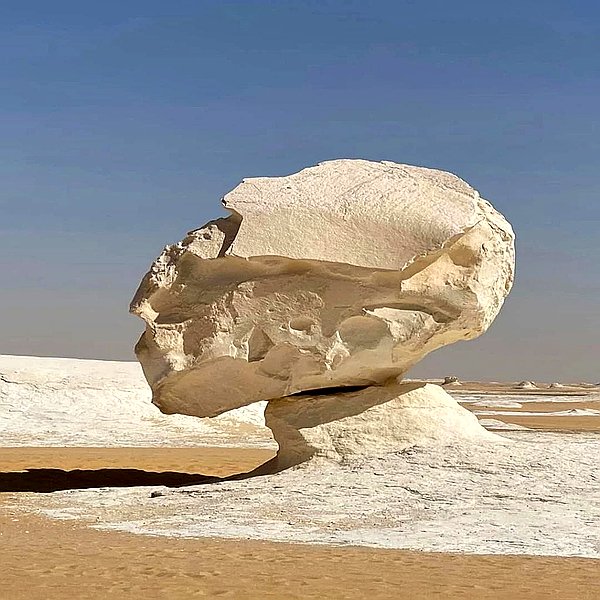
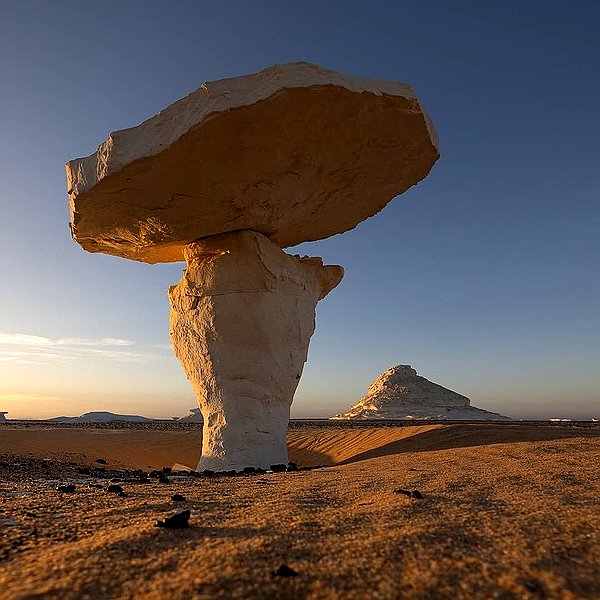
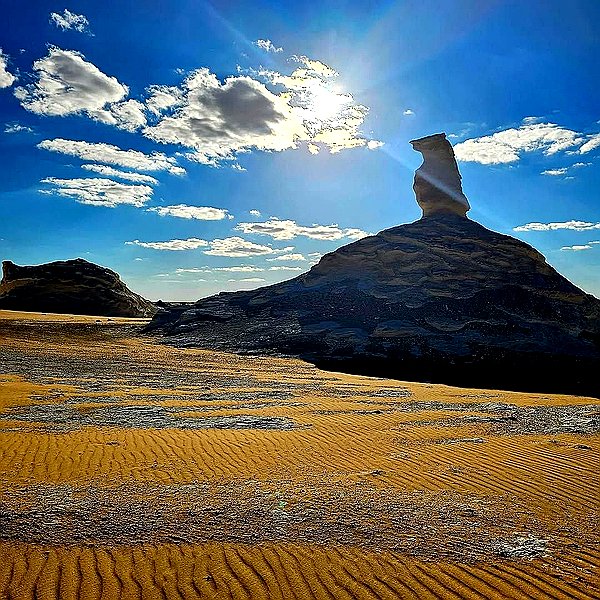
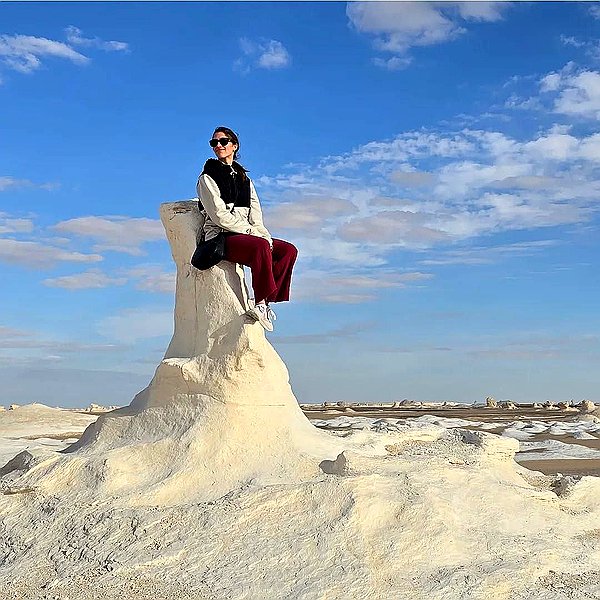
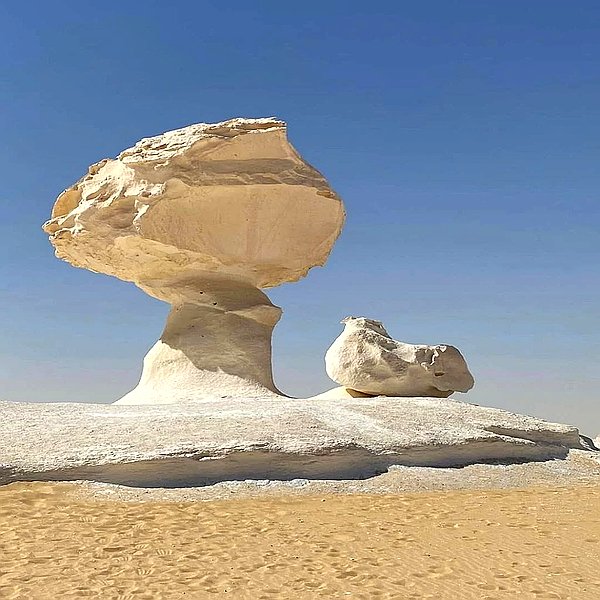
Bright white rock towers rise from golden sand. Some formations resemble mushrooms. Others look like animals, giant columns, icebergs, tents, faces, or sculptures created by an artist.
But no sculptor made them.
The White Desert is the result of a geological story that began when much of this part of Egypt was covered by an ancient sea.
Marine sediments accumulated on the seabed.
Tiny organisms contributed calcium-rich material.
Those deposits eventually became thick layers of chalk and limestone.
The sea disappeared.
The land was uplifted and exposed.
Then water, wind, sand, temperature changes, dissolution, and millions of years of erosion gradually removed weaker material and left behind the extraordinary formations travelers see today.
The Egyptian Environmental Affairs Agency describes the White Desert as a rare example of karst landscape, an open-air geological museum containing white limestone and chalk formations, fossils, dunes, cliffs, and other desert features. Egypt officially declared the area a protected landscape in 2002.
But saying “the rocks were shaped by wind” tells only part of the story.
To understand why the White Desert looks the way it does, you have to go much further back—to a time when there was no Sahara here at all.
This guide explains the geology of the White Desert in Egypt, how its chalk formed, why the rocks are white, how mushroom-shaped formations developed, what fossils reveal about the ancient environment, and why neighboring landscapes such as Crystal Mountain, the Black Desert, and the Valley of Agabat look so different.
If you are planning a trip as well as studying the landscape, start with our complete White Desert Egypt Guide and our guide to the White Desert Rock Formations.
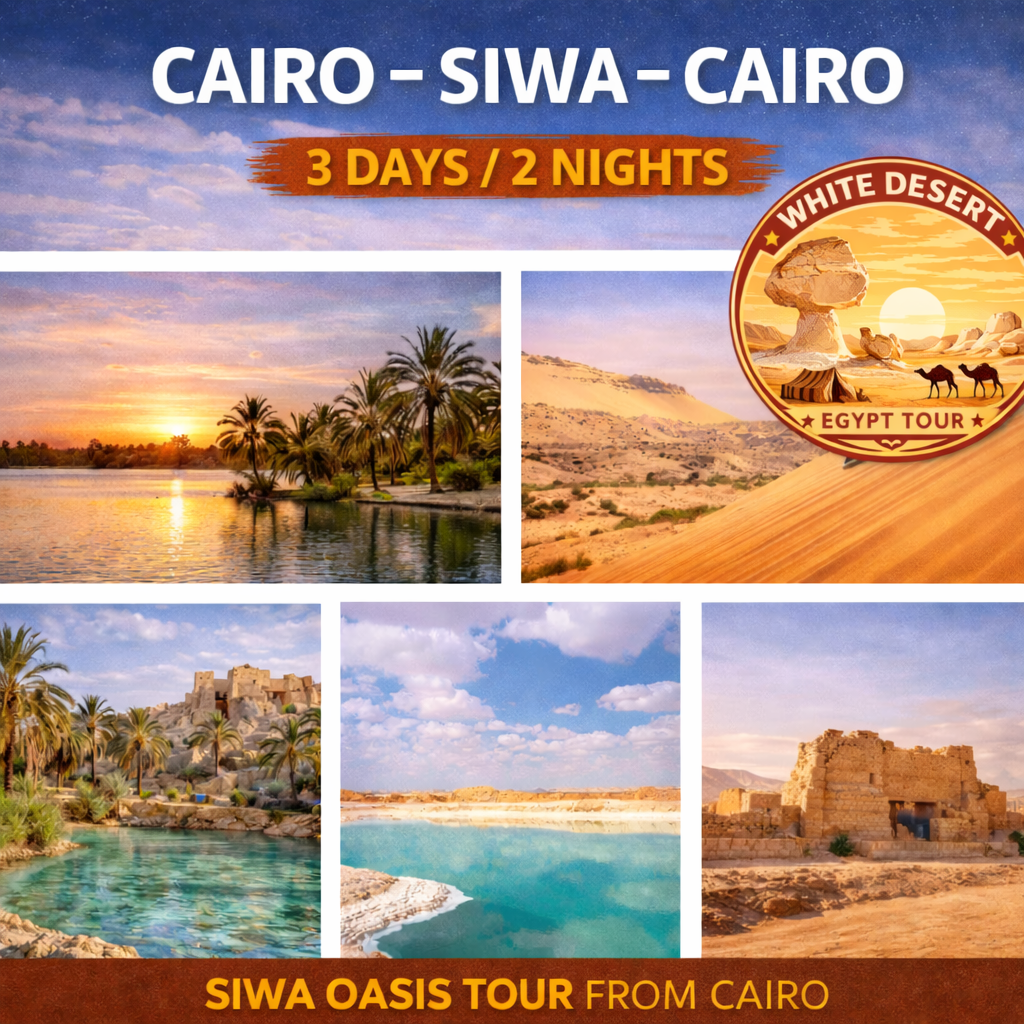
3 Days Siwa Oasis Tour from Cairo – Great Sand Sea Safari & Oasis Experience
3 Days / 2 Nights Siwa Oasis Tour from Cairo This 3-day Siwa Oasis tour from Cairo is perfect for…
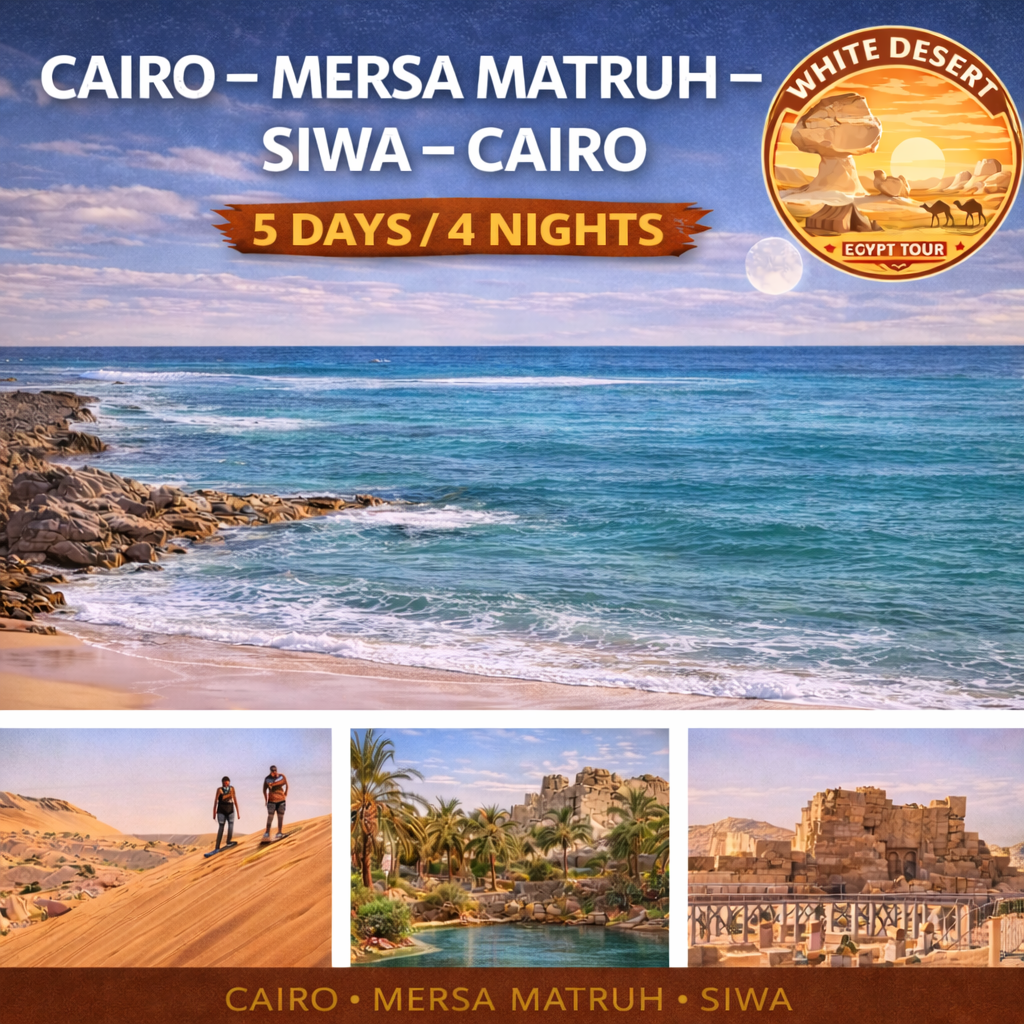
5 Days Siwa Oasis Tour from Cairo – Marsa Matrouh & Great Sand Sea Safari
🏜️ Cairo – Marsa Matrouh – Siwa – Cairo 5 Days / 4 Nights Siwa Oasis Tour from Cairo This…
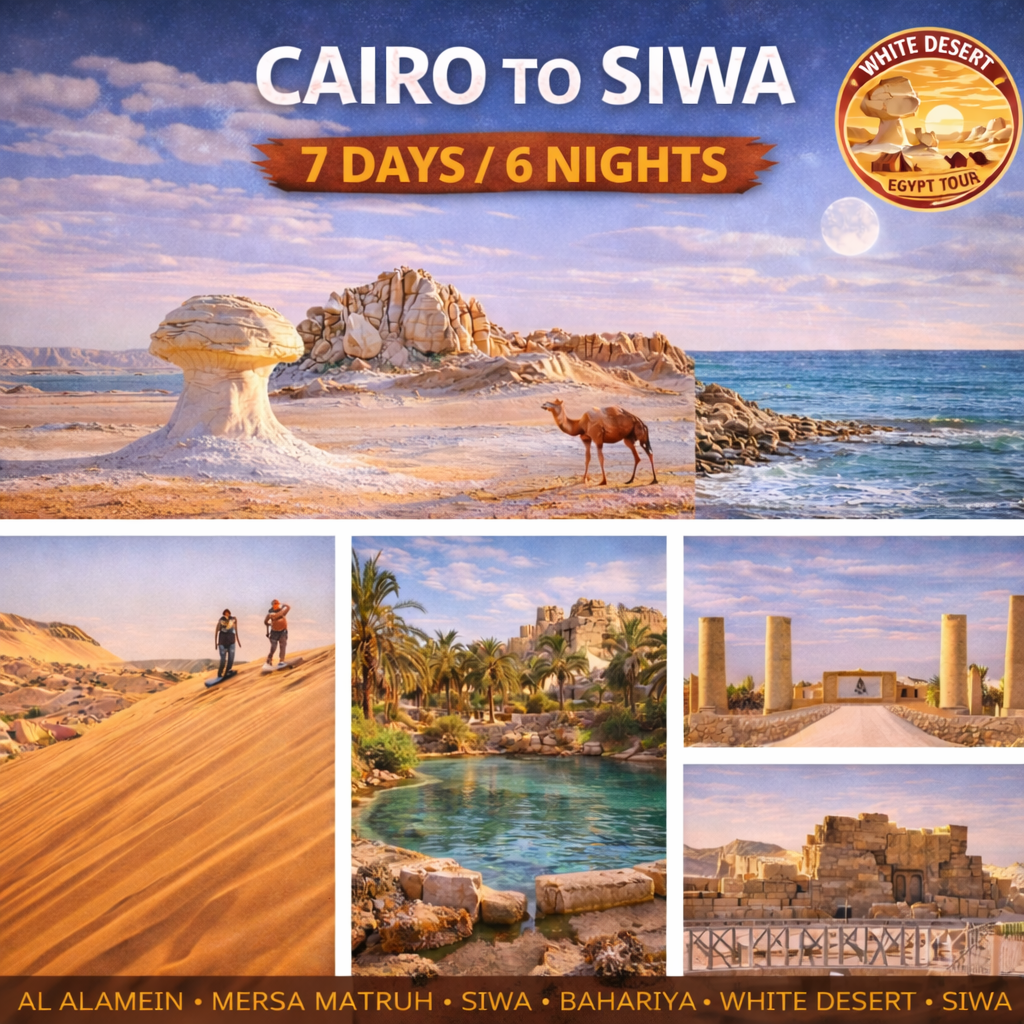
7 Days Siwa & White Desert Tour from Cairo – Ultimate Western Desert Expedition
🏜️ 7 Days Siwa & White Desert Tour from Cairo North Coast – Siwa – Bahariya – White Desert (7…
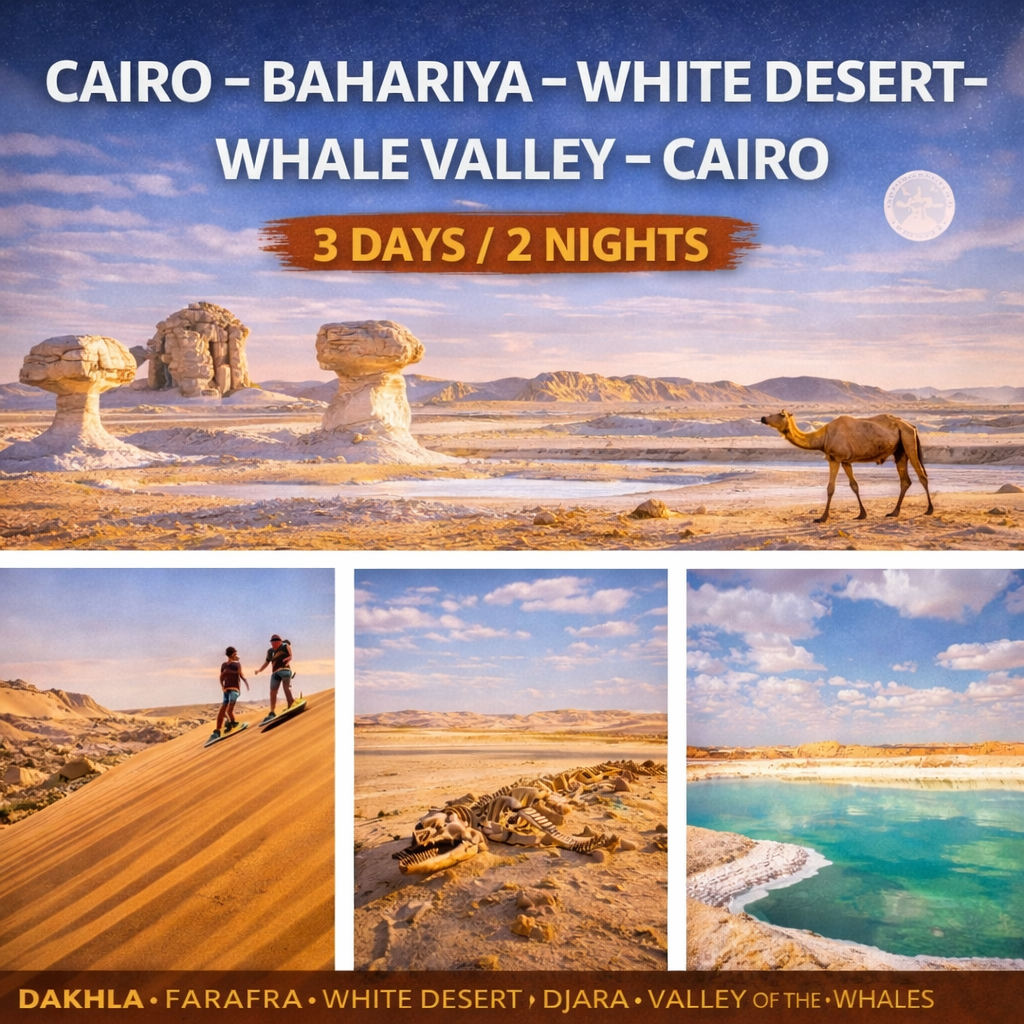
White Desert & Whale Valley Tour from Cairo – 3 Day Desert & Fossil Adventure
🏜️ White Desert & Whale Valley Tour from Cairo Cairo – Bahariya – White Desert – Wadi El Hitan –…
Western Desert Tour from Cairo to Luxor – 5 Day Multi-Oasis Desert Expedition
5 Days / 4 Nights Multi-Oasis Expedition This Western Desert Tour from Cairo to Luxor is a full desert expedition…
6 Days Western Desert Expedition – Cairo to Luxor Oasis & Desert Safari
🏜️ 6 Days Western Desert Expedition Cairo → Fayoum → White Desert → Dakhla → Kharga → Luxor This 6-day…
8 Days Western Desert Expedition – Kharga to Cairo Oasis & Desert Adventure
🏜️ 8 Days Western Desert Expedition (Kharga to Cairo) Kharga → Dakhla → Farafra → White Desert → Djara Cave…
Quick Answer: How Was the White Desert Formed?
The White Desert developed in several major stages.
First, parts of Egypt’s Western Desert were covered by an ancient marine environment during the Late Cretaceous.
Fine calcium-carbonate-rich sediment accumulated on the seabed and eventually formed thick chalk deposits known geologically as the Khoman Formation.
Geological research in the Farafra region dates much of this white chalk to the Maastrichtian, the final stage of the Late Cretaceous, shortly before the end-Cretaceous extinction roughly 66 million years ago. Studies indicate that the chalk was deposited in an open marine environment connected with the ancient Tethyan realm.
Later:
- The sea retreated.
- Additional sedimentary layers accumulated.
- The region was uplifted and exposed.
- Water and chemical dissolution helped create karst features.
- Running water helped excavate parts of the Farafra Depression during wetter climatic periods.
- Wind and wind-blown sand continued eroding exposed chalk.
- Differential erosion left harder or better-protected sections standing while weaker material disappeared.
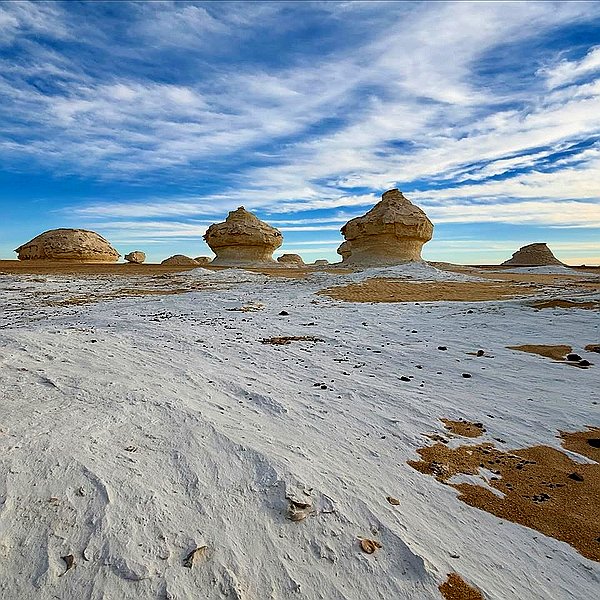
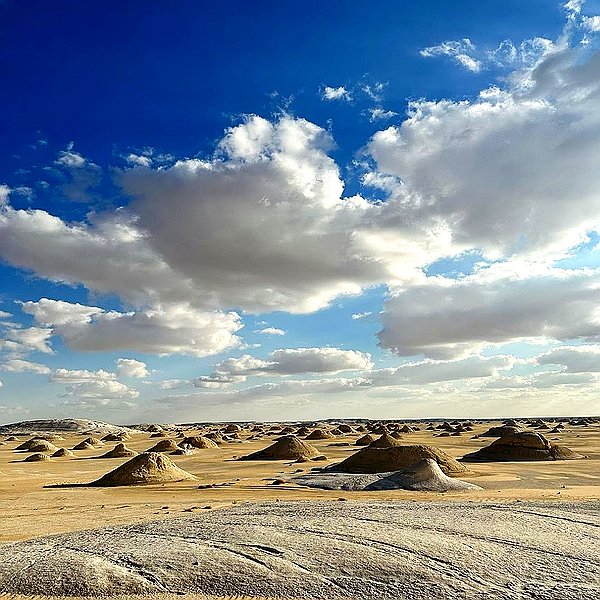
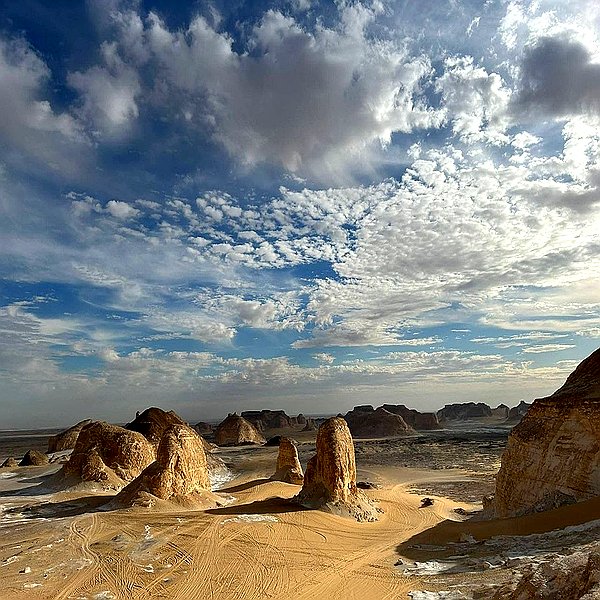
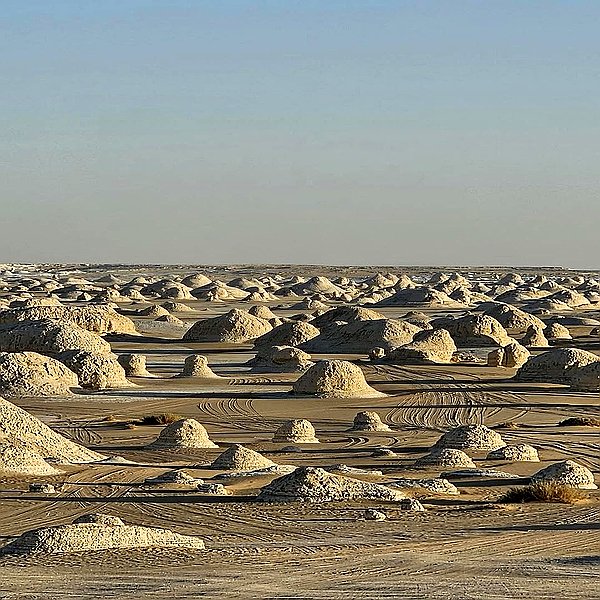
The result is the strange landscape of chalk towers, pedestals, mushrooms, cliffs, and isolated white hills visible today.
Where Is the White Desert Geologically?
The White Desert lies north of Farafra Oasis in Egypt’s Western Desert.
It forms part of the Farafra Depression, a large geological basin surrounded in places by escarpments and plateaus.
The depression contains sedimentary rocks spanning a long period of geological history, including Late Cretaceous and Paleogene formations.
The brilliant white landscape most travelers associate with the White Desert is particularly connected with the Khoman Formation, a widespread chalk unit exposed across parts of the depression.
Research into the region describes the Khoman Formation as containing the snow-white chalk that dominates much of the floor of the northern Farafra Depression.
Farafra itself is therefore far more than a convenient oasis stop.
It sits inside one of Egypt’s most interesting geological landscapes.
Read our Farafra Oasis Egypt Guide if you want to explore the oasis as part of the wider journey.
Was the White Desert Really Under the Sea?
Yes.
This is perhaps the most surprising fact for first-time visitors.
The landscape that is now extremely dry was once part of a marine environment.
Studies of the Khoman Formation around Farafra identify marine microfossils and sedimentary evidence indicating deposition in an open marine setting during the Late Cretaceous.
One detailed study of Farafra describes the Maastrichtian rocks as having formed in an outer neritic marine environment, while other research interprets parts of the Khoman chalk as deposits from a warm Tethyan marine shelf.
So when you stand among White Desert formations today, you are effectively walking across rocks whose story began beneath ancient seawater.
That makes the current landscape wonderfully ironic:
one of Egypt’s driest environments was built from marine sediment.
What Was the Tethys Sea?
During much of the Mesozoic and early Cenozoic eras, a vast marine system commonly referred to as the Tethys Ocean or Tethys Sea existed between large continental landmasses.
The geography of Earth looked very different from today.
North Africa was influenced by these marine environments, and seas repeatedly covered areas that are now desert.
Sediments accumulated on the seabed over immense periods.
Some became shale.
Some became limestone.
And some became chalk.
The Farafra region preserves part of that marine history.
That is why geologists can find marine microfossils in rocks that now sit hundreds of kilometers from Egypt’s modern coastline.
What Is Chalk?
Chalk is a soft, fine-grained form of limestone composed mainly of calcium carbonate.
Much marine chalk forms from enormous quantities of microscopic calcareous remains that accumulated on ancient seafloors.
US Geological Survey material explains that pelagic chalk commonly contains skeletal components dominated by microscopic organisms such as coccoliths and planktonic foraminifera, with calcium-carbonate-rich material gradually becoming compacted into chalk.
These organisms are tiny.
But given enough time—and enough of them—their remains can create immense rock deposits.
This is one reason geology changes your perspective.
A White Desert formation weighing many tons may ultimately owe much of its material to marine organisms that were microscopic.
Why Is the White Desert White?
Its color comes from the pale chalk and limestone exposed across the landscape.
The Egyptian Environmental Affairs Agency specifically describes the White Desert as having a floor of white chalk with bright chalk pillars and extremely white limestone formations.
Fresh or relatively clean chalk reflects a large amount of visible light.
Under Egypt’s strong sun, this produces an almost snow-like appearance.
That visual effect changes throughout the day.
At Midday
The chalk can appear intensely white.
At Sunrise
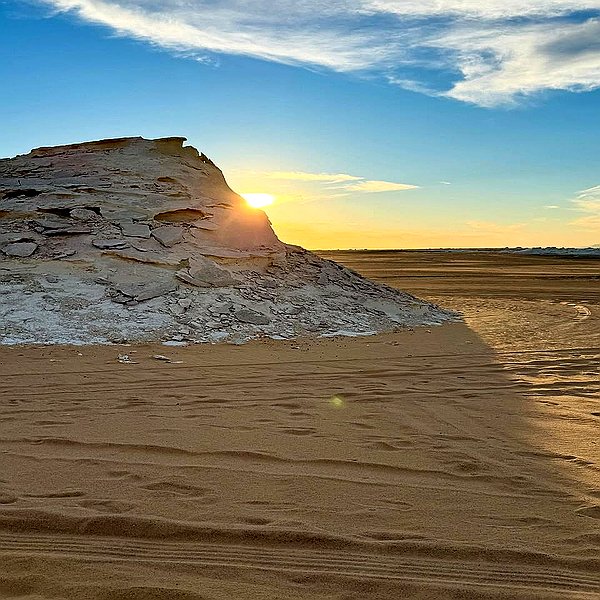
It may become pale pink, cream, or gold.
At Sunset
The formations often reflect orange and warm yellow tones.
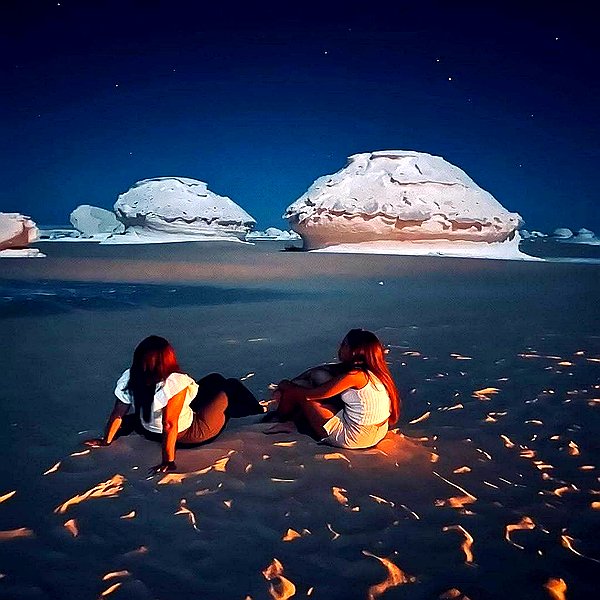
Under Moonlight
They can appear almost luminous.
That ability to respond dramatically to changing light is one reason the landscape is so popular with photographers.
For practical photography advice, see our White Desert Photography Tips.
What Is the Khoman Formation?
The Khoman Formation is one of the keys to understanding White Desert geology.
It is a geological rock unit found across parts of Egypt and is especially important around Farafra.
Research on Farafra identifies the formation as primarily Late Cretaceous in age, particularly Maastrichtian, and composed substantially of chalk.
A 2021 geological study divided the regional Khoman Formation into several units and identified the basal White Desert member as snow-white chalky limestone.
This is useful because “White Desert” is not merely a tourism nickname.
There is a genuine geological reason the landscape looks so different from surrounding areas.
The underlying rock itself changes.
How Old Are the White Desert Rocks?
Much of the characteristic Khoman chalk belongs to the Late Cretaceous.
The Maastrichtian stage lasted roughly from 72 to 66 million years ago.
That means parts of the White Desert landscape are built from sediments deposited at approximately the same broad period when dinosaurs still lived elsewhere on Earth.
The modern rock shapes, however, are much younger than the original sediment.
This distinction is important.
The rock material may be tens of millions of years old.
The mushroom or pillar shape developed later through erosion.
Geology often works like this.
The material is ancient.
The sculpture is younger.
Did Dinosaurs Live in the White Desert?
Be careful with this question.
The White Desert’s chalk dates broadly to a period when dinosaurs still existed globally, but that does not mean the famous White Desert formations themselves are dinosaur remains or that visitors should expect dinosaur fossils scattered around the chalk fields.
Nearby Bahariya Oasis, however, is extremely important for dinosaur paleontology.
Egyptian environmental authorities describe Bahariya as a major fossil research area where dinosaur remains have historically been discovered.
So the wider Western Desert has major paleontological importance.
But White Desert geology is particularly famous for marine sediments, chalk, fossils, erosion, and karst landscapes.
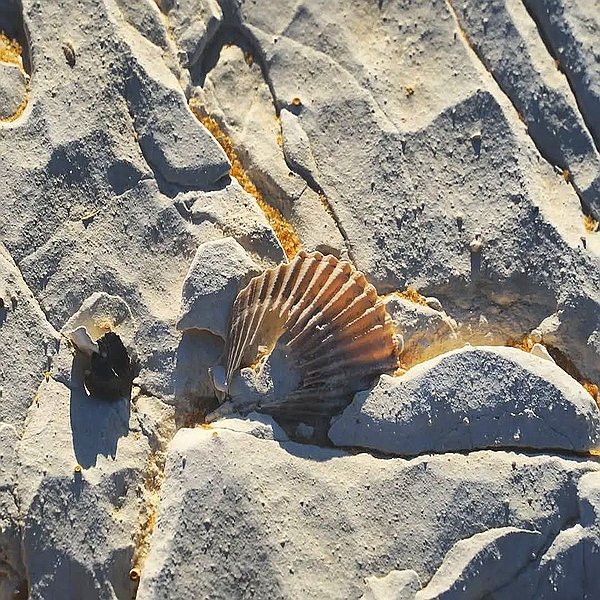
Are There Fossils in the White Desert?
Yes.
The Egyptian Environmental Affairs Agency specifically highlights fossils as part of the White Desert’s geological importance and describes the protected area as an open-air place for studying desert environments, geography, fossils, and wildlife.
The rocks of the broader Farafra region preserve evidence of ancient marine life.
Microfossils such as foraminifera have been especially useful for geologists because particular species help researchers determine:
- Rock age
- Marine depth
- Water conditions
- Depositional environment
- Changes in sea level
Fossils are therefore not simply interesting objects.
They are geological evidence.
They help reconstruct an environment that vanished tens of millions of years ago.
Can Visitors Collect Fossils or Chalk?
No responsible traveler should remove geological material from a protected landscape.
The White Desert is a protected area.
Leave rocks, fossils, crystals, and formations where they are.
Do not:
- Break pieces off formations
- Scratch names into rock
- Collect fossils
- Remove chalk
- Climb fragile formations unnecessarily
A tiny piece may seem meaningless to one visitor.
Multiply that by thousands of visitors and the damage becomes real.
Photography is the souvenir that does not remove part of the landscape.
How Were the Famous White Desert Rock Formations Created?
This is where the story becomes more complicated than “wind made them.”
The shapes are the result of multiple geological processes acting over long periods.
These include:
- Differential erosion
- Wind abrasion
- Chemical weathering
- Karst dissolution
- Jointing and fractures
- Earlier water erosion
- Changes in climate
- Differences in rock strength
The White Desert management plan notes that chalk remnants occur in many forms and sizes and that their surfaces can be pitted and polished by wind action. It also observes that chalk stacks are particularly common where prevailing winds align with sets of joints in the rock.
Meanwhile, modern geological research emphasizes that the landscape also contains important karst and paleokarst features, meaning dissolution by water played a significant part in its longer geological development.
The bizarre formations are therefore the product of a long sequence rather than a single force.
What Is Differential Erosion?
Differential erosion happens when different parts of a rock mass erode at different rates.
Imagine a formation with:
- A more resistant upper layer
- A softer lower section
Wind-blown sand may attack the lower section more aggressively.
The base becomes narrower.
The upper part remains broader.
Over time, the formation begins to resemble a mushroom.
This process explains why pedestal and mushroom shapes are common in desert landscapes.
Small differences in:
- Rock hardness
- Fractures
- Mineral composition
- Exposure
- Height
can produce dramatic differences after thousands or millions of years of weathering.
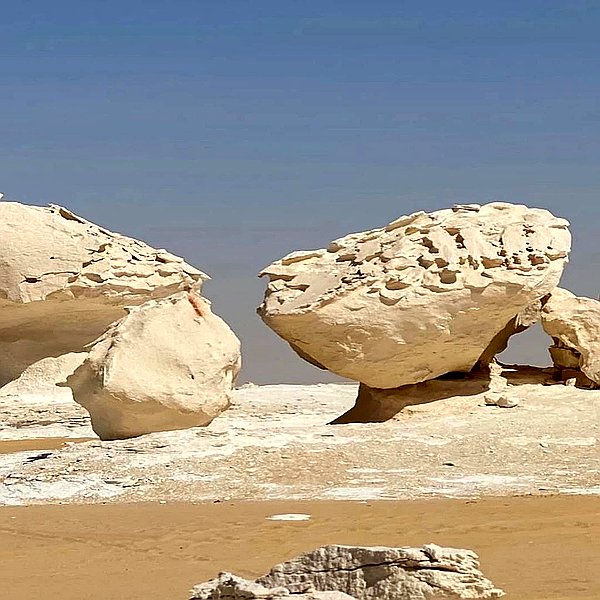
Why Are There Mushroom-Shaped Rocks?
Mushroom rocks are among the White Desert’s most photographed formations.
They develop when the lower part of a rock erodes faster than the upper section.
Wind often carries the greatest concentration of abrasive sand close to ground level.
That means the lower rock can receive stronger sandblasting than the upper portion.
Over long periods:
wide rock → undercut base → narrow stem + broad top
The resulting formation can look almost deliberately balanced.
But it is temporary in geological terms.
The same erosion that creates the mushroom continues weakening it.
Eventually, many such formations collapse.
That is an important idea when visiting the White Desert:
the landscape is still changing.
Is Wind the Only Force Shaping the White Desert?
No.
Wind is extremely important, but geologists studying the White Desert also emphasize karst processes and evidence of earlier water activity.
Academic research describes the area as an important karst geoheritage landscape, containing dissolution features, caves, paleokarst surfaces, sink-like depressions, and calcite deposits.
Other studies of the Farafra Depression conclude that erosion by running water combined with wind helped excavate and reshape the region following geological uplift and periods of wetter climate.
Today’s Sahara is extremely dry.
Past Saharan climates were not always so arid.
Periods of greater rainfall could produce:
- Runoff
- Temporary lakes
- Streams
- Chemical dissolution
- Groundwater activity
These processes left evidence that survives even though the modern environment is dry.
What Is Karst?
Karst is a landscape created largely through the dissolution of soluble rock.
Limestone and chalk contain calcium carbonate.
Slightly acidic water can gradually dissolve calcium carbonate as it moves across or through rock.
Over enough time, this can create:
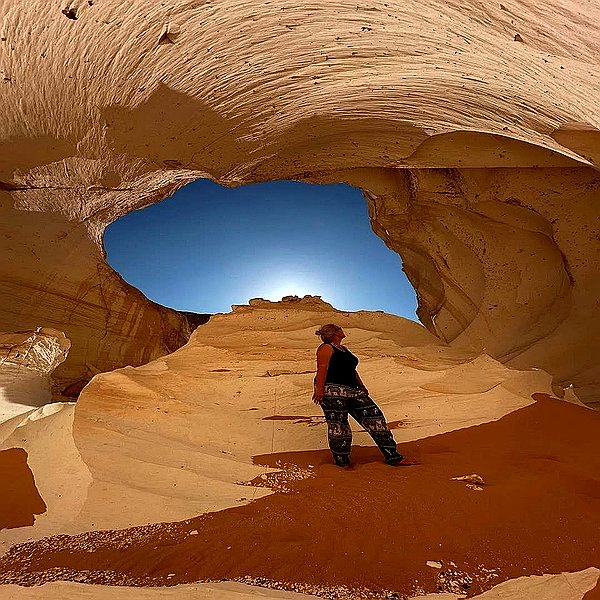
- Cavities
- Caves
- Pits
- Sinkholes
- Channels
- Enlarged fractures
- Irregular rock surfaces
The Egyptian Environmental Affairs Agency specifically identifies the White Desert as a unique example of karst phenomena.
This matters because travelers usually focus only on visible mushroom formations.
Geologists see something much larger:
a landscape recording cycles of marine deposition, exposure, dissolution, erosion, and climatic change.
Did the Sahara Used to Be Wetter?
Yes.
The Sahara has experienced repeated climatic changes.
There were periods when parts of today’s desert received significantly more rainfall.
Evidence from Farafra includes ancient lake deposits known as playas.
Recent geological research on the White Desert describes old lake sediments resting over the bright Maastrichtian Khoman chalk and notes that some chalk mounds may once have stood like small islands surrounded by palaeolake water.
Picture that for a moment.
Today:
white rocks surrounded by desert.
At another period:
some of those rock remnants may have stood beside or within temporary lake environments.
The Sahara has never been as permanent as it looks.
Why Do Some Formations Look Like Animals?
Human brains are excellent at finding familiar shapes in random forms.
This tendency is called pareidolia.
That is why travelers see:
- Rabbits
- Chickens
- Camels
- Faces
- Sphinxes
- Birds
in White Desert rocks.
The formations were not shaped specifically into animals.
Erosion created complex forms.
Your brain supplies the interpretation.
This is part of the fun.
Two travelers can stand beside the same rock and confidently see completely different things.
Read our White Desert Rock Formations Guide for more on the famous shapes.
Why Are Some Rocks Smooth and Others Rough?
Several factors influence surface texture.
A chalk formation exposed to wind-driven sand for long periods can become relatively polished.
Other areas develop pits, cavities, or irregular surfaces.
The White Desert management plan specifically records both pitted and polished surfaces among chalk stacks and identifies these textures as characteristic of wind action.
Surface differences may also reflect:
- Fractures
- Mineral changes
- Moisture
- Dissolution
- Orientation to prevailing winds
Even two neighboring formations can weather differently.
Why Do the White Rocks Sometimes Have Dark Layers?
Not every exposed layer in the region has exactly the same composition.
Farafra contains a sequence of different sedimentary formations deposited during different geological periods.
Chalk may sit below or beside:
- Limestone
- Shale
- Marl
- Sand
- Younger sediments
Research on the Farafra area describes a geological sequence including the Khoman, Tarawan, Esna, and Farafra formations, representing changing marine conditions over millions of years.
The landscape therefore records multiple ancient environments—not one single episode.
What Is Crystal Mountain?
One of the most famous geological stops on many White Desert routes is Crystal Mountain.
Despite its tourism name, it is not a giant mountain made entirely of crystal.
It is a geological feature containing prominent crystalline material and interesting structural textures.
It looks very different from the soft white mushroom formations deeper in the White Desert.
That contrast is exactly why visiting several geological stops is valuable.
Within one journey you can see dramatically different rock types and erosion styles.
Read our complete Crystal Mountain Egypt Guide before your trip.
Is Crystal Mountain Part of the Same Geology?
It belongs to the broader Western Desert geological story, but visitors should not assume every landmark between Bahariya and the White Desert consists of identical rock.
The region contains different formations, depositional histories, structural features, and mineral compositions.
That variety explains why the landscapes change so dramatically as you travel.
One hour you may be looking at dark volcanic-looking hills.
Later, glittering crystalline material.
Then enormous white chalk formations.
The Western Desert is essentially a geological road trip.
Why Is the Black Desert Black?
The Black Desert provides one of the strongest visual contrasts with the White Desert.
Instead of pale chalk dominating the scenery, many hills appear dark because their surfaces contain dark geological material.
Egypt’s Environmental Affairs Agency describes some Black Desert hills as containing dark dolerite and iron-rich quartzite, with other hills displaying iron-rich sandstone and occasional white limestone.
This produces the remarkable itinerary sequence:
Black Desert → Crystal Mountain → Valley of Agabat → White Desert
Each landscape looks as though it belongs to a different country.
Yet they occur within the same broad Western Desert journey.
Learn more in our Black Desert Egypt Guide.
Is the Black Desert Volcanic?
This needs some nuance.
Some dark rocks in the broader Bahariya region include igneous material such as dolerite, and environmental authorities note evidence connected with old volcanic or intrusive geological activity in parts of the area.
But saying the entire Black Desert is simply “old volcanoes” is an oversimplification.
The landscape includes multiple rock types.
As with the White Desert, the real geology is more interesting than the simplified tourism label.
What Created the Valley of Agabat?
The Valley of Agabat is another dramatic landscape encountered on deeper Western Desert routes.
Its towering pale formations and broad valleys reflect another stage of erosion within the region’s layered sedimentary geology.
Compared with the classic mushroom formations, Agabat feels larger and more mountainous.
That makes it particularly impressive during sunset or golden hour.
For travelers interested in geology, the route through Agabat makes the transition into the White Desert much easier to understand.
You see erosion operating at different scales:
tiny cavities.
isolated pillars.
mesas.
cliffs.
whole valleys.
Why Does the White Desert Look Like Snow?
The effect is strongest when white chalk covers both the ground and the formations.
From a distance, entire sections can resemble a snowfield.
This illusion becomes even more convincing under:
- Soft morning light
- Cloudy skies
- Moonlight
Of course, it is not snow.
Temperatures can be extremely warm during the day.
But the visual similarity is responsible for many descriptions comparing the landscape with:
- Antarctica
- Another planet
- A frozen sea
- The Moon
That otherworldly appearance is probably the White Desert’s greatest visual appeal.
Is the White Desert Like the Moon?
Visually, sometimes.
Geologically, no.
The Moon is dominated by completely different rock types and geological processes.
The White Desert is a terrestrial sedimentary landscape shaped by marine deposition, erosion, dissolution, climate, and desert weathering.
So “lunar landscape” is a useful visual metaphor.
It is not a geological description.
Are the Formations Still Changing?
Absolutely.
Erosion has not stopped.
Every year, formations continue to experience:
- Wind
- Sand abrasion
- Temperature variation
- Occasional moisture
- Gravity
- Fracturing
Some formations become narrower.
Pieces break away.
Eventually, unstable structures collapse.
Meanwhile, erosion may gradually expose new shapes elsewhere.
The White Desert is therefore not a finished sculpture garden.
It is an active landscape.
The view future generations see will not be identical to the one you see today.
How Fast Do White Desert Formations Erode?
There is no useful universal rate for tourists because erosion varies enormously from one formation to another.
It depends on:
- Chalk hardness
- Fractures
- Wind exposure
- Sand movement
- Surface shape
- Moisture
- Position
A thin pedestal may change faster than a massive chalk hill.
Geological change often appears invisible during a human lifetime but becomes dramatic across thousands or millions of years.
This is why damaging even a small formation matters.
Nature may need immense periods to create something that a careless visitor can damage in seconds.
Why Is the White Desert Protected?
The White Desert is not protected only because it looks beautiful.
Egyptian environmental authorities describe it as important for:
- Geological formations
- Karst phenomena
- Fossils
- Wildlife
- Desert ecosystems
- Archaeological traces
- Landscape value
- Environmental education
The area was officially declared a protected area in 2002 and is classified as a landscape protectorate.
This gives visitors an important responsibility.
Do not treat the formations like playground equipment.
You are visiting geological heritage.
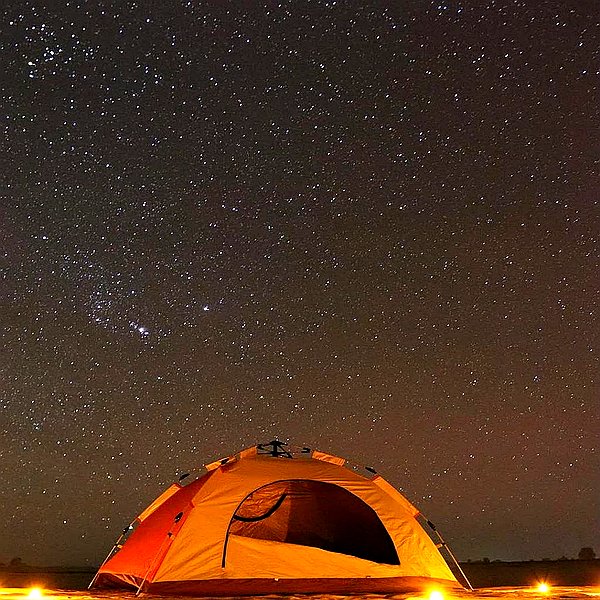
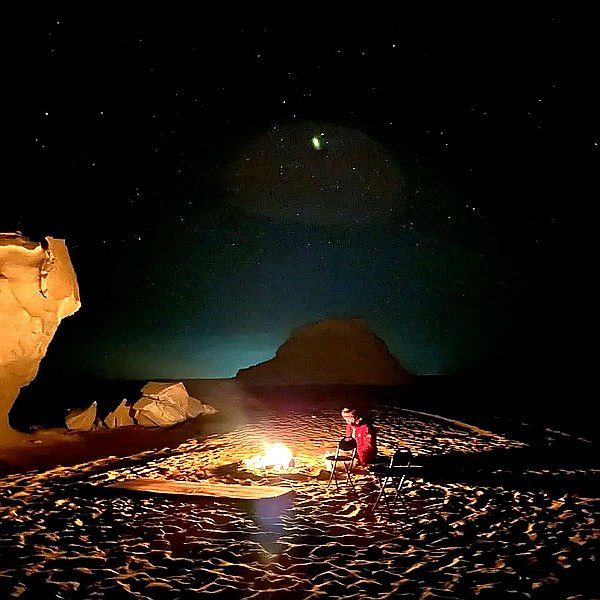
Can You Camp Among the Geological Formations?
Camping is one of the classic White Desert experiences, but it should be done through appropriate routes and according to current protected-area regulations.
A good desert camp gives travelers something daytime visitors miss.
As the light fades, the geology changes visually.
The chalk reflects sunset.
Then it becomes pale beneath the stars.
By sunrise, shadows reveal textures that were almost invisible the previous afternoon.
This makes an overnight trip especially rewarding for travelers interested in the landscape itself.
Read our White Desert Camping Guide and White Desert Camping Experience for practical planning.
Best Time to See the Geology
The rocks are there all year, but light and temperature change the experience considerably.
Morning
Excellent for texture and shadows.
Midday
Best for seeing the extreme whiteness of the chalk, although the light can look flat in photographs.
Sunset
Excellent for warm color and long shadows.
Night
The formations become silhouettes beneath the stars.
Sunrise
One of the best times to understand shape because low light emphasizes every ridge and cavity.
If geology and photography are both priorities, stay overnight rather than rushing through on a day visit.
Best White Desert Tour for Geology Lovers
You do not necessarily need a specialized scientific expedition.
But more time helps.
A classic overnight White Desert Tour From Cairo introduces the major landscapes efficiently.
A 3 Days White Desert Tour From Cairo allows more time to appreciate transitions between landscapes.
A 4 Days White Desert Tour From Cairo works even better for travelers who want slower exploration and photography.
And travelers who want to understand the terrain on foot should consider the 4 Days White Desert Trekking Expedition.
Walking changes the way you notice geology.
From a vehicle, you see formations.
On foot, you see textures.
Can You See White Desert Geology on a 2-Day Tour?
Yes.
The classic two-day route can introduce you to a remarkable range of landscapes, especially when combined with the Black Desert, Crystal Mountain, Agabat, and the White Desert itself.
However, two days gives you an overview.
If geology or photography is one of the main reasons for traveling, three or four days provides more time to stop, walk, photograph, and understand transitions.
See our White Desert Itinerary: 2 Days vs 3 Days vs 4 Days for a detailed comparison.
White Desert Geology for Photographers
Understanding the geology helps improve photography.
Instead of photographing only famous shapes, start looking for geological processes.
Photograph:
- Undercutting at the base of mushroom rocks
- Layers within formations
- Fractures
- Wind-polished surfaces
- Pitted chalk
- Sand collecting around pedestals
- Eroded cliffs
- Contrasting rock types
- Chalk against golden dunes
This gives you a visual story rather than another collection of postcard photographs.
White Desert Geology for Families
The White Desert can be a brilliant natural science classroom.
Children can understand geological ideas surprisingly easily when they can actually touch the concepts visually.
Ask them:
Why is that rock narrow at the bottom?
Why are these rocks white?
What happens when sand hits stone for thousands of years?
Why are there fossils in the desert?
How could an ocean once have existed here?
Suddenly geology stops being something inside a textbook.
For family-specific trip planning, see our White Desert Tour for Families.
White Desert Geology for Trekkers
Walking is arguably the best way to appreciate geological detail.
A vehicle naturally draws your attention toward large landmarks.
Trekking reveals:
- Small fossils
- Sedimentary layers
- Surface textures
- Erosion patterns
- Wind ripples
- Changing rock types
- Minor formations
The slower pace makes transitions more obvious.
Our White Desert Trekking Expedition Egypt guide explains the experience in more detail.
Why the White Desert Is More Than an Instagram Destination
It is easy to reduce the White Desert to “weird mushroom rocks.”
The real story is much larger.
Those formations represent:
an ancient sea.
Microscopic marine organisms.
Tens of millions of years of sediment.
Changes in sea level.
Uplift.
Wet Saharan climates.
Lakes.
Running water.
Chemical dissolution.
Wind.
Sand.
And continued erosion.
That geological timeline is so vast that human history occupies only a tiny final fraction.
Understanding this does not make the landscape less magical.
It makes it more extraordinary.
A Simple Geological Timeline of the White Desert
Here is the story in simplified form.
More Than 60 Million Years Ago
Marine conditions dominate parts of the region.
Calcium-rich sediment and microscopic marine remains accumulate.
Late Cretaceous
Thick deposits associated with the Khoman Formation develop, including the white chalk now exposed around the White Desert.
Paleogene
Additional marine sediments—including chalk, shale, and limestone units—accumulate as environments and sea levels change.
Later Geological Periods
Uplift, erosion, and changing climates increasingly expose the sedimentary layers.
Wetter Saharan Phases
Running water, lakes, groundwater, and chemical dissolution reshape the terrain. Ancient playa deposits preserve evidence of wetter conditions.
Increasing Aridity
Wind and sand become increasingly important erosional agents.
Today
The remaining chalk stacks, cliffs, mushrooms, pedestals, and valleys form the White Desert landscape.
And erosion continues.
How to Experience the White Desert Responsibly
The geology took millions of years to create.
Treat it accordingly.
When visiting:
- Do not carve names into rocks.
- Do not remove fossils.
- Do not collect chalk formations.
- Do not intentionally break fragile structures.
- Stay with experienced desert guides.
- Follow protected-area regulations.
- Take all rubbish out.
- Camp responsibly.
- Avoid unnecessary driving over sensitive areas.
The best travelers leave photographs and footprints—not damage.
Plan a Geology-Focused White Desert Trip
A strong route for someone interested in geology should include contrasting landscapes rather than only the famous white formations.
A typical sequence might include:
Bahariya Oasis
Gateway to the desert and an important geological region in its own right.
Black Desert
Dark hills and iron-rich or igneous geological material.
Crystal Mountain
Crystalline structures and contrasting rock textures.
Valley of Agabat
Large-scale erosion and dramatic pale landforms.
White Desert
Chalk stacks, mushroom formations, karst, fossils, and dune interactions.
Overnight Camp
Observe how the formations change under sunset, stars, moonlight, and sunrise.
That route turns a desert safari into a journey through geological history.
Book a White Desert Tour From Cairo
The easiest way to experience this landscape is with experienced Western Desert guides and appropriate 4×4 transportation.
For a classic first experience, explore the White Desert Tour From Cairo.
For more time in the landscape, choose the 3 Days White Desert Tour From Cairo.
Travelers wanting a deeper journey can explore the 4 Days White Desert Tour From Cairo.
Before booking, you can also compare the wider options in our Best White Desert Egypt Tours guide.
Final Thoughts: How Was Egypt's White Desert Really Created?
The White Desert was not created by one event.
It is the result of layers of geological history stacked on top of one another.
First came the sea.
Marine organisms and calcium-rich sediments accumulated on its floor.
Those sediments became chalk.
The sea disappeared.
The land was exposed.
Water dissolved and carved parts of the carbonate landscape.
Wetter climates produced runoff and lakes.
Wind carried sand across exposed surfaces.
Softer material disappeared faster.
Harder remnants remained.
And slowly, ordinary layers of chalk became extraordinary shapes.
Egypt’s Environmental Affairs Agency now recognizes the White Desert as an important karst landscape and an open-air geological museum, while modern geological research identifies its famous white rocks largely with Late Cretaceous Khoman chalk deposited in a marine environment.
So when you look at a mushroom-shaped rock in the White Desert, you are not simply seeing an unusual desert sculpture.
You are looking at the remains of an ancient seabed.
A piece of ocean history standing in the Sahara.
And the sculpture is still being made.
Wind is still blowing.
Sand is still moving.
Rock is still weathering.
Pieces will eventually fall.
New surfaces will appear.
The White Desert travelers see today is only one moment in a geological story that began tens of millions of years ago and has not yet ended.
For more detail on what you will actually see during a visit, continue with our White Desert Rock Formations, Crystal Mountain Egypt, Black Desert Egypt, and Valley of Agabat Egypt guides.
3 Days Siwa Oasis Tour from Cairo – Great Sand Sea Safari & Oasis Experience
3 Days / 2 Nights Siwa Oasis Tour from Cairo This 3-day Siwa Oasis tour from Cairo is perfect for…
5 Days Siwa Oasis Tour from Cairo – Marsa Matrouh & Great Sand Sea Safari
🏜️ Cairo – Marsa Matrouh – Siwa – Cairo 5 Days / 4 Nights Siwa Oasis Tour from Cairo This…
7 Days Siwa & White Desert Tour from Cairo – Ultimate Western Desert Expedition
🏜️ 7 Days Siwa & White Desert Tour from Cairo North Coast – Siwa – Bahariya – White Desert (7…
White Desert & Whale Valley Tour from Cairo – 3 Day Desert & Fossil Adventure
🏜️ White Desert & Whale Valley Tour from Cairo Cairo – Bahariya – White Desert – Wadi El Hitan –…
Western Desert Tour from Cairo to Luxor – 5 Day Multi-Oasis Desert Expedition
5 Days / 4 Nights Multi-Oasis Expedition This Western Desert Tour from Cairo to Luxor is a full desert expedition…
6 Days Western Desert Expedition – Cairo to Luxor Oasis & Desert Safari
🏜️ 6 Days Western Desert Expedition Cairo → Fayoum → White Desert → Dakhla → Kharga → Luxor This 6-day…
8 Days Western Desert Expedition – Kharga to Cairo Oasis & Desert Adventure
🏜️ 8 Days Western Desert Expedition (Kharga to Cairo) Kharga → Dakhla → Farafra → White Desert → Djara Cave…
White Desert Egypt Tour TripAdvisor reviews
A Serious Adventure, Done Properly - Having guides who were actually raised in the desert changed the whole experience for me. Their stories and knowledge weren't things you could get from simply reading a guidebook. You... read more could feel that this wasn't just a workplace for them—it was home.
August 28, 2026
A Two-Day Trip . - We went on a two-day, one-night desert trip with White Desert Egypt Tour, and we were extremely happy with everything the company provided throughout the journey. The itinerary was wonderful,... read more and the food was delicious, prepared with great care and love. We really enjoyed talking with the tour team, as they were very cheerful and friendly.
They gave us an amazing experience in the desert and made us love Egypt even more. In addition to visiting the beautiful landscapes, we enjoyed listening to Bedouin songs in the evening and joining in with their traditional Bedouin dancing. The atmosphere was truly wonderful.
We were very happy to have them as our guides during the trip, and we highly recommend experiencing a tour with White Desert Egypt Tour for a wonderful experience in Egypt.
Advice: Book your trip and enjoy the experience. There is no need to worry about anything. just enjoy the journey and every moment of it.
August 6, 2026
Nice and Relax - Nice and relaxed desert trip, mohammed is a great tours guide and knows a lot, the private tours is something i recommend, because it gives a good and relax experience,... read more as you want.
October 13, 2026
Frequently Asked Questions About White Desert Egypt Geology
Explore the geology of Egypt’s White Desert, from ancient marine chalk and fossils to mushroom formations, karst landscapes, Crystal Mountain, the Black Desert, Valley of Agabat and millions of years of erosion.
The White Desert formed through a long geological process that began when this part of Egypt was covered by an ancient sea. Calcium-rich marine sediments accumulated on the seabed and eventually became thick layers of chalk and limestone. After the sea retreated, erosion, water dissolution, wind, sand, and changing climates gradually shaped the exposed rock into the formations seen today.
Yes. Geological evidence shows that parts of Egypt’s Western Desert were covered by marine environments tens of millions of years ago. The chalk exposed around the White Desert formed from sediments deposited on an ancient seabed.
Much of the characteristic white chalk belongs to the Late Cretaceous period, particularly the Maastrichtian stage, roughly 72 to 66 million years ago.
The landscape is white because much of the exposed rock consists of pale chalk and limestone rich in calcium carbonate. Under strong sunlight, these rocks can appear almost snow-white.
The White Desert is especially known for chalk and chalky limestone associated with the Khoman Formation. The wider Farafra region also contains limestone, shale, marl, sandstone, and other sedimentary rocks.
The Khoman Formation is a Late Cretaceous geological rock unit found in parts of Egypt. Around Farafra, it contains thick deposits of pale chalk and chalky limestone responsible for much of the White Desert’s distinctive appearance.
Chalk is a soft form of limestone composed mainly of calcium carbonate. Much marine chalk forms from the microscopic calcium-rich remains of organisms that accumulated on ancient seafloors.
Yes. Tiny marine organisms contributed calcium-carbonate-rich material to ancient seabed sediments. Over immense periods, these deposits were compacted into the chalk that forms much of the White Desert today.
The Tethys was a large ancient marine system that existed between major continental landmasses. Marine environments connected with the Tethyan realm covered parts of North Africa during periods when the White Desert’s sediments were being deposited.
The formations developed through differential erosion, wind abrasion, chemical weathering, water dissolution, fractures, gravity, and changes in climate. Softer or more exposed parts of the rock eroded faster than more resistant sections.
Mushroom-shaped rocks form when the lower part of a formation erodes faster than the upper section. Wind-driven sand is often concentrated near ground level, which can gradually narrow the base while leaving a wider top.
No. The mushroom formations are completely natural. Their unusual shapes are the result of erosion and weathering acting over very long periods.
No. Wind is an important force, but it is not the only one. Water erosion, chemical dissolution, ancient wetter climates, fractures in the rock, gravity, and differences in rock hardness also contributed to the landscape.
Differential erosion occurs when different parts of a rock erode at different speeds. This can happen because some layers are harder, more protected, or less fractured than others.
Karst is a landscape created when water slowly dissolves soluble rocks such as limestone or chalk. Karst processes can create pits, cavities, enlarged fractures, caves, depressions, and irregular surfaces.
Yes. The White Desert is recognized for important karst and paleokarst features, making it one of Egypt’s notable geological landscapes.
No. The Sahara has experienced repeated periods of wetter and drier climate. Evidence around Farafra shows that water, lakes, groundwater, and runoff played important roles during earlier climatic periods.
Geological evidence indicates that temporary lakes existed in parts of the Farafra region during wetter phases of Saharan history. Ancient lake sediments have been identified above older chalk deposits.
Yes. The broader White Desert and Farafra region contain fossils, including marine microfossils that help geologists understand the age of the rocks and the ancient environment in which they formed.
They are found there because the region was once beneath or beside ancient seas. When marine organisms died, their remains became incorporated into seabed sediments that later turned into rock.
No. The White Desert is a protected landscape, and visitors should leave fossils, rocks, chalk, and other geological material where they find them.
You should not remove chalk, fossils, crystals, or pieces of rock from the protected area. Take photographs instead and leave geological material in its natural location.
The White Desert’s characteristic chalk dates broadly to a time when dinosaurs still existed elsewhere on Earth. However, the White Desert itself is primarily known for marine sedimentary geology rather than as a major dinosaur fossil site.
The wider Western Desert does have important dinosaur fossil sites, particularly around Bahariya Oasis. However, this is separate from the White Desert’s best-known chalk formations and marine fossils.
Natural erosion creates complex and irregular shapes, and the human brain tends to recognize familiar forms in them. This phenomenon, called pareidolia, is why visitors often see rabbits, chickens, faces, camels, or other shapes in the rocks.
Their narrow bases and wider tops are created by uneven erosion. Sand carried close to the ground can wear away the lower section more quickly than the upper rock.
Long-term exposure to wind-driven sand can polish rock surfaces. Other formations may remain rough or develop pits because of differences in rock structure, moisture, fractures, and exposure.
Holes and cavities may form through chemical dissolution, weathering, erosion, and the enlargement of natural fractures in the chalk and limestone.
Yes. Wind, sand, temperature changes, occasional moisture, gravity, and erosion continue to alter the formations today.
Yes. Erosion can gradually weaken narrow or fractured formations until sections eventually break or collapse. This is a natural part of the landscape’s evolution.
There is no single erosion rate because each formation is different. Rock hardness, fractures, wind exposure, sand movement, shape, and moisture all influence how quickly it changes.
The chalk-covered ground and pale rock formations reflect strong sunlight, creating a bright white landscape that can resemble snow from a distance.
The famous white appearance comes from chalk and limestone rather than snow. The landscape can look especially snow-like under bright daylight or moonlight.
White chalk reflects surrounding light very effectively. During sunrise and sunset, the warm colors of the sky can make the formations appear cream, gold, orange, or pink.
The pale chalk reflects moonlight strongly, sometimes giving the formations an almost luminous appearance at night.
Crystal Mountain is a separate geological feature within the wider Western Desert route and contains prominent crystalline material. It looks very different from the soft white chalk formations of the White Desert.
Read our Crystal Mountain Egypt Guide for more detail.
Crystal Mountain is commonly visited on White Desert safari routes, but it represents a different geological feature from the classic chalk mushroom formations.
The Black Desert contains hills covered or composed partly of darker geological materials, including iron-rich rocks and igneous material such as dolerite in parts of the region.
Parts of the Bahariya region contain igneous rocks and evidence of older volcanic or intrusive geological activity, but describing the entire Black Desert simply as volcanic would be an oversimplification.
The White Desert is dominated visually by pale chalk and limestone, while the Black Desert contains much darker surface rocks and iron-rich or igneous materials. Their contrasting geology creates dramatically different landscapes.
The Valley of Agabat was shaped by long-term erosion acting on layered sedimentary rocks. Its cliffs, towers, and valleys illustrate erosion on a much larger scale than the smaller mushroom formations.
Read our Valley of Agabat Egypt Guide for more information.
It can look lunar because of its pale rocks and unusual formations, but the geology is completely different. The White Desert is a sedimentary terrestrial landscape shaped by marine deposition, water, wind, and erosion.
The White Desert is protected because of its extraordinary geological formations, fossils, karst features, desert ecosystems, wildlife, archaeological traces, and landscape value.
Egypt officially declared the White Desert a protected area in 2002.
Visitors should avoid climbing fragile formations unnecessarily. Many shapes are vulnerable to erosion and damage, and protected-area regulations should always be followed.
Yes, camping is one of the most popular ways to experience the landscape when arranged through appropriate desert operators and according to current protected-area regulations.
Read our White Desert Camping Guide for practical information.
It can be. Camping allows you to observe the formations during sunset, moonlight, sunrise, and low-angle light, when rock textures and shapes become especially visible.
Sunrise and sunset provide the strongest shadows and most dramatic colors. Midday reveals the extreme whiteness of the chalk but can create flatter photographs.
The cooler months are generally the most comfortable for walking, camping, photography, and extended desert exploration.
See our Best Time to Visit White Desert Egypt guide before planning your trip.
Yes. A classic two-day itinerary can introduce travelers to the Black Desert, Crystal Mountain, Valley of Agabat, and the famous White Desert formations.
Yes. Three days provide more time for walking, photography, geological stops, and observing the transition between different Western Desert landscapes.
Explore the 3 Days White Desert Tour From Cairo .
Yes. A four-day trip gives travelers more time to explore slowly, walk between formations, photograph different lighting conditions, and understand the changing geology of the region.
See the 4 Days White Desert Tour From Cairo .
Yes. Trekking lets travelers notice smaller geological details such as sedimentary layers, fossils, fractures, erosion patterns, surface textures, and wind-shaped formations that are easy to miss from a vehicle.
You can explore the 4 Days White Desert Trekking Expedition .
Yes. The landscape can be an excellent natural science experience for families because concepts such as erosion, ancient seas, fossils, sediment, and weathering can be seen directly in the environment.
Yes. The original chalk was deposited tens of millions of years ago, but erosion and weathering continue reshaping the exposed formations today.
The White Desert is not simply a collection of rocks shaped by wind. It records a much longer story involving an ancient sea, marine sedimentation, chalk formation, uplift, wetter Saharan climates, water dissolution, wind erosion, and millions of years of environmental change.
Most travelers travel from Cairo to Bahariya Oasis and continue into the Western Desert with an experienced local desert team and 4×4 vehicle.
For a classic first experience, see the White Desert Tour From Cairo .