White Desert Egypt Archaeology: Prehistoric Sites & Ancient Desert History
Most visitors come to Egypt’s White Desert for geology.
They want to see chalk formations, mushroom-shaped rocks, golden dunes, the Black Desert, Crystal Mountain, and a night beneath an impossibly clear sky.
But the landscape contains another story.
Long before desert camps and 4×4 safaris, people moved through this part of Egypt’s Western Desert.
They made stone tools.
Built hearths.
Processed wild plants.
Hunted animals.
Later communities kept sheep and goats.
They camped beside lakes and water sources that have long since disappeared.
Some left engravings on cave walls.
Others established more substantial seasonal settlements in places that today look almost incapable of supporting human life.
Egypt’s Environmental Affairs Agency describes the White Desert Protected Area as containing prehistoric antiquities and tools, including archaeological remains associated with caves, tombs and engraved surfaces, alongside its better-known geological and fossil heritage.
The archaeological story becomes even richer when we widen the view beyond the modern protected-area boundary to the Farafra Depression, Wadi El Obeiyid, Djara and the Egyptian Limestone Plateau.
Research in these landscapes has identified numerous prehistoric sites dating to wetter periods of the Sahara, when lakes, seasonal runoff and vegetation made human occupation possible.
This changes the way you see the desert.
A dry depression may once have held water.
A scatter of stones may be the remains of tool production.
A blackened patch may mark an ancient hearth.
A cave can preserve engravings made thousands of years before the first tourist arrived.
The White Desert and Farafra region are therefore not only natural landscapes.
They are also part of the human history of the Sahara.
This guide explores the archaeology and prehistoric history of the White Desert and wider Farafra region, including ancient climate, prehistoric camps, Hidden Valley, Wadi El Obeiyid, Djara Cave, rock art, stone tools, early food processing, pastoralism and the connections between the Western Desert and Nile Valley.
For the natural history behind the landscape, start with our White Desert Egypt Geology and White Desert Egypt Fossils guides.
3 Days Siwa Oasis Tour from Cairo – Great Sand Sea Safari & Oasis Experience
3 Days / 2 Nights Siwa Oasis Tour from Cairo This 3-day Siwa Oasis tour from Cairo is perfect for…
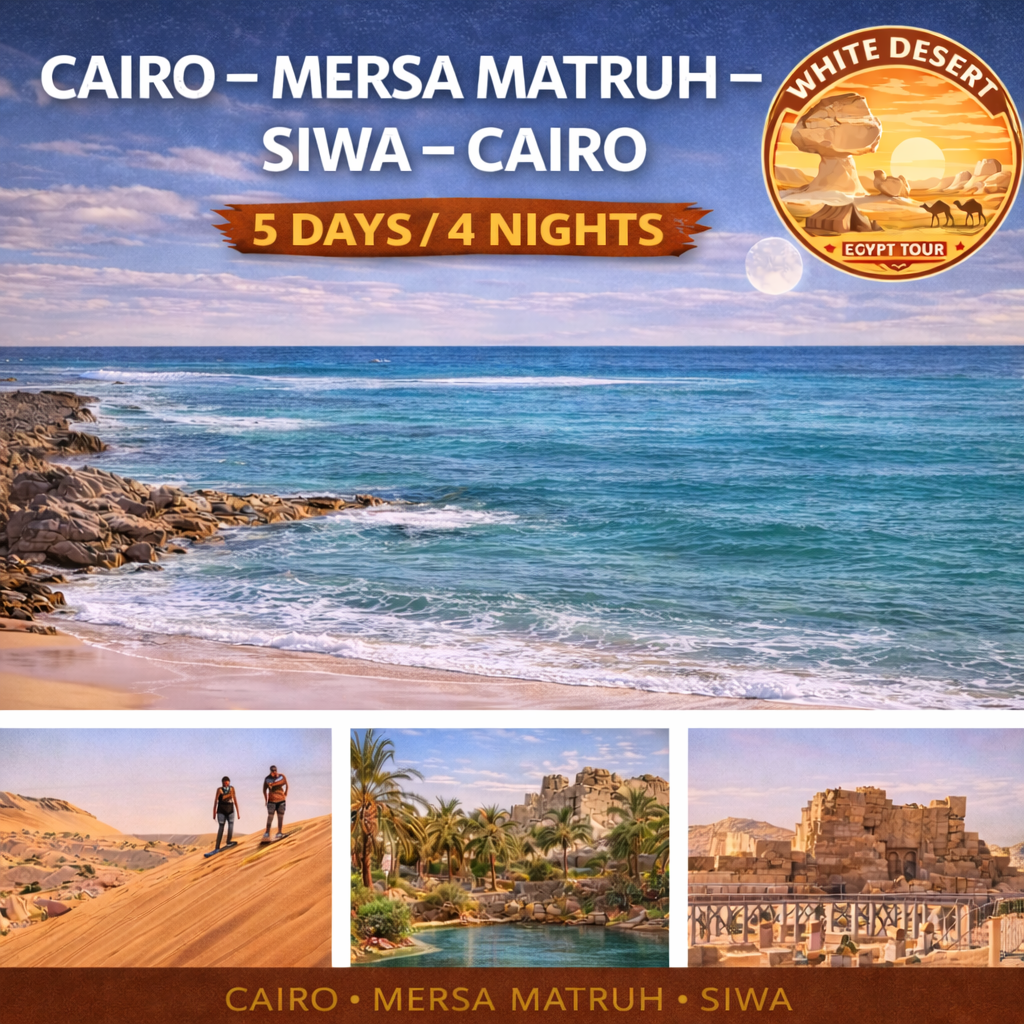
5 Days Siwa Oasis Tour from Cairo – Marsa Matrouh & Great Sand Sea Safari
🏜️ Cairo – Marsa Matrouh – Siwa – Cairo 5 Days / 4 Nights Siwa Oasis Tour from Cairo This…
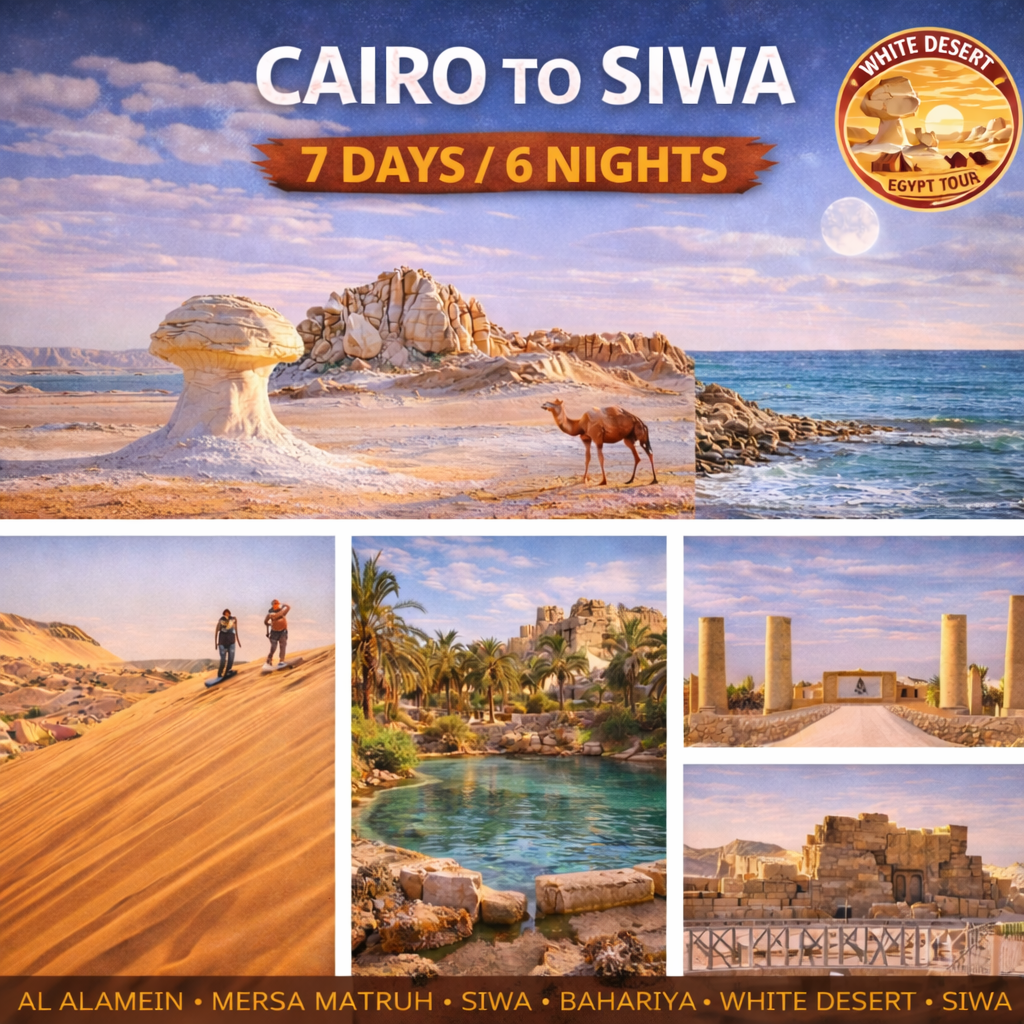
7 Days Siwa & White Desert Tour from Cairo – Ultimate Western Desert Expedition
🏜️ 7 Days Siwa & White Desert Tour from Cairo North Coast – Siwa – Bahariya – White Desert (7…
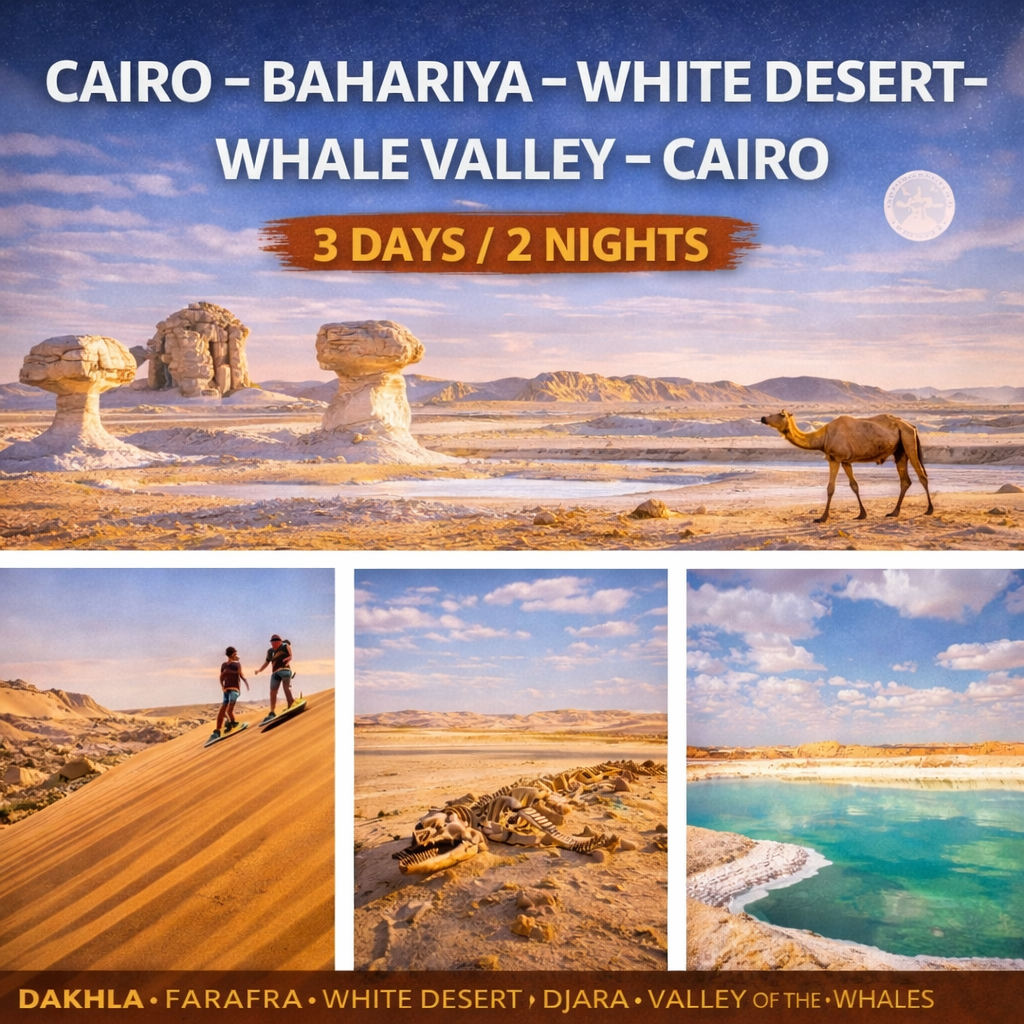
White Desert & Whale Valley Tour from Cairo – 3 Day Desert & Fossil Adventure
🏜️ White Desert & Whale Valley Tour from Cairo Cairo – Bahariya – White Desert – Wadi El Hitan –…
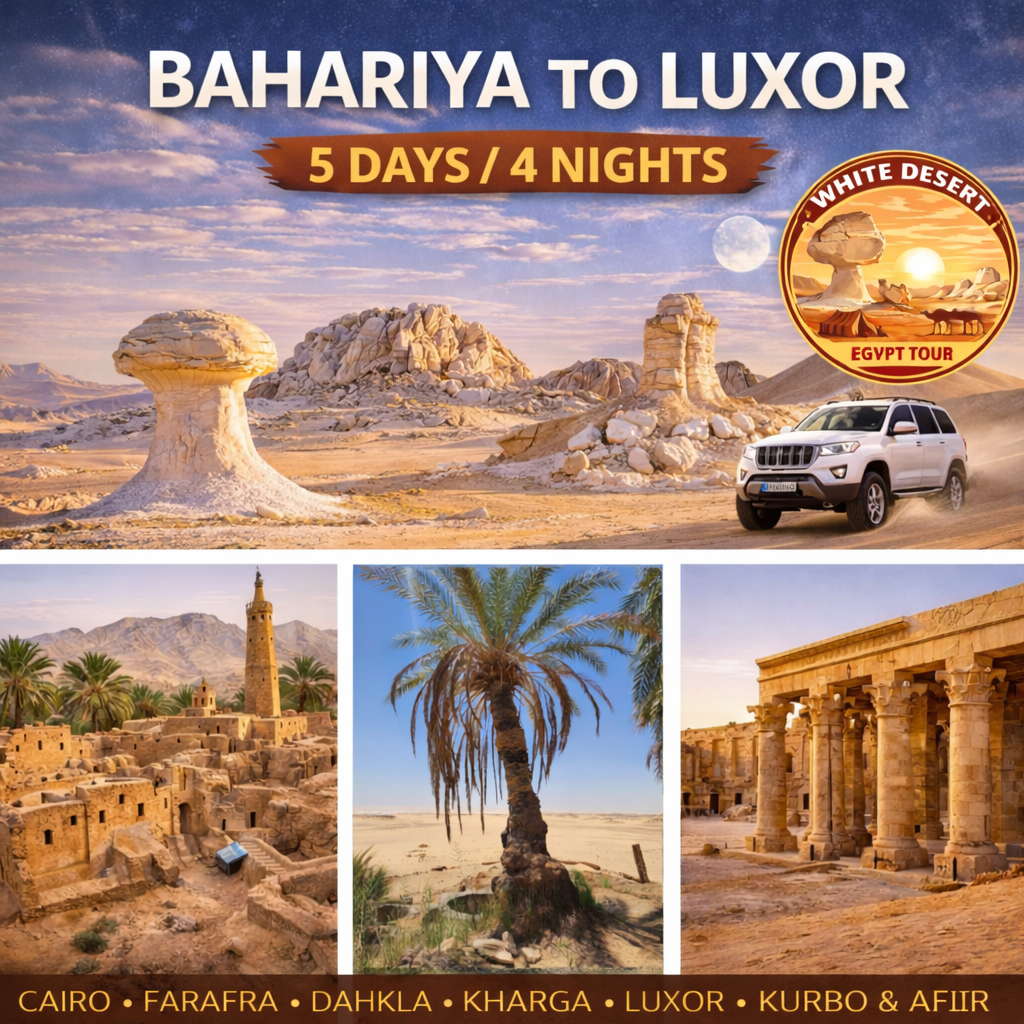
Western Desert Tour from Cairo to Luxor – 5 Day Multi-Oasis Desert Expedition
5 Days / 4 Nights Multi-Oasis Expedition This Western Desert Tour from Cairo to Luxor is a full desert expedition…
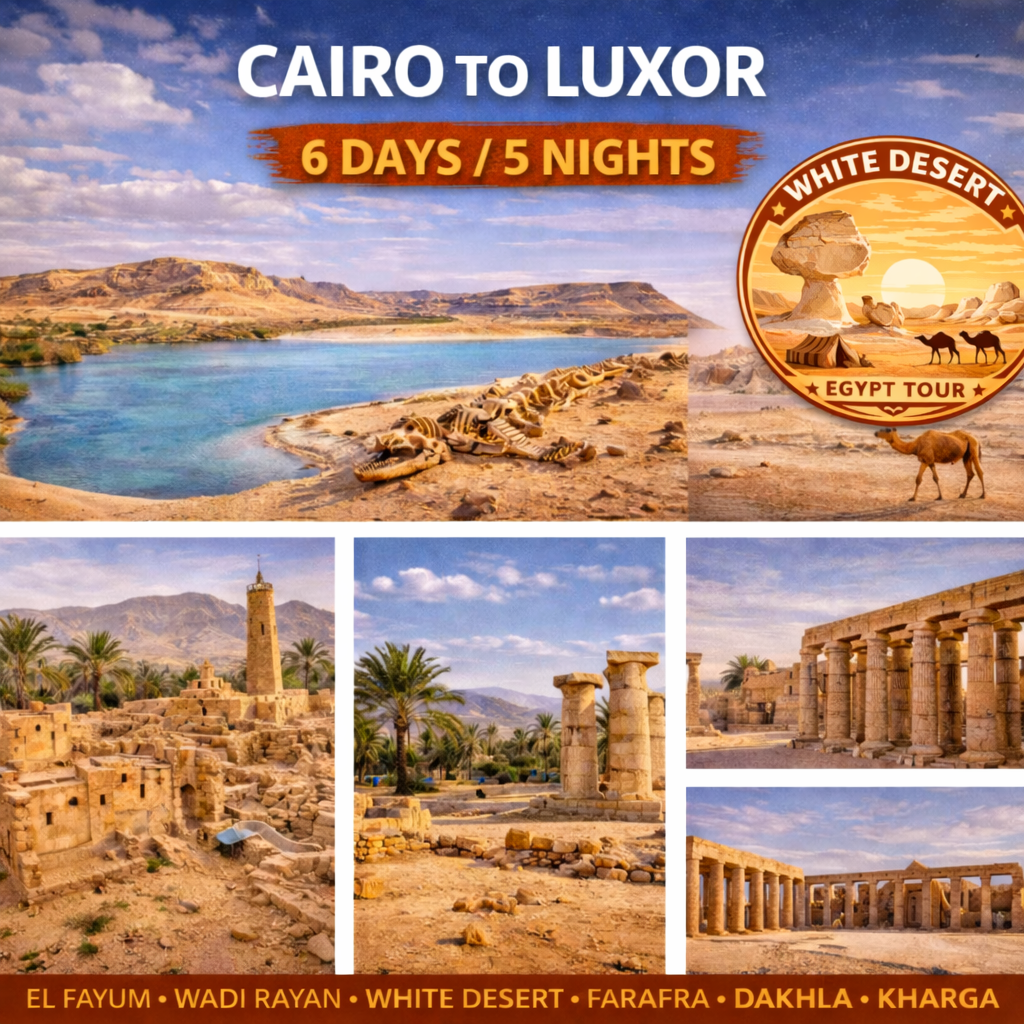
6 Days Western Desert Expedition – Cairo to Luxor Oasis & Desert Safari
🏜️ 6 Days Western Desert Expedition Cairo → Fayoum → White Desert → Dakhla → Kharga → Luxor This 6-day…
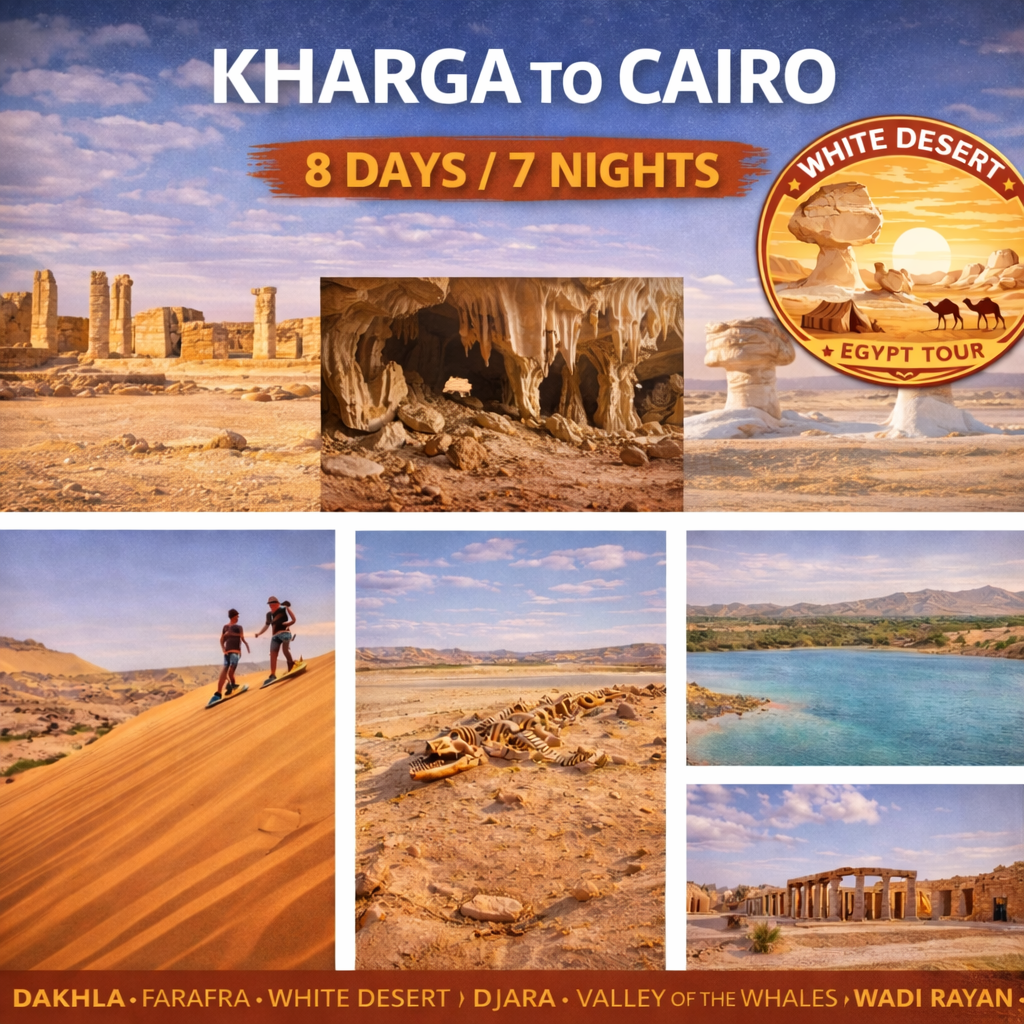
8 Days Western Desert Expedition – Kharga to Cairo Oasis & Desert Adventure
🏜️ 8 Days Western Desert Expedition (Kharga to Cairo) Kharga → Dakhla → Farafra → White Desert → Djara Cave…
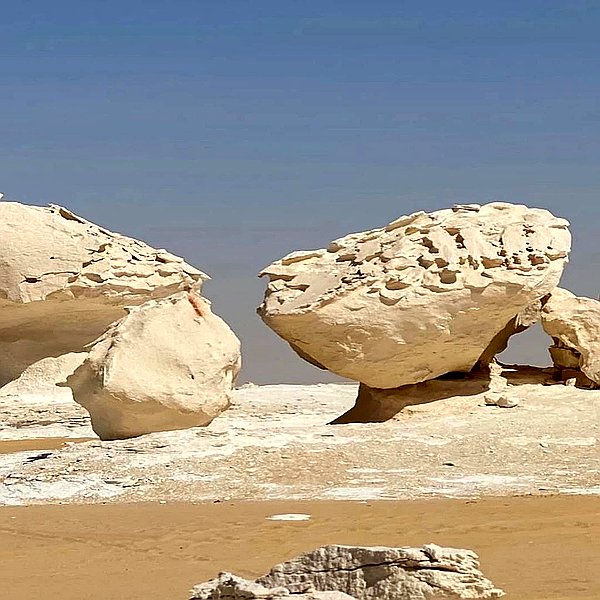
Quick Answer: Are There Archaeological Sites in the White Desert?
Yes.
The White Desert Protected Area and the wider Farafra region contain evidence of prehistoric human activity.
Egypt’s Environmental Affairs Agency specifically identifies prehistoric artifacts and archaeological remains among the protected area’s important resources.
In the broader Farafra and Limestone Plateau region, archaeological research has documented:
- Stone tools
- Hearths
- Prehistoric camps
- Seasonal settlements
- Hut or shelter foundations
- Grinding stones
- Rock engravings
- Cave occupation
- Animal remains
- Plant remains
- Evidence of hunting
- Evidence of early herding
- Ancient lake-side settlement
Some of the best-studied locations include Wadi El Obeiyid, Hidden Valley, Sheikh El-Obeiyid and Djara.
These places help archaeologists reconstruct how people survived in a Sahara that was once much wetter than it is today.
Important: The White Desert and Farafra Archaeology Are Not Exactly the Same Thing
This distinction matters.
The White Desert Protected Area is a specific protected landscape north of Farafra.
The archaeological record discussed by researchers extends across a much larger region that includes:
- Farafra Depression
- Wadi El Obeiyid
- Northern Plateau
- Egyptian Limestone Plateau
- Djara region
- Other desert basins and springs
So it would be inaccurate to say that every archaeological site mentioned in this guide lies inside the modern White Desert park.
Instead, think of them as parts of the wider prehistoric landscape surrounding the White Desert and Farafra Oasis.
This broader perspective is actually more useful.
Prehistoric communities did not organize their movements according to today’s tourism maps or protected-area boundaries.
They followed water.
Food.
Seasonal vegetation.
Animals.
And routes across the Sahara.
Why Would Prehistoric People Live in Such a Dry Place?
Because it was not always this dry.
Today, much of Egypt’s Western Desert is hyper-arid.
But during parts of the early and middle Holocene, the Sahara experienced significantly wetter climatic conditions.
Rainfall increased.
Seasonal water flowed across plateaus.
Shallow lakes developed in depressions.
Vegetation expanded.
Animals became more abundant.
And places that are nearly uninhabitable today became viable landscapes for mobile human communities.
Research at Djara has reconstructed a semi-arid environment with alternating wetter and drier conditions during the early and middle Holocene. Prehistoric sites were concentrated in areas where runoff and palaeochannels could provide freshwater after rainfall.
Farafra archaeology shows a similar relationship between human settlement and water.
Ancient camps frequently developed close to playas—temporary or seasonal lake basins—and springs.
Water explains almost everything.
The Sahara Was Once Greener
The idea of a “Green Sahara” can sound exaggerated.
It does not mean the entire Sahara became a tropical rainforest.
Instead, there were periods when rainfall and vegetation were much greater than today.
Depending on location and time, the landscape could contain:
- Seasonal lakes
- Grasslands
- Shrubs
- Trees
- Wet depressions
- Wildlife
- Grazing areas
These wetter conditions created corridors through regions that are now extremely difficult to cross without modern vehicles and stored water.
The archaeological evidence in Farafra records human groups repeatedly using those opportunities.
When water became available, people moved in.
When the climate became increasingly dry, occupation declined.
At Djara, researchers observed a reduction in radiocarbon dates and archaeological sites around 6300 BP, interpreting it as evidence of population decline connected with increasing aridity.
Climate did not simply influence prehistoric life.
It helped determine where human life was possible.
Archaeology and Ancient Lakes
One of the most important ideas in Farafra archaeology is the relationship between settlements and playas.
A playa is a low desert basin that can collect water after rainfall.
Today, many look completely dry.
In wetter periods, however, they could temporarily become shallow lakes.
Archaeologists have repeatedly found prehistoric activity around the edges of these former water bodies.
Why?
Because water attracted everything humans needed:
- Plants
- Animals
- Birds
- Raw materials
- Grazing opportunities
And, of course, people.
The relationship is so strong that archaeological surveys can sometimes use ancient lake geography to help predict where prehistoric camps may exist.
Wadi El Obeiyid: One of Farafra's Most Important Prehistoric Landscapes
Wadi El Obeiyid is one of the key areas in the archaeology of Farafra.
It is a large fossil valley associated with the northern part of the Farafra Depression.
Research there has revealed dense clusters of prehistoric sites, especially from the early and middle Holocene.
The landscape contained lake basins and seasonal water resources.
People established camps and more substantial occupations around them.
Researchers have found:
- Hearths
- Stone tools
- Grinding equipment
- Settlement structures
- Animal remains
- Plant remains
Together, these discoveries allow archaeologists to move beyond simply saying:
“people were here.”
They help reconstruct what those people actually did.
Hidden Valley: A Prehistoric Settlement in the Desert
One of the most important archaeological locations around Farafra is commonly called Hidden Valley.
The site lies within the Wadi El Obeiyid landscape.
Archaeological research describes a prehistoric settlement beside an ephemeral lake basin, with repeated occupation during the middle Holocene.
Hidden Valley is important because it contains much more than scattered stone tools.
Excavations have revealed evidence of organized living areas and repeated human activity.
The site helps researchers understand how prehistoric desert communities used:
- Water
- Plants
- Animals
- Stone resources
- Seasonal landscapes
Rather than simply passing through the Sahara, some groups appear to have stayed for meaningful periods when environmental conditions allowed.
Was Hidden Valley a Permanent Village?
The word “village” needs some care.
Archaeologists sometimes use the term to describe concentrations of structures and repeated settlement activity.
That does not necessarily mean people lived there permanently throughout the year in the same way modern residents inhabit a town.
Research suggests many Western Desert communities still used relatively mobile strategies.
Water availability changed.
Lakes dried.
Animal resources shifted.
Pasture moved.
People responded by moving too.
At Djara, researchers specifically concluded that environmental constraints probably required highly mobile subsistence strategies despite wetter conditions.
So prehistoric settlement existed on a spectrum.
Some camps were brief.
Others were repeatedly occupied.
Some became considerably more structured.
Sheikh El-Obeiyid
Another important prehistoric region is Sheikh El-Obeiyid.
Archaeological and geological research there has identified occupation ranging from Epipalaeolithic phases into the Saharan Pastoral Neolithic.
One study documented a settlement with approximately 30 circular or elliptical structures, together with hearths and stone-tool assemblages. Radiocarbon evidence places use of the village at roughly 7,900 years ago.
This is remarkable when you compare it with the modern landscape.
A place that now seems hostile and empty once supported groups building repeated structures close to water sources.
The desert preserves their footprints—not as footprints in sand, but as patterns of stone and sediment.
What Did Prehistoric Houses Look Like?
Do not picture stone temples.
These were practical structures built for people living within a mobile or semi-mobile desert economy.
Archaeological remains in the Farafra region include:
- Circular foundations
- Elliptical foundations
- Stone-lined living areas
- Hearths
- Low structural remains
Organic roofing or wall materials would usually disappear over thousands of years.
Stone survives.
That means archaeologists often reconstruct buildings from the foundations rather than from complete walls.
A ring of stones that looks insignificant to a tourist can therefore represent the outline of someone’s home thousands of years ago.
Prehistoric Hearths
Hearths are among the most valuable archaeological features in the Sahara.
Why?
Because people gathered around fire.
They cooked.
Processed plants.
Prepared animal foods.
Stayed warm.
And left behind charcoal.
Charcoal is especially useful because it can sometimes be radiocarbon dated.
This helps archaeologists determine when a site was occupied.
Farafra archaeological projects have documented large numbers of hearths, including clusters in the Hidden Valley area.
A blackened patch beneath desert sediment can become a timestamp.
Stone Tools in Farafra
Stone tools are among the most common surviving remains of prehistoric communities.
Wood.
Leather.
Plant fibers.
Food.
Clothing.
These disappear.
Stone does not.
Archaeologists in the Farafra region have documented a wide variety of stone artifacts from different periods.
These include tools associated with:
- Cutting
- Scraping
- Hunting
- Plant processing
- Other everyday activities
Different tool styles also help archaeologists distinguish periods and technological traditions.
At Sheikh El-Obeiyid, for example, researchers identified changes from early blade and microlithic industries toward later assemblages including bifacial tools and projectile points.
Technology changed as communities changed.
What Are Microliths?
Microliths are small stone tools or blade segments.
They could be mounted into wooden or bone shafts to create more complex tools.
A single tiny stone blade might therefore form part of:
- A hunting weapon
- Cutting tool
- Composite implement
Finding many microliths at a site can provide clues about technological traditions and activities.
To a casual traveler, they may simply look like sharp pieces of stone.
To an archaeologist, shape and manufacturing technique matter enormously.
Grinding Stones and Plant Processing
One of the most fascinating discoveries from Farafra is evidence of plant processing.
Researchers studying grinding equipment from Hidden Valley found direct microscopic evidence that stone tools were used to process wild plants during the Holocene Sahara.
This tells us something very human.
People were not simply hunting animals across an empty landscape.
They understood local vegetation.
They collected plant foods.
They processed seeds and other resources.
They used specific tools to turn raw plants into food.
That adds another dimension to prehistoric desert life.
Did People Farm in Prehistoric Farafra?
The safest answer is nuanced.
Some earlier research discussed possible increasing plant management and exploitation of cereal resources in Farafra.
Later studies have produced strong evidence for intensive wild plant processing.
Researchers have also identified sheep and goat herding in the middle-Holocene archaeological record.
So prehistoric subsistence was not one simple thing.
Different communities and phases involved combinations of:
- Hunting
- Gathering
- Plant processing
- Herding
The transition toward food production occurred gradually and unevenly.
We should avoid imagining one moment when everyone suddenly “became farmers.”
Sheep and Goats in the Western Desert
Evidence from Wadi El Obeiyid and surrounding Farafra sites suggests sheep and goat herding formed part of later prehistoric economies.
This matters because pastoralism transformed how people used desert landscapes.
Livestock can convert vegetation humans cannot directly eat into:
- Meat
- Milk
- Other resources
But herds also require water and grazing.
Pastoral groups therefore needed detailed environmental knowledge.
Where had it rained?
Where was grass available?
Which lake still held water?
Which route connected one usable area to the next?
Mobility became survival strategy.
Hunting in Prehistoric Farafra
Hunting remained important even as pastoralism developed.
The greener Sahara supported animals that are absent or much rarer in the region today.
Animal remains recovered from archaeological sites help researchers reconstruct both ancient diet and environment.
Different species reveal information about:
- Vegetation
- Water
- Climate
- Hunting strategy
Archaeology and environmental reconstruction therefore reinforce one another.
Human bones and tools tell one part of the story.
Animal remains and lake sediment tell another.
Djara Cave: One of the Most Fascinating Archaeological Sites in the Western Desert
Djara Cave is one of the most visually impressive places connected with the prehistoric archaeology of this region.
It lies on the Egyptian Limestone Plateau roughly between the Nile Valley and Farafra Oasis.
Djara is both:
- A geological cave
- A prehistoric archaeological site
Its interior contains limestone cave formations such as stalactites and stalagmites.
But researchers have also documented prehistoric occupation and an important collection of incised rock art.
That combination makes Djara exceptional.
Geology created the cave.
Climate made human occupation possible.
People then transformed part of the cave into a cultural space.
Read our dedicated Djara Cave Egypt Guide for the complete travel experience.
Was Djara Cave Used by Prehistoric People?
Yes.
Archaeological excavation inside Djara Cave identified occupation deposits including an ash-rich layer.
Radiocarbon measurements from material inside the cave produced dates broadly around 7000–6200 BC for this occupation phase.
This places human activity inside Djara during the early-to-middle Holocene, when the surrounding desert environment was significantly wetter than it is today.
The cave may have provided:
- Shelter
- Shade
- A landmark
- A gathering place
- Protection from weather
Its rock art indicates that it also carried meaning beyond simple physical shelter.
Djara Cave Rock Art
Djara contains one of the notable prehistoric rock-art assemblages of Egypt’s northern Western Desert.
Researchers describe a rich repertoire of incised images carved into the cave walls.
This is unusual.
Much Saharan rock art is found on open rock faces or shelters.
Djara places its engravings inside a cave environment.
The physical setting matters.
Entering the cave changes light.
Sound changes.
Temperature changes.
The walls become enclosed spaces rather than open landscape.
Researchers studying the art emphasize that the cave itself likely influenced where prehistoric artists placed images.
What Does the Djara Rock Art Show?
Djara’s carved images include human and animal figures.
The exact interpretation of prehistoric rock art is difficult.
We can identify shapes.
We can document their location.
We can compare styles.
But knowing exactly what they meant to their creators is far harder.
Possible functions of prehistoric rock art can include:
- Storytelling
- Group identity
- Ritual
- Memory
- Communication
- Symbolic relationships with animals or landscape
But researchers need evidence before assigning a specific meaning.
Good archaeology accepts uncertainty.
Not every ancient image needs a dramatic mystical explanation.
Is Djara Cave Inside the White Desert?
Not in the simple sense tourists sometimes assume.
Djara lies on the Egyptian Limestone Plateau in the broader Western Desert and is generally reached through a deeper multi-day desert expedition.
It is not simply another stop beside the classic White Desert formations.
That is why your dedicated 3 Days White Desert & Djara Cave Safari uses a longer route with substantial off-road driving.
The current itinerary combines Djara with:
- Bahariya Oasis
- Black Desert
- El Haize
- Valley of Agabat
- White Desert
- Crystal Mountain
making it particularly relevant for travelers interested in both archaeology and natural history.
Djara and Connections With the Nile Valley
One of the most interesting questions in Western Desert archaeology is:
Were prehistoric desert communities isolated?
Evidence suggests they were not.
Researchers at Djara discovered shells belonging to a Nile freshwater bivalve, indicating contact or movement between the Djara region and the Nile Valley.
Djara lies roughly between Farafra and the Nile.
That makes its location especially important.
The site may have formed part of wider systems of movement linking:
- Western Desert
- Oases
- Nile Valley
A shell can therefore tell a story about human travel.
Farafra as a Crossroads
The geography of Farafra makes it important for understanding movement through the Western Desert.
Researchers have explicitly investigated the oasis as a potential communication zone connecting:
- Nile Valley
- Central Sahara
- Other Western Desert oases
Farafra offered something essential:
water.
During wetter periods, additional lakes and seasonal sources expanded the usable landscape.
When conditions became more arid, permanent oases became even more important as refuges.
This pattern helps explain why oasis settlements remained strategically significant throughout later Egyptian history.
Did Ancient Egyptians Cross the Western Desert?
Yes.
Long after the prehistoric periods discussed above, Egypt’s oases participated in wider networks of travel and exchange.
Desert routes connected different oases and linked them with the Nile Valley.
The full history stretches far beyond the White Desert itself, involving places such as:
- Bahariya
- Farafra
- Dakhla
- Kharga
- Siwa
These were not isolated dots.
They were nodes in desert networks.
Camels became especially important in later periods, but human movement across the Western Desert is far older than camel caravans.
Prehistoric archaeology demonstrates that people crossed and occupied these landscapes thousands of years earlier.
Prehistory vs Pharaonic History
Travelers often think all ancient Egyptian archaeology is Pharaonic.
It isn’t.
The prehistoric archaeology of Farafra is much older than many famous Egyptian monuments.
The Great Pyramid of Giza was constructed around the third millennium BC.
Some Western Desert archaeological sites preserve human activity thousands of years before that.
That means the story of Egypt does not begin with pyramids.
It begins with much earlier human communities adapting to landscapes, climate and resources.
The Western Desert preserves part of that deeper story.
Why Isn't White Desert Archaeology as Famous as the Pyramids?
Visibility.
A pyramid is obvious.
A prehistoric hearth is not.
A temple has walls, columns and inscriptions.
A Stone Age campsite may survive as:
- Scattered tools
- Charcoal
- Grinding stones
- Foundations
- Animal bones
Without archaeological explanation, a visitor may walk straight past it.
This makes desert archaeology easy to underestimate.
But scientifically, these modest remains can answer extremely important questions about:
- Climate adaptation
- Human mobility
- Food production
- Pastoralism
- Sahara–Nile connections
Monuments tell us about rulers.
Small camps often tell us about ordinary human survival.
What Happened When the Sahara Dried?
Increasing aridity gradually transformed the Western Desert.
Lakes disappeared.
Vegetation contracted.
Animal communities changed.
Routes between water sources became more difficult.
Places capable of supporting settlement became fewer.
At Djara, archaeological research links decreasing occupation after the Holocene humid phase with environmental drying.
This likely forced communities to concentrate increasingly around reliable water sources.
Major refuges included:
- Nile Valley
- Oases
- Other persistent water sources
Climate therefore influenced population geography on a huge scale.
Archaeology as Evidence of Climate Change
Archaeological sites can act as climate evidence.
Suppose archaeologists find repeated settlements in a place with no water today.
That raises a question.
How could people survive there?
Then geology reveals an ancient lake.
Plant remains indicate vegetation.
Animal bones indicate grazing wildlife.
Hearths indicate repeated occupation.
Suddenly, archaeological and environmental evidence support each other.
The people prove that the environment must once have been more habitable.
The sediments explain why.
This interdisciplinary approach is one of the strengths of Farafra research.
Archaeology and White Desert Geology
The archaeology cannot be separated from geology.
Geology created:
- Basins
- Plateaus
- Springs
- Limestone caves
- Raw material for tools
Climate then determined whether those geological features contained water or vegetation.
People adapted to that landscape.
For example:
A depression becomes a lake.
Humans camp beside it.
They build hearths.
The climate dries.
The lake disappears.
Wind covers the campsite.
Thousands of years later, archaeologists uncover the hearth.
One landscape contains every stage of the story.
Read our White Desert Egypt Geology guide for the physical processes behind that environment.
Archaeology and White Desert Fossils Are Not the Same Thing
Another useful distinction:
Fossils relate to ancient life over geological timescales.
Archaeology focuses on humans and human activity.
A marine fossil from the White Desert may be tens of millions of years old.
A prehistoric stone tool may be several thousand years old.
Both are “old” from a human perspective.
But the timescales are radically different.
Our White Desert Egypt Fossils guide explores the ancient marine story separately.
Archaeology and Modern White Desert Wildlife
Human adaptation also depended on animals and plants.
Prehistoric communities hunted wild animals and gathered vegetation that depended on wetter conditions.
Today, the ecosystem is dramatically more arid.
Modern wildlife includes desert-adapted animals such as foxes, rodents, birds and reptiles.
Comparing ancient food remains with modern desert wildlife shows just how much the environment has changed.
Read White Desert Egypt Wildlife for the modern ecological picture.
Can Tourists See Archaeological Remains in the White Desert?
Sometimes—but do not expect a conventional archaeological attraction with ticket gates and labelled monuments.
Many prehistoric remains are subtle.
Some are remote.
Some are scientifically sensitive.
Some should not be approached without appropriate guidance.
Djara Cave is the most obvious archaeology-related attraction travelers may encounter on a dedicated expedition because its cave environment and rock art make the prehistoric dimension more visually understandable.
Other archaeological sites are better thought of primarily as research locations rather than tourist attractions.
Can You Pick Up Stone Tools?
No.
If you think you have found an artifact, leave it exactly where it is.
This is extremely important.
The scientific value of an artifact depends heavily on context.
Archaeologists need to know:
- Exact location
- Relationship to other objects
- Elevation
- Sediment
- Nearby hearths
- Geological setting
A stone tool in your hand becomes an object.
A stone tool left in context becomes data.
Do not remove it.
Why Archaeological Context Matters
Imagine finding a prehistoric blade.
You pick it up and put it in your backpack.
Now archaeologists no longer know exactly where it came from.
Perhaps it was beside a hearth.
Perhaps it was part of a tool-production area.
Perhaps twenty similar tools formed a pattern.
That spatial relationship is lost.
Archaeology is not treasure collecting.
It is the study of relationships.
Can You Touch Rock Art?
No.
Do not:
- Touch engravings
- Trace them with fingers
- Add water to improve contrast
- Scratch nearby surfaces
- Write names
- Use chalk
- Attempt rubbings
Rock art may have survived thousands of years.
Human contact can accelerate deterioration.
Photography is enough.
Can You Collect Pottery or Bones?
No.
Leave archaeological material where it is.
That includes:
- Pottery
- Bones
- Stone tools
- Shells
- Beads
- Grinding stones
- Worked stone
Even objects that appear insignificant may contribute to archaeological interpretation.
Protected desert landscapes are not souvenir shops.
Can You Visit Djara Cave Independently?
Djara is remote and should be treated as a desert expedition rather than a normal roadside attraction.
The route involves substantial travel across desert terrain.
For most visitors, a properly equipped 4×4 expedition with experienced Western Desert drivers is the sensible option.
Your current 3 Days White Desert & Djara Cave Safari is specifically designed around this deeper route.
Current access conditions and required permissions should always be confirmed before travel.
Is Djara Worth Adding to a White Desert Tour?
Yes, if archaeology, geology and remote exploration interest you.
A standard White Desert tour is excellent for:
- Chalk formations
- Black Desert
- Crystal Mountain
- Agabat
- Camping
Djara adds:
- Cave geology
- Prehistoric occupation
- Rock art
- A much more remote expedition feeling
The tradeoff is time.
Djara is better suited to a multi-day safari than a short overnight White Desert trip.
Read our White Desert & Djara Cave Safari Guide for the detailed comparison.
White Desert Archaeology for Families
Prehistory can make the desert fascinating for children.
Instead of saying:
“people lived here a long time ago,”
ask better questions.
Where did they find water?
What did they eat?
How did they make tools without metal?
How did they cross the desert without cars?
Why did they leave?
The landscape becomes a giant puzzle.
Combine archaeology with geology and children can connect:
rain → lake → plants → animals → people → drought → abandoned landscape
That is a surprisingly powerful way to understand human adaptation.
For practical family planning, see our White Desert Tour for Families.
White Desert Archaeology for Photographers
Archaeological photography requires a different mindset from landscape photography.
The most famous White Desert images are wide.
Archaeological details are often small.
Look for:
- Cave engravings
- Hearth structures
- Stone arrangements
- Relationship between site and landscape
- Ancient lake basins
- Cave entrances
Context matters.
A rock engraving photographed with part of the cave visible often tells a stronger story than an isolated close-up.
Never move artifacts to create a better photograph.
White Desert Archaeology for History Lovers
If Egyptian history is your main interest, the Western Desert gives you a completely different experience from Luxor or Giza.
There are no giant temple pylons.
No royal tomb filled with painted scenes.
No colossal statues.
Instead, you encounter the foundations of human history:
water.
food.
tools.
movement.
shelter.
survival.
This is Egypt before monuments became the main archaeological story.
A Simplified Timeline of Prehistoric Farafra
Earlier Stone Age Occupation
Archaeological work indicates much older human activity in the Farafra region, including evidence associated with Stone Age populations before the Holocene.
Recent research continues to investigate Middle Stone Age material in northern Farafra.
Early Holocene
As wetter conditions returned, mobile hunter-gatherer groups used water-rich locations and left stone-tool assemblages and camps.
Early to Middle Holocene
Djara and other areas supported repeated occupation during periods of greater rainfall and freshwater availability.
Middle Holocene
More structured settlements developed in parts of Farafra.
Hidden Valley, Wadi El Obeiyid and Sheikh El-Obeiyid preserve evidence of hearths, structures, plant processing, hunting and livestock herding.
Increasing Aridity
Lakes became less reliable.
Vegetation declined.
Occupation in many desert locations decreased.
People increasingly depended on permanent water sources and oasis refuges.
Later Historic Periods
Western Desert oases continued to participate in trade and communication networks linking different parts of Egypt and North Africa.
What Archaeology Tells Us About Climate Adaptation
The most important lesson from Farafra archaeology may be adaptation.
Prehistoric desert communities did not control climate.
They responded to it.
When rainfall increased:
they expanded into desert landscapes.
When lakes appeared:
they camped beside them.
When plants became available:
they gathered and processed them.
When pastoralism developed:
they moved animals through grazing landscapes.
When the Sahara dried:
settlement patterns changed again.
The archaeological record is therefore not simply a collection of artifacts.
It is a record of humans responding to environmental uncertainty.
Was Prehistoric Desert Life Primitive?
“Primitive” is not a useful way to describe it.
Survival in the Western Desert required sophisticated knowledge.
People needed to understand:
- Water availability
- Seasonality
- Animals
- Plants
- Stone resources
- Routes
- Weather
- Geography
A modern traveler can cross the White Desert because a vehicle carries fuel, water, GPS equipment, food and communications.
Prehistoric travelers had none of these.
Their survival depended on detailed environmental knowledge passed between generations.
That is sophistication of a different kind.
Why Farafra Archaeology Matters to the History of Egypt
The Nile Valley gets most of the attention in Egyptian archaeology.
Understandably.
But Egypt was never only the Nile.
The Western Desert influenced:
- Human migration
- Pastoral development
- Exchange
- Climate adaptation
- Communication
- Oasis settlement
Research in Farafra helps archaeologists understand how desert populations related to communities in the Nile Valley and across the Sahara.
This broadens Egyptian prehistory from a river story into a landscape story.
Is the White Desert an Open-Air Archaeological Museum?
In one sense, yes.
But unlike a museum, archaeological material is not always labelled or protected by glass.
That increases visitor responsibility.
The White Desert and Farafra landscape contains overlapping layers of heritage:
- Geological formations
- Fossils
- Wildlife
- Prehistoric archaeology
- Later human history
Egypt’s Environmental Affairs Agency explicitly includes prehistoric remains among the reasons the White Desert Protected Area is important.
Treat the landscape as heritage even when nothing is behind a barrier.
Responsible Archaeological Tourism
If you encounter archaeological material:
- Leave it in place.
- Do not collect stone tools.
- Do not remove pottery.
- Do not take bones.
- Do not touch rock art.
- Do not carve modern graffiti.
- Do not dig.
- Do not move stones.
- Follow your guide.
- Respect protected-area regulations.
One tourist taking one artifact may feel insignificant.
Multiply that behavior across years of tourism and an archaeological site can disappear piece by piece.
Best White Desert Tour for Archaeology Lovers
For the standard White Desert, a classic overnight trip introduces the main geological landscape.
But archaeology lovers should strongly consider more time.
Classic White Desert Tour
Best if you primarily want the major landscapes and one camping night.
Explore the White Desert Tour From Cairo.
3-Day White Desert Tour
Better if you want slower exploration and more time in the wider desert environment.
Explore the 3 Days White Desert Tour From Cairo.
White Desert & Djara Cave Safari
Best of these options if prehistoric rock art and cave archaeology are specifically important to you.
Explore the 3 Days White Desert & Djara Cave Safari.
Djara Cave Safari vs Standard White Desert Tour
Choose the standard White Desert tour if you want:
- Shorter trip
- Famous chalk formations
- One-night camping
- Black Desert
- Crystal Mountain
- Valley of Agabat
Choose the Djara Cave expedition if you want:
- Longer adventure
- Prehistoric rock art
- Cave formations
- More remote terrain
- Two camping nights
- Deeper Western Desert exploration
Neither is automatically better.
They answer different travel goals.
How Archaeology Changes the White Desert Experience
Without archaeology, you may see:
an empty desert.
With archaeology, you start seeing questions.
Was this depression once filled with water?
Could people have camped here?
Where would they find stone for tools?
Which route connected this landscape to the Nile?
How different did the Sahara look 8,000 years ago?
Those questions turn scenery into history.
The White Desert Is Not Timeless
Deserts often feel timeless because modern human development is scarce.
But the White Desert has changed continuously.
Millions of years ago:
marine environments created the chalk.
Thousands of years ago:
wetter climates allowed human occupation.
Later:
increasing aridity transformed settlement patterns.
Today:
4×4 vehicles cross the same landscape.
The place has never been frozen in time.
It is layered time.
Geological.
Environmental.
Human.
Plan a White Desert Archaeology-Focused Journey
A strong natural-history and archaeology route could include:
Bahariya Oasis
Gateway to the White Desert and an important historical landscape.
Black Desert
For geological contrast.
Valley of Agabat
For understanding erosion and ancient landscape formation.
White Desert
For geology, fossils, protected natural heritage and prehistoric context.
Djara Cave
For cave formations and prehistoric rock art.
Desert Camping
For experiencing the scale and remoteness that shaped human survival.
This combines millions of years of natural history with thousands of years of human history.
Combine Archaeology With the Natural History Cluster
If you want to understand the White Desert properly, read the landscape in this order:
- Geology
How was the physical desert created?
- Fossils
What lived here when ancient seas covered the region?
- Archaeology
How did humans later use the landscape during wetter Saharan periods?
This guide.
- Wildlife
What survives in today’s hyper-arid ecosystem?
Together, those four topics tell a far deeper story than a simple list of tourist attractions.
Book a White Desert and Djara Cave Expedition
Travelers particularly interested in archaeology should consider a route that includes Djara rather than limiting the trip to the classic White Desert highlights.
Your current 3 Days White Desert & Djara Cave Safari is a private, customizable 3-day/2-night expedition from Cairo combining Djara Cave with the Black Desert, El Haize, Valley of Agabat, White Desert and Crystal Mountain.
It provides the strongest natural connection between this archaeology article and a booking page because the traveler can actually include Djara in the journey.
For shorter first-time trips, compare the options in our Best White Desert Egypt Tours guide.
Final Thoughts: The Human History Hidden in Egypt’s White Desert
The White Desert looks empty because most of the human story is difficult to see.
There are no giant pyramids rising above the chalk.
No enormous temple walls.
No rows of statues.
Instead, the evidence is quieter.
A stone blade.
A hearth.
A grinding stone.
A circle of foundation stones.
A prehistoric lake shore.
An engraving inside a cave.
Together, these fragments tell a remarkable story.
Research in Farafra, Wadi El Obeiyid and Djara shows that people repeatedly occupied parts of Egypt’s Western Desert during wetter periods of the Holocene. They hunted, gathered plants, processed food, used stone technologies and later incorporated livestock herding into their economies.
They were responding to a Sahara very different from today’s.
Water once collected where there is now dust.
Vegetation grew where there is now exposed stone.
Communities camped beside lakes that have vanished.
Djara Cave preserves both evidence of occupation and prehistoric rock art, while wider Farafra settlements record changing relationships between people, water, food and climate.
Eventually, increasing aridity made many of these landscapes harder to inhabit.
People moved.
The lakes dried.
Sand and wind covered traces of their lives.
But they did not erase them completely.
That is why the White Desert should never be understood simply as an empty wilderness.
It is a landscape with memory.
The chalk records ancient seas.
The fossils record ancient marine life.
The archaeological sites record humans adapting to a greener Sahara.
And the modern desert records what happened when the water disappeared.
When you visit, do not only look at the spectacular rocks.
Look at the ground.
Look at the old lake basins.
Look at the cave walls.
And remember that long before tourists arrived to photograph this desert, other people already knew its water sources, traveled its routes and called parts of this apparently impossible landscape home.
Continue the story with our Djara Cave Egypt, White Desert Egypt Geology, White Desert Egypt Fossils, and White Desert Egypt Wildlife guides.
3 Days Siwa Oasis Tour from Cairo – Great Sand Sea Safari & Oasis Experience
3 Days / 2 Nights Siwa Oasis Tour from Cairo This 3-day Siwa Oasis tour from Cairo is perfect for…
5 Days Siwa Oasis Tour from Cairo – Marsa Matrouh & Great Sand Sea Safari
🏜️ Cairo – Marsa Matrouh – Siwa – Cairo 5 Days / 4 Nights Siwa Oasis Tour from Cairo This…
7 Days Siwa & White Desert Tour from Cairo – Ultimate Western Desert Expedition
🏜️ 7 Days Siwa & White Desert Tour from Cairo North Coast – Siwa – Bahariya – White Desert (7…
White Desert & Whale Valley Tour from Cairo – 3 Day Desert & Fossil Adventure
🏜️ White Desert & Whale Valley Tour from Cairo Cairo – Bahariya – White Desert – Wadi El Hitan –…
Western Desert Tour from Cairo to Luxor – 5 Day Multi-Oasis Desert Expedition
5 Days / 4 Nights Multi-Oasis Expedition This Western Desert Tour from Cairo to Luxor is a full desert expedition…
6 Days Western Desert Expedition – Cairo to Luxor Oasis & Desert Safari
🏜️ 6 Days Western Desert Expedition Cairo → Fayoum → White Desert → Dakhla → Kharga → Luxor This 6-day…
8 Days Western Desert Expedition – Kharga to Cairo Oasis & Desert Adventure
🏜️ 8 Days Western Desert Expedition (Kharga to Cairo) Kharga → Dakhla → Farafra → White Desert → Djara Cave…
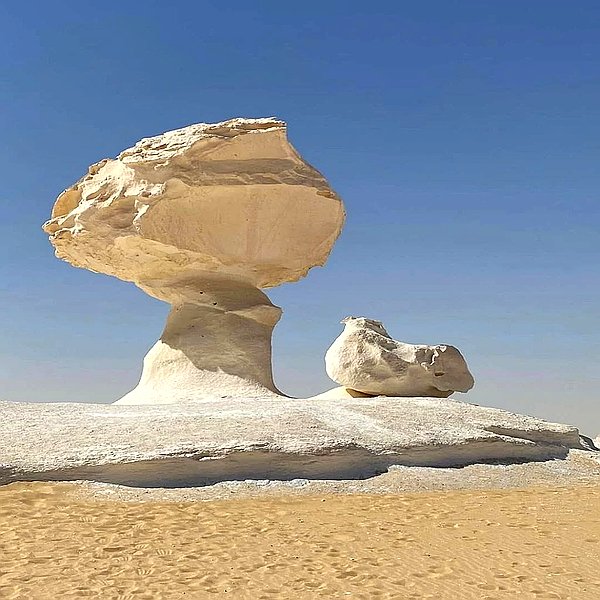
White Desert Egypt Tour TripAdvisor reviews
A Serious Adventure, Done Properly - Having guides who were actually raised in the desert changed the whole experience for me. Their stories and knowledge weren't things you could get from simply reading a guidebook. You... read more could feel that this wasn't just a workplace for them—it was home.
August 28, 2026
A Journey into the Heart of the Desert… and a Memory That Will Stay in My Heart for a Long Time. - There are places that you do not simply visit; they leave something of themselves inside you and the White and Black Deserts were one of the most beautiful places... read more I have ever experienced.
My wife and I spent an exceptional three-night experience among the Black Mountains and the white formations that seemed as though they had been carefully sculpted in the middle of nature, along endless roads beneath a vast sky unlike any sky I had ever seen before. Every moment was different—from the beauty of the scenery while driving, to the sunset that transformed the desert into a breathtaking painting, and then the peaceful night beneath millions of stars an experience that is difficult to describe in words.
What made the trip even more beautiful was the attention to every detail. Mohamed was more than just a trip organizer; he was a friendly and comforting person who knew the desert very well and knew the places worth visiting, as well as the places that gave you a genuine feeling of being far away from everything. He was always keen to ensure our comfort and to make sure we experienced the journey in a way that suited us. He also speaks English, which was very important to us, as he explained everything to us in detail.
The food in the desert was also a wonderful surprise in itself! Having a hot and delicious meal in the middle of complete silence, far away from the noise of the cities, was one of the most beautiful details of the trip. Sometimes, the simplest moments are the ones that remain in our memories the longest.
Thanks to the good organization and extensive experience, we felt comfortable and safe throughout the entire journey. We had the space to enjoy the place, the peace, and nature, while being accompanied by people who know the desert very well and genuinely care about making the experience special.
This was not just an ordinary tourist trip, but an experience in which you feel that you are discovering a new place and also discovering something new within yourself. The desert gives you a rare sense of peace and makes you stop for a moment, forget about everything else, simply look around, and enjoy the greatness of nature.
Thank you, Mohamed and Mahmoud, for this beautiful experience and for all the details and moments that made this journey an unforgettable memory. If you are thinking about visiting the White and Black Deserts, do not hesitate go with an open heart, and you will return with memories more beautiful than you expect.
August 13, 2026
Highly recommended! - We had a great time with Mohammed and his compagnon. The welcome was very warm and we had a great lunch at the house before going to the desert. Nothing... read more is rushed and everything is taken care off in a friendly manner. Highly recommended!
October 14, 2026
Frequently Asked Questions About White Desert Egypt Fossils
Explore the fossils of Egypt’s White Desert, including ancient marine life, foraminifera, Late Cretaceous chalk, the Khoman Formation, fossil conservation, Bahariya dinosaurs, Wadi El Hitan and the geological history of Farafra.
Yes. The White Desert and wider Farafra region contain fossil-bearing sedimentary rocks, including important marine microfossils such as foraminifera and calcareous nannofossils.
Because parts of Egypt’s Western Desert were covered by ancient marine environments millions of years ago. Marine organisms lived in those waters, and their remains became preserved in sediment that eventually turned into rock.
Yes. Geological evidence shows that the Farafra region experienced marine conditions during parts of the Late Cretaceous and later geological periods.
Many fossils associated with the White Desert’s characteristic chalk date to the Late Cretaceous, particularly the Maastrichtian stage, around 72 to 66 million years ago.
The region is especially important for marine microfossils such as planktonic foraminifera, benthic foraminifera, and calcareous nannofossils. Other marine fossil material may also occur in exposed sedimentary rocks.
Foraminifera are tiny single-celled organisms that often produce calcium-carbonate shells. Their fossilized remains are extremely useful for dating rocks and reconstructing ancient marine environments.
Planktonic foraminifera live in the water column, while benthic foraminifera live on or near the seafloor. Both can be preserved as fossils and provide different clues about ancient marine conditions.
Different species lived during different periods and preferred different water depths and environmental conditions. Scientists use them to estimate rock age, ancient sea depth, and environmental change.
Calcareous nannofossils are microscopic calcium-carbonate remains produced by tiny marine organisms. They are widely used in biostratigraphy to date and correlate marine sedimentary rocks.
Biostratigraphy is the use of fossils to identify and correlate rock layers by age. Particular fossil species can act as geological markers because they existed during known time intervals.
The Khoman Formation is an important Late Cretaceous rock unit found in parts of Egypt. Around Farafra, it contains much of the pale chalk associated with the White Desert.
Yes. The Khoman Formation contains marine microfossils that scientists have used to study the age and depositional environment of the White Desert region.
Yes. Microscopic marine organisms contributed calcium-rich material that accumulated on ancient seafloors and became part of the sediment that eventually formed chalk.
No. Ancient biological remains contributed heavily to the calcium-carbonate sediment, but the resulting rock also reflects compaction, mineral processes, and other geological changes.
No. The mushroom-shaped formations are erosional landforms made from sedimentary rock. The rock itself may contain fossils, but the mushroom shape was created much later by erosion.
The White Desert itself is primarily known for marine geology and marine fossils rather than dinosaur remains. The wider Bahariya Oasis region is much more famous for dinosaur and vertebrate fossils.
Yes. Much of the characteristic White Desert chalk dates to the Late Cretaceous, when non-avian dinosaurs still existed elsewhere on Earth.
The wider Bahariya Oasis region is especially important for dinosaur and vertebrate paleontology.
The White Desert should not be confused with Wadi El Hitan. Whale Valley is the famous Egyptian site for fossil whales, while the White Desert is better known for marine chalk and microfossils.
The White Desert is especially important for marine sedimentary rocks and microfossils. Wadi El Hitan is famous for large fossil whales that document the evolution of whales from land mammals to fully aquatic animals.
Yes. Travelers interested in fossils and natural history can combine the two regions in a longer itinerary.
Sometimes. Travelers may notice shell-like forms, fossil fragments, or marine textures in exposed rock, although many scientifically important fossils are microscopic and cannot be identified without specialist equipment.
Not always. Many fossil forms require scientific expertise, and microfossils usually need a microscope. Travelers should avoid guessing exact species without reliable identification.
Experienced guides may recognize common fossil-bearing rocks and explain the broad geological history, but exact paleontological identification may require a specialist.
No responsible visitor should remove fossils from the White Desert. It is a protected landscape, and fossils should be left in their original geological context.
You should not. Even a small fossil has scientific and conservation value, especially when its exact location and rock layer are known.
A fossil's geological context helps scientists understand its age, environment, relationship to other fossils, and the layer in which it formed. Removing it destroys much of that information.
Visitors should leave chalk, fossils, rocks, and other geological materials in place within the protected area.
Travelers should avoid buying fossils claimed to have been removed from protected areas. Purchasing such material can encourage illegal or damaging fossil collection.
Protected natural resources should not be removed or damaged. Visitors should follow current Egyptian protected-area regulations and guidance from local authorities.
Yes. Photography is one of the best ways to record interesting fossils without damaging or removing them.
Photograph it in place, include some of the surrounding rock, take images from several angles, and avoid touching or breaking the fossil-bearing surface.
Morning and late afternoon often provide better side lighting, which can reveal texture and small relief features more clearly than harsh midday light.
Different layers formed under different water depths, oxygen levels, sedimentation rates, and ecological conditions, so fossil abundance and preservation vary from one layer to another.
Different marine organisms preferred different environments. By studying fossil communities, geologists can estimate whether ancient water was relatively shallow, deeper, nearshore, or farther offshore.
Fossil assemblages and sedimentary rocks can provide clues about water temperature, sea level, environmental change, and broader climatic conditions.
Yes. Geological research indicates repeated changes in marine depth and relative sea level across the Farafra sedimentary sequence.
The region was influenced by marine environments connected with the ancient Tethyan realm during parts of its geological history.
The Tethys was an ancient marine system that existed between major continental landmasses. Its waters influenced large parts of North Africa and the Middle East during geological time.
Marine sedimentation eventually ended, the region became exposed, and later uplift, rainfall, groundwater, wind, and erosion gradually reshaped the landscape.
Erosion removed overlying material and exposed older sedimentary rock at the surface, revealing fossils that had remained buried for millions of years.
Yes. Erosion can both expose and destroy fossils. Some fossils become visible while others are gradually broken down by weathering.
Yes. The White Desert is important for geology, stratigraphy, fossils, karst features, ancient environmental reconstruction, and desert landscape studies.
Farafra exposes fossil-bearing sedimentary sequences covering important geological periods, allowing scientists to study marine environments, microfossil zones, and major geological boundaries.
The wider Farafra sedimentary record includes rocks spanning the transition from the Late Cretaceous into the Paleogene, making it valuable for research into environmental change around that period.
Around 66 million years ago, Earth experienced a major mass extinction that eliminated the non-avian dinosaurs and many marine organisms.
Yes. Changes in fossil communities preserved around the Cretaceous–Paleogene transition can help scientists study how marine ecosystems responded to major global environmental disruption.
Paleontology studies ancient life through fossils. Archaeology studies humans and human cultures through artifacts, structures, and other material remains.
Yes. The White Desert Protected Area contains evidence of prehistoric human activity as well as important geological and paleontological resources.
Yes, but standard tours focus mainly on the landscape and major attractions. Tell your guide in advance if fossils and geology are especially important to you.
Potentially, yes. A classic White Desert Tour From Cairo travels through fossil-bearing and geologically significant landscapes.
Yes. More time gives you greater opportunity to walk, examine rock layers, photograph details, and ask your guide about the landscape.
See the 3 Days White Desert Tour From Cairo .
Yes. A longer itinerary allows slower exploration of the White Desert, Valley of Agabat, Bahariya region, and other geological landscapes.
Explore the 4 Days White Desert Tour From Cairo .
Walking makes it easier to notice fossil textures, sedimentary layers, fractures, erosion features, and smaller geological details that may be missed from a moving vehicle.
See the 4 Days White Desert Trekking Expedition .
Yes. The contrast between marine fossils and the modern Sahara makes the White Desert an excellent natural science experience for curious children.
The fossils were preserved within the ancient marine sediments that later became chalk and limestone. Those same rocks were eventually exposed and sculpted into today's White Desert formations.
Read our White Desert Egypt Geology guide for the full geological story.
Fossils show the organisms that lived in ancient marine environments, while White Desert Egypt Wildlife explains the animals surviving in the modern desert ecosystem.
Because its exposed rocks, fossils, chalk formations, karst features, and sedimentary layers allow visitors to observe geological history directly in the landscape.
Leave it exactly where you found it. Photograph it, observe it, and allow it to remain part of the protected geological record.
The fossils prove that today's hyper-arid White Desert was once part of a marine environment. They are physical evidence of how dramatically Earth's landscapes and ecosystems can change over geological time.