White Desert Egypt Fossils: Ancient Sea Life in the Sahara

White Desert Egypt Fossils: Ancient Sea Life in the Sahara

Finding evidence of ancient marine life in the middle of Egypt’s Western Desert sounds impossible.

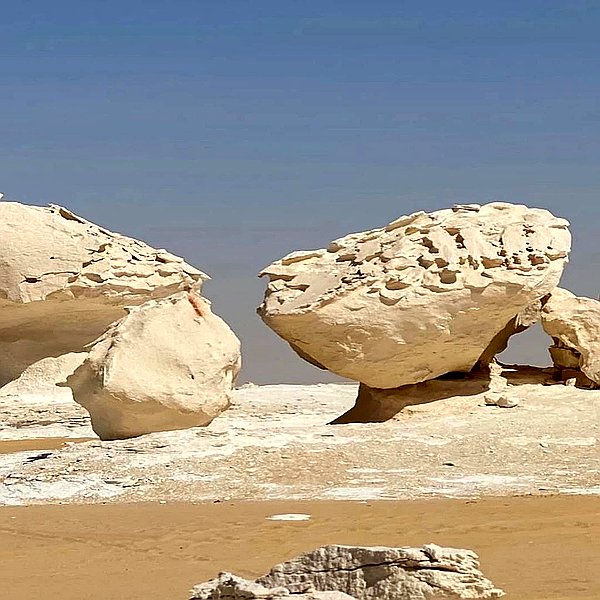
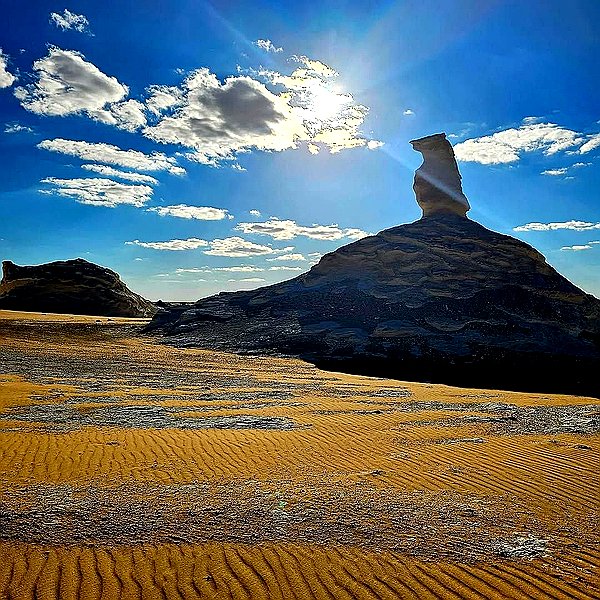
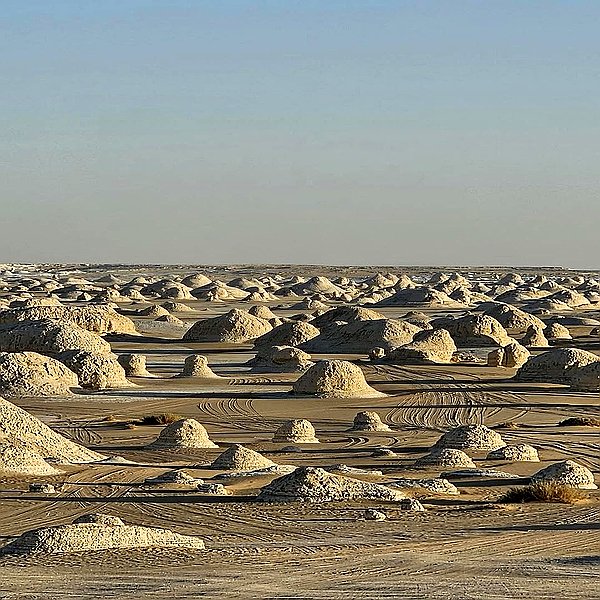
Today, the White Desert of Egypt is one of the driest landscapes in North Africa. Golden sand stretches between brilliant white chalk formations. Rain is scarce. The nearest modern sea is hundreds of kilometers away.

Yet the rocks beneath your feet tell a completely different story.

Millions of years ago, this landscape was connected to a warm ancient marine environment.

Sediment accumulated beneath the water. Microscopic marine organisms lived, died, and settled onto the seabed. Their calcium-rich remains became part of thick layers of chalk and limestone.

Eventually, those sediments hardened into rock.

The sea retreated.

The Sahara developed.

Wind and water exposed the ancient layers.

Today, the result is a desert containing geological evidence of an environment that no longer exists.

Egypt’s Environmental Affairs Agency describes the White Desert Protected Area as an open-air landscape for studying geology, fossils, desert environments, wildlife, and geographical phenomena, and specifically notes that its white limestone formations contain distinctive fossils.

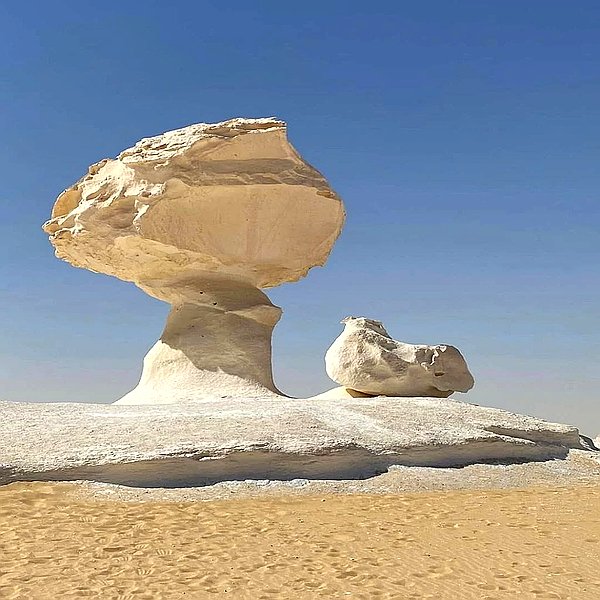
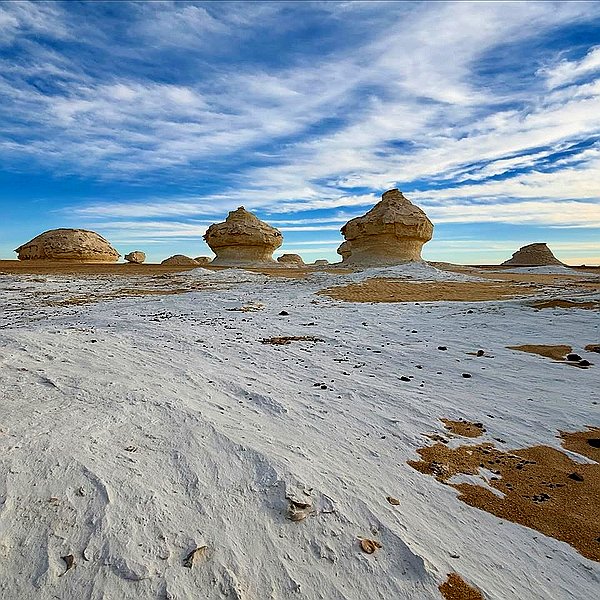
The White Desert therefore is not simply a collection of unusual mushroom-shaped rocks.

It is also a fossil archive.

Some of the most scientifically important fossils are so small that you would need a microscope to appreciate them properly.

These tiny remains—particularly foraminifera and calcareous nannofossils—have allowed geologists to determine the age of the rocks, estimate ancient water depth, reconstruct changes in sea level, and understand what the region looked like more than 60 million years ago.

This guide explains the fossils of the White Desert and Farafra Oasis, why marine fossils exist in the Sahara, what foraminifera are, how fossils help scientists reconstruct an ancient sea, and why travelers should never remove fossils from the protected landscape.

For the wider geological story first, read our White Desert Egypt Geology Guide and our guide to the White Desert Rock Formations.

Quick Answer: Are There Fossils in the White Desert Egypt?

Yes.

The White Desert and wider Farafra region contain important fossil-bearing sedimentary rocks.

Scientific research has identified abundant marine microfossils, particularly:

  • Planktonic foraminifera
  • Benthic foraminifera
  • Calcareous nannofossils

These organisms lived in ancient marine environments and later became preserved within sedimentary rocks.

Research on the Farafra succession has identified multiple fossil zones spanning the Late Cretaceous and early Paleogene and has used those fossils to reconstruct ancient sea depth and environmental conditions.

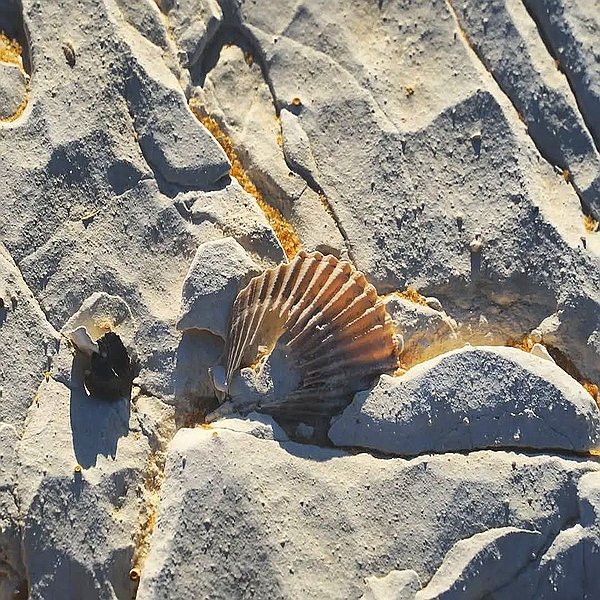
Travelers may also encounter obvious fossil-like marine remains or shell forms exposed in sedimentary rocks, depending on the location.

However, the scientifically important fossil record is much broader than the few fossils visible to the naked eye.

Why Are There Marine Fossils in the Sahara?

Because the Sahara has not always been desert.

Earth’s geography and climate have changed dramatically through geological time.

During the Late Cretaceous, parts of what is now Egypt’s Western Desert were covered by warm marine waters associated with the ancient Tethyan realm.

The white chalk of the Khoman Formation in the Farafra region was deposited in an open marine environment.

One study of the Ain El-Wadi area describes Khoman chalk deposition during the Maastrichtian in a warm Tethyan outer-shelf marine environment.

Another major study of Farafra identified fossil evidence consistent with outer-neritic marine conditions during the Maastrichtian.

In simple terms:

where you now see dunes and desert camps, there was once seawater.

That is why marine fossils appear inside rocks far from Egypt’s modern coastline.

How Old Are White Desert Fossils?

Many of the fossils associated with the famous white chalk belong to the Late Cretaceous, particularly the Maastrichtian stage.

The Maastrichtian lasted approximately from 72 to 66 million years ago.

That puts these sediments close to the end of the age of non-avian dinosaurs.

Research around Farafra has also identified younger fossil-bearing rocks from the Paleocene and Eocene, meaning the wider geological sequence preserves evidence from several different chapters of ancient marine history.

So there is no single age for every fossil around Farafra.

Different rock layers represent different periods.

This is one reason geologists study the area so carefully.

Moving vertically through sedimentary layers can effectively mean moving through millions of years of Earth history.

What Is the Khoman Formation?

The Khoman Formation is one of the most important geological units for understanding the White Desert.

It contains the pale chalk and chalky limestone that create much of the classic White Desert landscape.

Modern geological work in the Aqabaat area of Farafra divides the Khoman Formation into several recognizable members, including a basal unit called the White Desert member.

The formation is important not only because it creates spectacular scenery.

It also contains fossils that allow scientists to determine:

  • Rock age
  • Ancient sea conditions
  • Relative water depth
  • Environmental change
  • Sea-level fluctuations

This combination of spectacular landforms and scientific information is one reason the White Desert is much more than a scenic photography destination.

What Are Foraminifera?

Foraminifera—usually shortened to forams—are tiny single-celled organisms that commonly produce shells called tests.

Many live in marine environments.

Some float or drift in the water column.

These are known as planktonic foraminifera.

Others live on or near the seabed.

These are known as benthic foraminifera.

When they die, their microscopic shells can accumulate in marine sediment.

Over immense periods, they may become preserved inside sedimentary rocks.

Researchers studying Farafra have identified numerous planktonic and benthic foraminiferal species and used them to reconstruct the ancient marine environment.

They may be microscopic, but geologically they are enormously useful.

Why Are Foraminifera So Important?

Different foraminiferal species lived during different periods and preferred different environmental conditions.

That means scientists can use them like geological clues.

A particular combination of species can help answer questions such as:

How old is this rock?

Was the water shallow or deep?

Was the seabed well oxygenated?

Was sea level rising or falling?

Was the environment changing rapidly?

Research from northern Farafra used foraminiferal assemblages to reconstruct changing marine depths around the Maastrichtian–Danian transition.

The evidence indicates that Maastrichtian rocks represented outer-shelf marine conditions, followed by significant environmental change around the end of the Cretaceous.

Tiny fossils can therefore reveal changes affecting an entire sea.

What Are Calcareous Nannofossils?

If foraminifera are small, calcareous nannofossils are even smaller.

They are microscopic calcium-carbonate structures largely produced by tiny marine organisms.

They can become abundant in marine sediments.

Scientists use them for biostratigraphy, which is the process of using fossils to date and correlate rock layers.

Research in Farafra has identified well-preserved calcareous nannofossil assemblages in parts of the Paleocene and Lower Eocene succession.

Their presence helps researchers identify geological boundaries that would otherwise be extremely difficult to recognize simply by looking at the rock.

This is another wonderful paradox of the White Desert:

the landscape is famous for enormous rock formations, but some of its most useful geological evidence is microscopic.

Did Tiny Sea Organisms Create the White Desert Chalk?

They contributed significantly to the calcium-carbonate sediment from which marine chalk developed.

Chalk commonly forms through the accumulation of microscopic calcareous remains on the seabed.

Over time, these deposits compact and undergo geological changes until they become rock.

The result can be thick pale chalk units like those exposed around Farafra.

This means that when you photograph a massive white formation, part of its material originated from microscopic marine life living tens of millions of years ago.

That is much stranger than the mushroom rocks themselves.

Was the White Desert a Deep Ocean?

Not necessarily a deep open ocean in the way travelers might imagine the modern Atlantic.

Research indicates that parts of the Late Cretaceous Farafra succession formed in a marine shelf environment.

Studies of foraminifera have interpreted the Maastrichtian environment as predominantly outer neritic—meaning an offshore continental-shelf marine setting—with periods of relative shallowing.

Later periods show changing water depth.

This matters because the ancient environment was dynamic.

Sea level changed.

Sedimentation changed.

Tectonic activity influenced the basin.

Different fossil communities responded.

The White Desert does not preserve one frozen moment.

It preserves a changing marine world.

The White Desert Before It Was a Desert

Try mentally removing everything you currently associate with the White Desert.

Remove:

  • Sand dunes
  • Camel safaris
  • Desert camps
  • Chalk mushrooms exposed above ground
  • Hyper-arid climate

Replace them with:

  • Seawater
  • Marine plankton
  • Seabed sediment
  • Calcium-carbonate mud
  • Marine organisms

That is closer to the environment in which the original chalk sediment accumulated.

Millions of years later, the sea disappeared and erosion exposed those marine deposits.

What was once sediment beneath water became cliffs and sculpted rocks standing above desert sand.

For the complete transformation, see our White Desert Egypt Geology article.

Fossils and the End of the Cretaceous

One particularly fascinating aspect of Farafra geology is that its sedimentary sequence reaches the period around the Cretaceous–Paleogene boundary, or K–Pg boundary.

This boundary marks one of the most important events in Earth history.

Approximately 66 million years ago, a mass extinction eliminated the non-avian dinosaurs along with many marine species.

Geologists studying Farafra use microfossils and sedimentary changes to examine environmental shifts across this transition.

Research from the northern Farafra Oasis identifies clear changes in foraminiferal assemblages and ancient marine conditions between Maastrichtian and Danian rocks.

So the Farafra region does not merely contain old fossils.

Its rocks intersect with one of the most dramatic transitions in Earth’s biological history.

Are There Dinosaur Fossils in the White Desert?

This question needs a careful answer.

The chalk of the White Desert dates broadly to a time when dinosaurs still existed elsewhere in the world.

But the White Desert itself is primarily famous for marine sedimentary geology and marine fossils, particularly microfossils.

If dinosaur fossils are your interest, the wider Bahariya Oasis region is much more important.

Egypt’s Environmental Affairs Agency describes Bahariya as a major vertebrate-fossil research area associated with discoveries of Egyptian dinosaur remains.

So:

White Desert → ancient marine chalk and marine fossils

Bahariya → particularly important for vertebrate and dinosaur paleontology

The two belong to the same broader Western Desert journey but tell different fossil stories.

Read our Bahariya Oasis Egypt Guide before visiting the region.

Why Is Bahariya Famous for Dinosaurs?

Bahariya Oasis became internationally significant in paleontology because Cretaceous rocks in the region have produced remains of giant prehistoric vertebrates.

Egyptian environmental authorities specifically describe the Bahariya area as a major site for vertebrate fossil research and note its historical dinosaur discoveries.

This creates one of the best geological combinations in Egypt.

A traveler moving between Bahariya and the White Desert can encounter evidence of:

  • Giant prehistoric land animals
  • Ancient marine environments
  • Chalk sedimentation
  • Fossil microorganisms
  • Later erosion
  • Desert landscape development

What looks like a two-day desert safari is actually a journey across enormous spans of geological time.

White Desert Fossils vs Wadi El Hitan Fossils

Another important distinction.

The White Desert and Wadi El Hitan, or Whale Valley, both preserve evidence of ancient marine environments.

But they are famous for very different fossils.

White Desert and Farafra

Especially important for:

  • Marine chalk
  • Foraminifera
  • Calcareous nannofossils
  • Marine sedimentary history
  • Geological stratigraphy

Wadi El Hitan

Famous for fossil whales and other vertebrates that document one of the great evolutionary transitions in mammalian history.

Wadi El Hitan is a UNESCO World Heritage Site and deserves its own trip.

Read our complete Wadi El Hitan Egypt Guide if fossil history is one of your main interests.

You can also explore the White Desert & Whale Valley Tour From Cairo if you want to experience both desert landscapes in one journey.

Does the White Desert Have Whale Fossils?

The White Desert should not be confused with Whale Valley.

Travel blogs sometimes loosely connect every fossil site in Egypt’s Western Desert.

That creates confusion.

Wadi El Hitan is internationally famous for archaeocete whale fossils.

The White Desert’s scientific fossil story is more strongly connected to marine sedimentary rocks and microfossils such as foraminifera.

If your goal is specifically to see famous fossil whales, go to Wadi El Hitan.

If your goal is to understand how ancient marine sediments became one of Egypt’s strangest desert landscapes, the White Desert is extraordinary.

What Fossils Can Travelers Actually See?

This depends heavily on the exact location and exposed rock.

You may notice:

  • Shell-like forms
  • Fossil fragments
  • Marine textures
  • Small structures preserved in limestone or chalk

But much of the scientifically important fossil record cannot be identified accurately by an untrained traveler with the naked eye.

Foraminifera and nannofossils often require microscopic study.

This creates an important expectation:

Do not visit the White Desert expecting huge dinosaur skeletons lying beside the road.

The fossil story here is often subtle.

Understanding the rocks makes the landscape much more interesting.

Can Your Guide Identify Fossils?

Some experienced local desert guides recognize common fossil-bearing rocks and can explain the broad geological history.

However, local guiding and professional paleontology are not the same thing.

For exact fossil identification—especially microscopic organisms—scientific expertise is required.

A responsible guide should be comfortable saying:

“this appears to be fossil material”

rather than inventing a species name.

Accuracy matters.

Why Do Some Rocks Contain More Fossils Than Others?

Different sedimentary layers formed under different environmental conditions.

Fossil abundance can depend on:

  • Water depth
  • Oxygen levels
  • Sedimentation rate
  • Type of organism
  • Seafloor conditions
  • Preservation
  • Later erosion

One layer may contain abundant microscopic marine organisms.

Another may preserve fewer fossils.

Another may have been exposed to conditions that destroyed much of its original fossil material.

The geological sequence around Farafra records repeated environmental changes, which is why different fossil assemblages appear at different levels.

Fossils as Geological Clocks

Imagine finding the same distinctive fossil species in two rock outcrops many kilometers apart.

If scientists know that species lived only during a certain geological interval, its presence can help correlate the two rock layers.

This is the basic idea behind biostratigraphy.

Farafra research has identified successive foraminiferal and nannofossil zones that help scientists divide the sedimentary sequence into geological time intervals.

In other words:

fossils help scientists read time inside rock.

Fossils as Ancient Depth Gauges

Benthic foraminifera are particularly useful because different communities prefer different seafloor conditions.

By studying the ratios and types of fossil foraminifera preserved in rock, scientists can estimate how deep the ancient water may have been.

Research in Farafra identified numerous benthic species and used their assemblages to reconstruct changes from outer-shelf to shallower marine environments during different periods.

A fossil smaller than a grain of rice can therefore help reconstruct an ancient sea tens of millions of years after it disappeared.

Fossils and Ancient Sea-Level Change

Sea level does not remain constant over geological time.

It rises and falls in response to factors including:

  • Climate
  • Ice volume
  • Tectonic activity
  • Basin movement

Farafra’s rock sequence preserves evidence of these changes.

Research on the Upper Cretaceous–Eocene succession identifies multiple depositional sequences separated by geological boundaries and interprets several shifts in relative sea level.

Fossils help scientists recognize these transitions because marine communities change as water becomes deeper or shallower.

The desert therefore contains a record not only of an ancient sea—but of that sea moving.

What Happened When the Sea Disappeared?

The disappearance of marine conditions was not one sudden event.

The region experienced repeated changes over immense periods.

Eventually, marine sedimentation ended.

The land became exposed.

Tectonic processes, erosion, groundwater, rainfall during wetter climatic periods, and later wind action gradually excavated the Farafra Depression.

Research concludes that running water and wind both contributed to shaping the depression after uplift, exposing the older marine rocks now visible today.

Without that erosion, many fossils would still be buried.

Erosion both destroys and reveals geological history.

Why Is Farafra So Important to Geologists?

Farafra exposes a relatively rich sedimentary sequence spanning important intervals of Earth history.

Geologists can study:

  • Maastrichtian chalk
  • Cretaceous–Paleogene transitions
  • Paleocene sediments
  • Eocene sediments
  • Microfossil zones
  • Sea-level change
  • Ancient water depth
  • Tectonic events
  • Later desert erosion

The landscape functions almost like pages from a geological book.

Different cliffs and sections expose different chapters.

This is why academic research continues to use the region for stratigraphic and paleoenvironmental studies.

Fossils and the Valley of Agabat

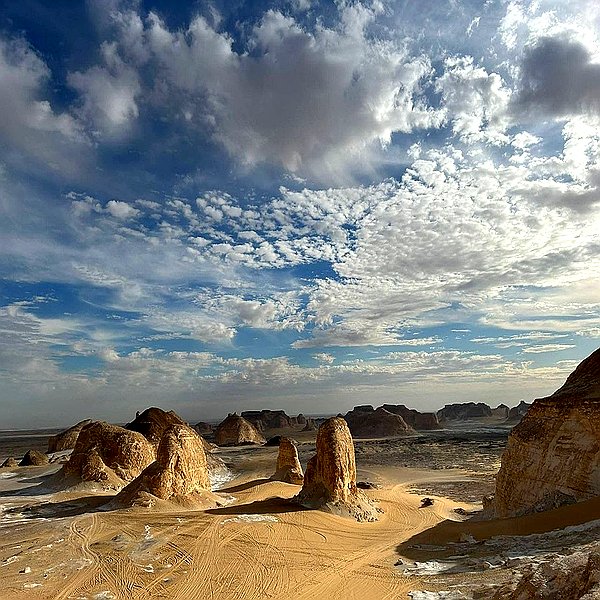
The Valley of Agabat is visually famous for enormous pale formations and dramatic eroded landscapes.

Geologically, the wider Aqabaat/Farafra area has also been used in research examining the Khoman Formation and fossil zones.

A major study of the Aqabaat section identified six planktonic foraminiferal zones and interpreted ancient depositional environments from the Late Cretaceous into younger periods.

This adds another layer to an already spectacular place.

When you stop in Agabat, you are not simply photographing cliffs.

You are traveling through exposed sedimentary history.

Fossils and White Desert Rock Formations

The famous White Desert formations and its fossils come from the same basic geological story.

Marine sediment creates rock.

The rock contains fossils.

The sea disappears.

Erosion exposes the rock.

Wind and other weathering processes sculpt that rock into unusual formations.

So the mushroom formations and the fossil record are not separate topics.

They are different results of the same ancient history.

Read our White Desert Rock Formations guide to understand how the exposed chalk became the shapes visitors see today.

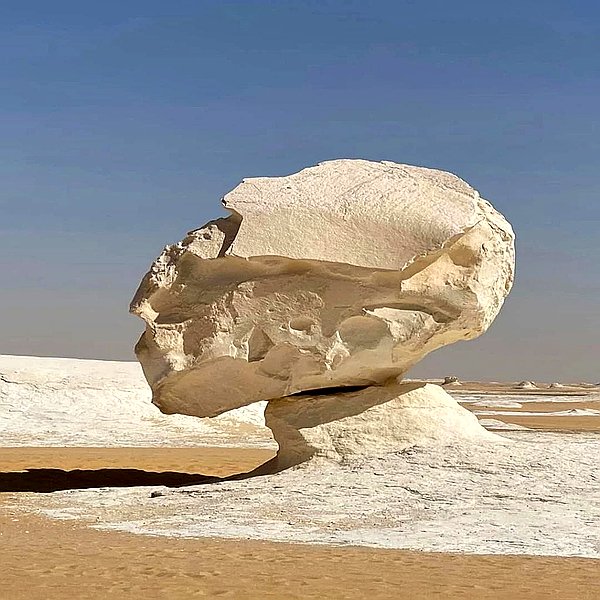
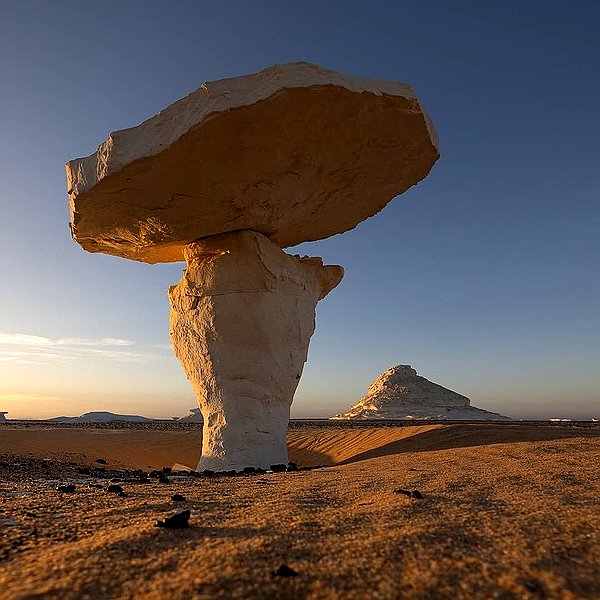
Are the Famous Mushroom Rocks Fossils?

No.

The rock formations themselves are not giant fossils.

They are erosional landforms made from sedimentary rock.

That sedimentary rock may contain microscopic fossils or other fossil material, but the entire mushroom shape was created much later by erosion.

This distinction is important:

Fossil = preserved evidence of ancient life.

Rock formation = geological material sculpted into a shape.

A mushroom rock may contain fossils.

It is not itself a fossil organism.

Are White Desert Rocks Made Entirely From Fossils?

Not exactly.

Chalk is a sedimentary rock made primarily from calcium carbonate.

Biological material—particularly microscopic marine remains—can be a major contributor to the sediment, but sedimentary rock formation involves compaction, chemical processes, mineral material, and geological alteration over time.

So saying the White Desert is “made entirely of fossils” would be too simplistic.

It is more accurate to say that ancient marine organisms played an important role in forming the calcium-rich sediment and that the rocks preserve a significant fossil record.

Can You Collect Fossils in the White Desert?

No responsible visitor should.

The White Desert is officially protected by Egypt.

The Environmental Affairs Agency identifies fossils as one of the natural resources contributing to the area’s scientific and conservation importance.

Removing fossils can:

  • Damage scientific context
  • Remove protected natural heritage
  • Encourage illegal collecting
  • Gradually degrade fossil sites

Even a small fossil matters more scientifically when researchers know exactly where it was found and within which rock layer.

Once you remove it, much of that information disappears.

Leave it where it is.

Why Location Matters More Than the Fossil Itself

Imagine finding a fossil and taking it home.

You still have the object.

But researchers lose:

  • Exact location
  • Rock layer
  • Relationship with surrounding fossils
  • Sedimentary context
  • Geological position

That information may be more scientifically valuable than the fossil alone.

Paleontology is not treasure hunting.

Context is everything.

This is why “I only took one little shell” is not a harmless attitude in a protected geological landscape.

Can You Buy Fossils in Egypt?

Travelers should be extremely cautious about buying archaeological, paleontological, or geological material represented as coming from protected areas.

Do not encourage the removal of fossils from conservation sites.

A photograph gives you the memory without removing part of the desert.

That is the better souvenir.

How to Photograph Fossils Responsibly

If you find something interesting:

  1. Leave it in place.
  2. Avoid touching fragile material.
  3. Photograph it from several angles.
  4. Include something for scale if appropriate.
  5. Avoid damaging surrounding rock.
  6. Ask your guide about it.

For serious geological observations, photographs showing the surrounding layer can actually be more informative than a close-up alone.

Best Lens for Fossil Photography

You do not need specialist equipment.

A modern phone can handle many close-ups surprisingly well.

For cameras, a standard zoom or macro-capable lens is useful.

Focus on:

  • Texture
  • Fossil shape
  • Relationship to rock
  • Sedimentary layers

Do not sacrifice the landscape.

A fossil photographed within white chalk and golden sand tells a much stronger White Desert story than an isolated close-up.

Best Time to See Fossil Details

Strong midday sun can create harsh reflections on white chalk.

Morning or late-afternoon side lighting often reveals texture more clearly.

Low-angle light produces shadows in:

  • Shell impressions
  • Rock cavities
  • Sedimentary layers
  • Fossil surfaces

That makes geological details easier to photograph.

For complete desert photography advice, read our White Desert Photography Tips.

Are Fossils Easy to See on a Normal White Desert Tour?

Sometimes, but fossil searching is not normally the main focus of a standard safari.

A typical tour prioritizes attractions such as:

  • Bahariya Oasis
  • Black Desert
  • Crystal Mountain
  • Valley of Agabat
  • White Desert formations
  • Camping

Tell your guide in advance if geology and fossils particularly interest you.

That allows the guide to explain more of the landscape instead of treating every stop purely as a photo location.

Can You See Fossils on a 2-Day White Desert Tour?

Potentially, yes.

A classic White Desert Tour From Cairo travels through a remarkable range of Western Desert geology.

However, a two-day trip is relatively fast.

If fossils and geology are a major interest, more time gives you greater opportunity to:

  • Walk
  • Examine rock layers
  • Ask questions
  • Photograph geological details

instead of moving quickly between headline attractions.

Is a 3-Day Tour Better for Fossil and Geology Lovers?

Yes.

A 3 Days White Desert Tour From Cairo gives you more time within the Western Desert and reduces the pressure to rush every stop.

This is particularly valuable if your interests include:

  • Geology
  • Fossils
  • Photography
  • Landscape history
  • Walking

Three days also give you more opportunity to experience the desert during different lighting conditions.

What About a 4-Day White Desert Tour?

A 4 Days White Desert Tour From Cairo allows an even slower relationship with the landscape.

For many travelers, this is where the desert stops feeling like a collection of attractions and starts feeling like an environment.

You begin noticing small things.

Rock layers.

Tracks.

Changes in sediment.

Different colors.

Different textures.

That is exactly how geological travel becomes interesting.

Is Trekking Better for Discovering Geology?

Absolutely.

Moving through the White Desert on foot reveals details that disappear from a moving vehicle.

A trekking route allows you to notice:

  • Fossil textures
  • Chalk layers
  • Small formations
  • Erosion
  • Fractures
  • Surface weathering

Explore the 4 Days White Desert Trekking Expedition if slow landscape exploration appeals to you.

White Desert Fossils for Families

Fossils can make the White Desert much more interesting for children.

Instead of presenting the desert as a collection of rocks, ask:

Why are sea fossils in the Sahara?

Suddenly, the landscape becomes a puzzle.

Children can learn basic concepts such as:

  • Seas can disappear.
  • Climate changes.
  • Sediment becomes rock.
  • Fossils preserve ancient life.
  • Wind exposes old rock.

The White Desert becomes a giant outdoor science classroom.

For trip planning with children, see our White Desert Tour for Families.

The Difference Between Archaeology and Paleontology

Travelers sometimes confuse the two.

Archaeology studies humans and human cultures through material remains.

Paleontology studies ancient life through fossils.

The White Desert Protected Area contains evidence important to both fields.

Environmental authorities note fossils as well as prehistoric archaeological remains among the protected area’s significant resources.

So a stone tool and a fossil shell are both old.

But they tell completely different stories.

Fossils vs Prehistoric Human Remains

A marine fossil could be tens of millions of years old.

A prehistoric human artifact may be thousands or hundreds of thousands of years old.

To human intuition, both sound “ancient.”

Geologically, the difference can be enormous.

This is another reason the White Desert is so fascinating.

Several completely different timescales overlap within the same landscape.

White Desert Fossils vs White Desert Wildlife

Fossils show what lived here in ancient environments.

Modern wildlife shows what survives here today.

Compare:

Ancient environment: marine organisms living beneath seawater.

Modern environment: foxes, gazelles, rodents, birds, reptiles and desert vegetation.

The environmental transformation is enormous.

Read our White Desert Egypt Wildlife guide to explore the living desert.

Together, geology, fossils and wildlife tell the complete natural history of the region.

A Simplified Fossil Timeline for Farafra

Late Cretaceous

Marine conditions cover parts of the Western Desert.

Chalk and marine sediments accumulate.

Foraminifera become preserved in the sediment.

Maastrichtian

The Khoman chalk records warm marine shelf conditions and diverse microfossil communities.

Around 66 Million Years Ago

The Cretaceous ends and global ecosystems undergo a major extinction event.

Farafra sediments preserve changes around this geological transition.

Paleocene

Marine sedimentation continues under changing water depths and environmental conditions.

Early Eocene

Different carbonate and marine environments develop, preserving new fossil communities and sediment types.

Much Later

The region becomes exposed and eroded.

Today

Ancient marine sediment stands exposed beneath one of the driest climates on Earth.

Why Fossils Change the Way You See the White Desert

Before learning the geology, you might look at the landscape and think:

beautiful white rocks.

After learning the fossil story, you start seeing:

an ancient seabed.

Every chalk ridge becomes evidence of vanished water.

Every marine microfossil becomes evidence of life that existed before the modern Sahara.

The dunes suddenly feel temporary.

Because on geological timescales, they are.

The White Desert looked completely different millions of years ago.

And given enough geological time, it will look completely different again.

The White Desert as an Open-Air Natural Museum

Egypt’s Environmental Affairs Agency explicitly describes the White Desert as an open-air area for studying fossils, geography, desert environments and wildlife.

That description is perfect.

There are no glass display cabinets.

The exhibits are the cliffs.

The ground.

The chalk formations.

The exposed sediment.

The fossils.

And unlike a museum, erosion is constantly changing the display.

This makes responsible tourism essential.

How to Visit Without Damaging Fossil Sites

Follow a few simple rules:

  • Never remove fossils.
  • Never break open rock.
  • Do not carve names into formations.
  • Avoid climbing fragile geological features.
  • Stay with experienced guides.
  • Follow protected-area instructions.
  • Take rubbish away.
  • Photograph discoveries instead of collecting them.

Millions of years created the landscape.

Treat it accordingly.

Combining White Desert Fossils With Wadi El Hitan

Travelers genuinely interested in fossils should consider combining the White Desert with Whale Valley.

The contrast is exceptional.

In the White Desert, you explore the geological evidence of ancient marine environments and microfossil-rich sediment.

At Wadi El Hitan, you encounter spectacular fossil vertebrates showing the evolution of whales from land-dwelling ancestors toward fully marine forms.

Your White Desert & Whale Valley Tour From Cairo naturally fits this search intent.

It’s effectively a journey through two completely different fossil records of ancient Egypt.

Combine Fossils With the Black Desert and Crystal Mountain

You do not need to make the entire trip about fossils.

The best Western Desert journeys show geological contrast.

A route might include:

Bahariya Oasis
Dinosaur and vertebrate fossil context.

Black Desert
Dark iron-rich and igneous geological landscapes.

Crystal Mountain
Distinct crystalline features.

Valley of Agabat
Large-scale sedimentary erosion.

White Desert
Chalk, marine fossils and sculpted formations.

That sequence is essentially a geology course delivered by a 4×4.

Read our Black Desert Egypt, Crystal Mountain Egypt and Valley of Agabat Egypt guides before your trip.

Best White Desert Trip for Fossil Lovers

For a first visit, an overnight White Desert trip gives you the basic landscape.

For travelers seriously interested in natural history, three or four days are stronger.

More time means:

  • More walking
  • More geological explanation
  • More exposure to different formations
  • Less rushing
  • Better photography

You can compare your options in our Best White Desert Egypt Tours guide.

Book a White Desert Tour From Cairo

The easiest way to explore Farafra and the White Desert is with experienced Western Desert drivers and local guides.

For the classic experience, see the White Desert Tour From Cairo.

For more time to explore geology and landscape, see the 3 Days White Desert Tour From Cairo.

For a deeper trip, consider the 4 Days White Desert Tour From Cairo.

And if fossils are one of your main interests, the White Desert & Whale Valley Tour From Cairo creates an especially strong natural-history itinerary.

Final Thoughts: Why Are Fossils Found in Egypt’s White Desert?

Because the White Desert has not always been a desert.

More than 60 million years ago, parts of what is now the Western Desert were beneath warm marine waters.

Microscopic organisms lived in that sea.

Their remains accumulated with calcium-rich sediment.

Those sediments gradually became chalk and limestone.

The marine environment changed.

Sea levels rose and fell.

New sediments accumulated.

Eventually, the water disappeared.

Far later, erosion exposed the ancient seabed.

Today, travelers camp where marine organisms once lived.

Academic studies of Farafra’s rocks have identified rich foraminiferal and nannofossil records and used them to reconstruct marine shelf conditions from the Late Cretaceous through younger geological periods.

Egypt’s environmental authorities now recognize fossils as one of the defining scientific resources of the White Desert Protected Area.

And that may be the most extraordinary part of visiting.

The White Desert looks alien because we see it only in its current state.

But the rocks remember another world.

A world with seawater instead of dunes.

Marine organisms instead of desert foxes.

Sediment instead of mushroom rocks.

The Sahara you see today is only the latest chapter.

When you find a marine fossil embedded in the desert, you are looking directly at evidence of a chapter that disappeared tens of millions of years ago.

Do not take it home.

Leave it exactly where the ancient sea left it.

Then continue the story with our White Desert Egypt Geology, White Desert Egypt Wildlife, White Desert Rock Formations and Bahariya Oasis Egypt guides.

White Desert Egypt Tour TripAdvisor reviews

star ratingAn Unforgettable Experience in the White and Black Desert and the Bahariya Oasis. - I had an amazing and truly memorable tour with White Desert Egypt Tour. At first, I felt a little hesitant and worried because I was traveling alone. However, after booking... read more

avatar thumb bryces9166
August 9, 2026

star ratingWhere Silence Speaks: Six days as a solo traveller - Surrounded by endless dunes, fascinating rock formations and a sky full of stars, my trip to the Black and White Desert was the perfect escape from everyday life.
I... read more

avatar thumb Meret G
October 26, 2026

star ratingA Two-Day Trip . - We went on a two-day, one-night desert trip with White Desert Egypt Tour, and we were extremely happy with everything the company provided throughout the journey. The itinerary was wonderful,... read more

avatar thumb nadaf2551
August 6, 2026
White Desert Egypt Fossils FAQ

Frequently Asked Questions About White Desert Egypt Fossils

Explore the fossils of Egypt’s White Desert, including ancient marine life, foraminifera, Late Cretaceous chalk, the Khoman Formation, fossil conservation, Bahariya dinosaurs, Wadi El Hitan and the geological history of Farafra.

Yes. The White Desert and wider Farafra region contain fossil-bearing sedimentary rocks, including important marine microfossils such as foraminifera and calcareous nannofossils.

Because parts of Egypt’s Western Desert were covered by ancient marine environments millions of years ago. Marine organisms lived in those waters, and their remains became preserved in sediment that eventually turned into rock.

Yes. Geological evidence shows that the Farafra region experienced marine conditions during parts of the Late Cretaceous and later geological periods.

Many fossils associated with the White Desert’s characteristic chalk date to the Late Cretaceous, particularly the Maastrichtian stage, around 72 to 66 million years ago.

The region is especially important for marine microfossils such as planktonic foraminifera, benthic foraminifera, and calcareous nannofossils. Other marine fossil material may also occur in exposed sedimentary rocks.

Foraminifera are tiny single-celled organisms that often produce calcium-carbonate shells. Their fossilized remains are extremely useful for dating rocks and reconstructing ancient marine environments.

Planktonic foraminifera live in the water column, while benthic foraminifera live on or near the seafloor. Both can be preserved as fossils and provide different clues about ancient marine conditions.

Different species lived during different periods and preferred different water depths and environmental conditions. Scientists use them to estimate rock age, ancient sea depth, and environmental change.

Calcareous nannofossils are microscopic calcium-carbonate remains produced by tiny marine organisms. They are widely used in biostratigraphy to date and correlate marine sedimentary rocks.

Biostratigraphy is the use of fossils to identify and correlate rock layers by age. Particular fossil species can act as geological markers because they existed during known time intervals.

The Khoman Formation is an important Late Cretaceous rock unit found in parts of Egypt. Around Farafra, it contains much of the pale chalk associated with the White Desert.

Yes. The Khoman Formation contains marine microfossils that scientists have used to study the age and depositional environment of the White Desert region.

Yes. Microscopic marine organisms contributed calcium-rich material that accumulated on ancient seafloors and became part of the sediment that eventually formed chalk.

No. Ancient biological remains contributed heavily to the calcium-carbonate sediment, but the resulting rock also reflects compaction, mineral processes, and other geological changes.

No. The mushroom-shaped formations are erosional landforms made from sedimentary rock. The rock itself may contain fossils, but the mushroom shape was created much later by erosion.

The White Desert itself is primarily known for marine geology and marine fossils rather than dinosaur remains. The wider Bahariya Oasis region is much more famous for dinosaur and vertebrate fossils.

Yes. Much of the characteristic White Desert chalk dates to the Late Cretaceous, when non-avian dinosaurs still existed elsewhere on Earth.

The wider Bahariya Oasis region is especially important for dinosaur and vertebrate paleontology.

The White Desert should not be confused with Wadi El Hitan. Whale Valley is the famous Egyptian site for fossil whales, while the White Desert is better known for marine chalk and microfossils.

The White Desert is especially important for marine sedimentary rocks and microfossils. Wadi El Hitan is famous for large fossil whales that document the evolution of whales from land mammals to fully aquatic animals.

Yes. Travelers interested in fossils and natural history can combine the two regions in a longer itinerary.

See the White Desert & Whale Valley Tour From Cairo .

Sometimes. Travelers may notice shell-like forms, fossil fragments, or marine textures in exposed rock, although many scientifically important fossils are microscopic and cannot be identified without specialist equipment.

Not always. Many fossil forms require scientific expertise, and microfossils usually need a microscope. Travelers should avoid guessing exact species without reliable identification.

Experienced guides may recognize common fossil-bearing rocks and explain the broad geological history, but exact paleontological identification may require a specialist.

No responsible visitor should remove fossils from the White Desert. It is a protected landscape, and fossils should be left in their original geological context.

You should not. Even a small fossil has scientific and conservation value, especially when its exact location and rock layer are known.

A fossil's geological context helps scientists understand its age, environment, relationship to other fossils, and the layer in which it formed. Removing it destroys much of that information.

Visitors should leave chalk, fossils, rocks, and other geological materials in place within the protected area.

Travelers should avoid buying fossils claimed to have been removed from protected areas. Purchasing such material can encourage illegal or damaging fossil collection.

Protected natural resources should not be removed or damaged. Visitors should follow current Egyptian protected-area regulations and guidance from local authorities.

Yes. Photography is one of the best ways to record interesting fossils without damaging or removing them.

Photograph it in place, include some of the surrounding rock, take images from several angles, and avoid touching or breaking the fossil-bearing surface.

Morning and late afternoon often provide better side lighting, which can reveal texture and small relief features more clearly than harsh midday light.

Different layers formed under different water depths, oxygen levels, sedimentation rates, and ecological conditions, so fossil abundance and preservation vary from one layer to another.

Different marine organisms preferred different environments. By studying fossil communities, geologists can estimate whether ancient water was relatively shallow, deeper, nearshore, or farther offshore.

Fossil assemblages and sedimentary rocks can provide clues about water temperature, sea level, environmental change, and broader climatic conditions.

Yes. Geological research indicates repeated changes in marine depth and relative sea level across the Farafra sedimentary sequence.

The region was influenced by marine environments connected with the ancient Tethyan realm during parts of its geological history.

The Tethys was an ancient marine system that existed between major continental landmasses. Its waters influenced large parts of North Africa and the Middle East during geological time.

Marine sedimentation eventually ended, the region became exposed, and later uplift, rainfall, groundwater, wind, and erosion gradually reshaped the landscape.

Erosion removed overlying material and exposed older sedimentary rock at the surface, revealing fossils that had remained buried for millions of years.

Yes. Erosion can both expose and destroy fossils. Some fossils become visible while others are gradually broken down by weathering.

Yes. The White Desert is important for geology, stratigraphy, fossils, karst features, ancient environmental reconstruction, and desert landscape studies.

Farafra exposes fossil-bearing sedimentary sequences covering important geological periods, allowing scientists to study marine environments, microfossil zones, and major geological boundaries.

The wider Farafra sedimentary record includes rocks spanning the transition from the Late Cretaceous into the Paleogene, making it valuable for research into environmental change around that period.

Around 66 million years ago, Earth experienced a major mass extinction that eliminated the non-avian dinosaurs and many marine organisms.

Yes. Changes in fossil communities preserved around the Cretaceous–Paleogene transition can help scientists study how marine ecosystems responded to major global environmental disruption.

Paleontology studies ancient life through fossils. Archaeology studies humans and human cultures through artifacts, structures, and other material remains.

Yes. The White Desert Protected Area contains evidence of prehistoric human activity as well as important geological and paleontological resources.

Yes, but standard tours focus mainly on the landscape and major attractions. Tell your guide in advance if fossils and geology are especially important to you.

Potentially, yes. A classic White Desert Tour From Cairo travels through fossil-bearing and geologically significant landscapes.

Yes. More time gives you greater opportunity to walk, examine rock layers, photograph details, and ask your guide about the landscape.

See the 3 Days White Desert Tour From Cairo .

Yes. A longer itinerary allows slower exploration of the White Desert, Valley of Agabat, Bahariya region, and other geological landscapes.

Explore the 4 Days White Desert Tour From Cairo .

Walking makes it easier to notice fossil textures, sedimentary layers, fractures, erosion features, and smaller geological details that may be missed from a moving vehicle.

See the 4 Days White Desert Trekking Expedition .

Yes. The contrast between marine fossils and the modern Sahara makes the White Desert an excellent natural science experience for curious children.

The fossils were preserved within the ancient marine sediments that later became chalk and limestone. Those same rocks were eventually exposed and sculpted into today's White Desert formations.

Read our White Desert Egypt Geology guide for the full geological story.

Fossils show the organisms that lived in ancient marine environments, while White Desert Egypt Wildlife explains the animals surviving in the modern desert ecosystem.

Because its exposed rocks, fossils, chalk formations, karst features, and sedimentary layers allow visitors to observe geological history directly in the landscape.

Leave it exactly where you found it. Photograph it, observe it, and allow it to remain part of the protected geological record.

The fossils prove that today's hyper-arid White Desert was once part of a marine environment. They are physical evidence of how dramatically Earth's landscapes and ecosystems can change over geological time.

Leave a Comment

Your email address will not be published. Required fields are marked *