White Desert Trekking vs 4x4 Safari: Which Experience Should You Choose?
Egypt’s White Desert offers two very different ways to explore one of the country’s most extraordinary natural landscapes: trekking on foot or traveling between desert attractions in a 4×4 safari vehicle.
Both experiences reveal the famous white chalk formations, dramatic valleys, vast open landscapes, and remote camping locations of Egypt’s Western Desert. However, the way you experience these places can be completely different.
A White Desert trekking tour focuses on walking through the landscape, exploring valleys at a slower pace, and spending more time away from the vehicle. A White Desert 4×4 safari focuses on traveling efficiently between different attractions, with shorter walks and frequent scenic stops.
Neither experience is automatically better. The right choice depends on your fitness level, available time, travel preferences, desired comfort, and the kind of desert adventure you want.
Quick Answer: Choose White Desert trekking if you enjoy hiking, want several nights of camping, and prefer exploring the desert on foot. Choose a 4×4 safari if you want to see more famous attractions in less time, prefer less physical activity, or have only two or three days available.
At White Desert Egypt Tour, the dedicated 4-day White Desert trekking expedition combines guided desert hiking, three camping nights, and 4×4 logistical support. Travelers who prefer a shorter, vehicle-focused adventure can instead explore the 2-day White Desert safari from Cairo.
This comparison explains exactly how the two experiences differ, what you can expect each day, which landscapes you can explore, and how to choose a tour that matches your expectations.
3 Days Siwa Oasis Tour from Cairo – Great Sand Sea Safari & Oasis Experience
3 Days / 2 Nights Siwa Oasis Tour from Cairo This 3-day Siwa Oasis tour from Cairo is perfect for…
3 Days White Desert & Djara Cave Safari
3 Days White Desert & Djara Cave Safari Discover the beauty of Egypt’s Western Desert on a 3-day, 2-night safari…
3 Days White Desert Safari from Cairo – Desert Camping & Adventure
🏜️ 3 Days White Desert Safari from Cairo This 3 Days White Desert Safari from Cairo is designed for travelers…
3 Days White Desert Tour from Cairo – Bahariya Oasis & Desert Safari
🏜️ 3 Days White Desert Tour from Cairo Experience the best of Egypt’s Western Desert with our 3 Days White…
4 Days White Desert Tour from Cairo – Ultimate Bahariya Oasis & Desert Safari
🏜️ 4 Days White Desert Tour from Cairo Our 4 Days White Desert Tour from Cairo is designed for travelers…
4 Days White Desert Trekking Expedition – Hiking Adventure in Egypt’s Western Desert
🏜️ 4 Days White Desert Trekking Expedition Cairo – Bahariya – El Agabat – White Desert – Cairo This 4-day…
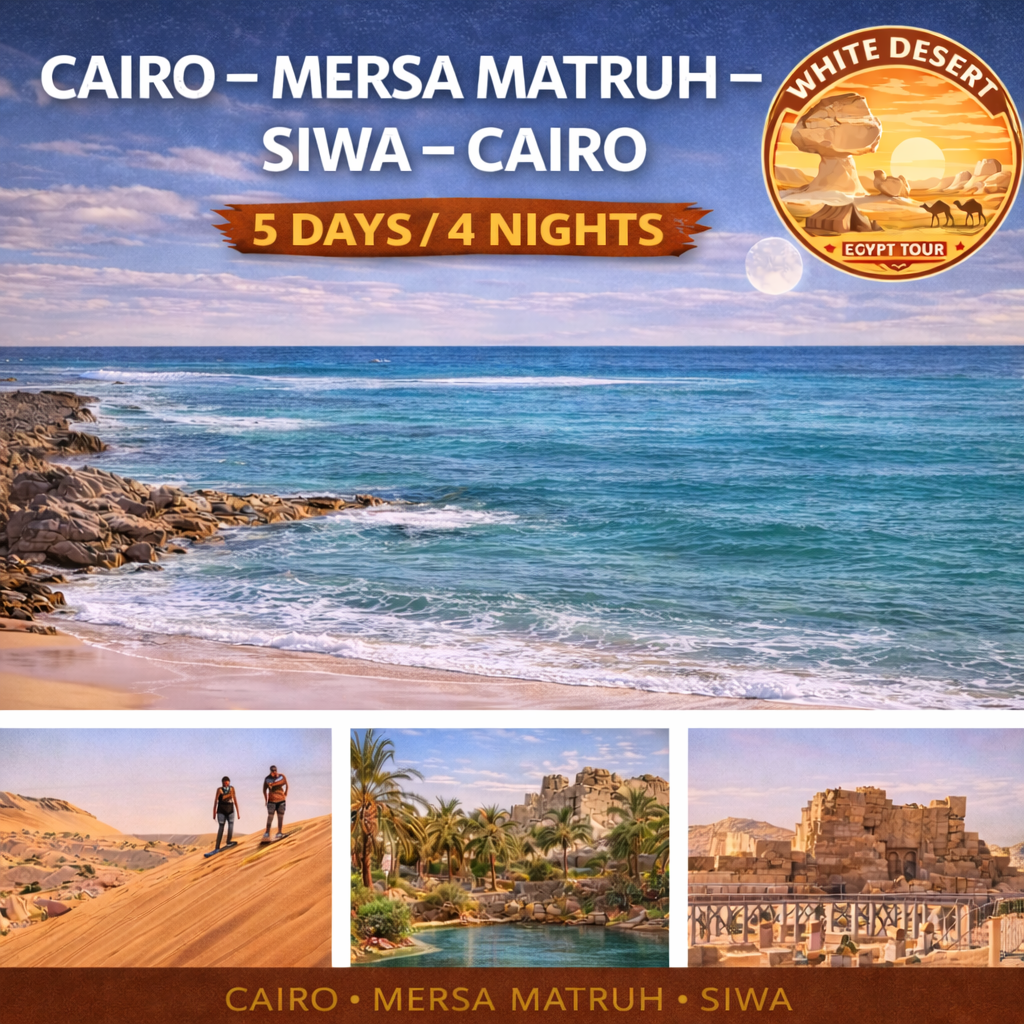
5 Days Siwa Oasis Tour from Cairo – Marsa Matrouh & Great Sand Sea Safari
🏜️ Cairo – Marsa Matrouh – Siwa – Cairo 5 Days / 4 Nights Siwa Oasis Tour from Cairo This…
5-Night Camel Safari in the White Desert
5-Night Camel Safari in the White Desert Experience the magic of Egypt’s desert on a five-night camel safari in the…
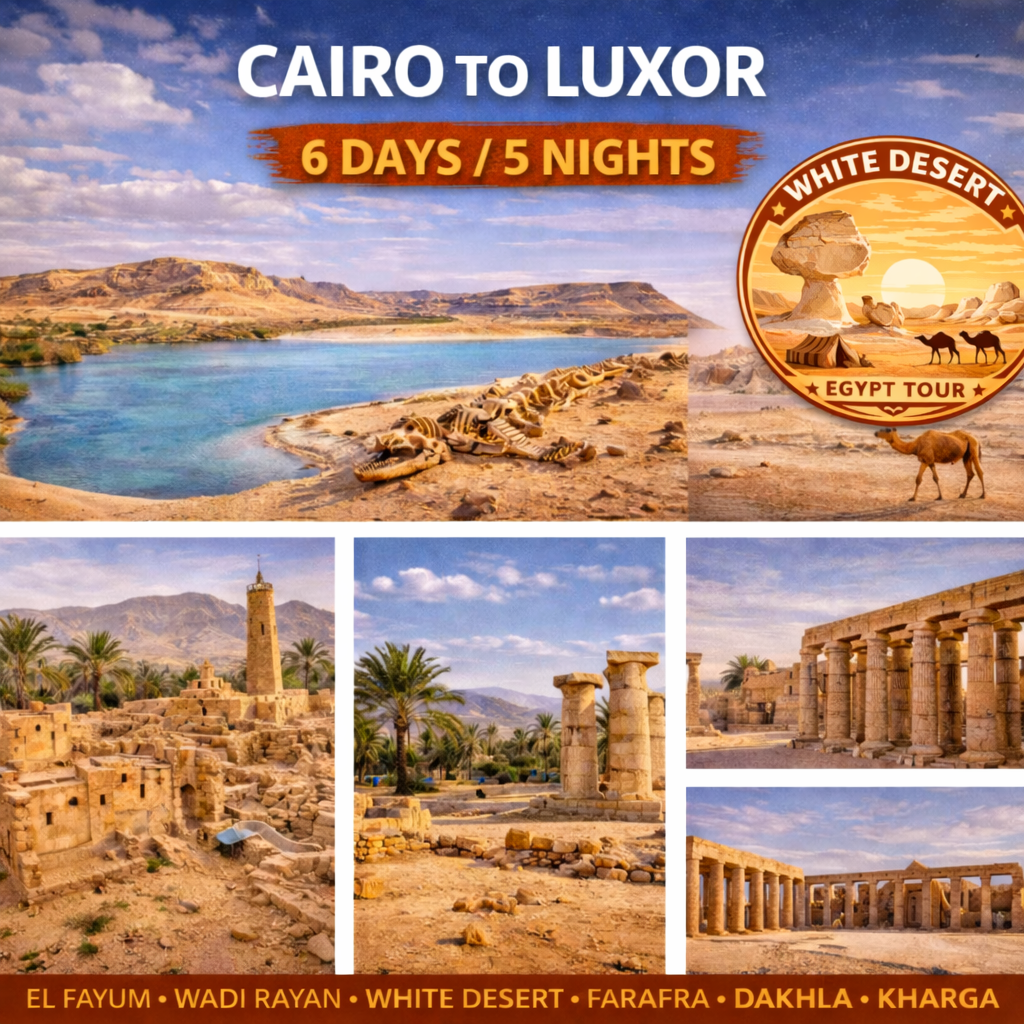
6 Days Western Desert Expedition – Cairo to Luxor Oasis & Desert Safari
🏜️ 6 Days Western Desert Expedition Cairo → Fayoum → White Desert → Dakhla → Kharga → Luxor This 6-day…
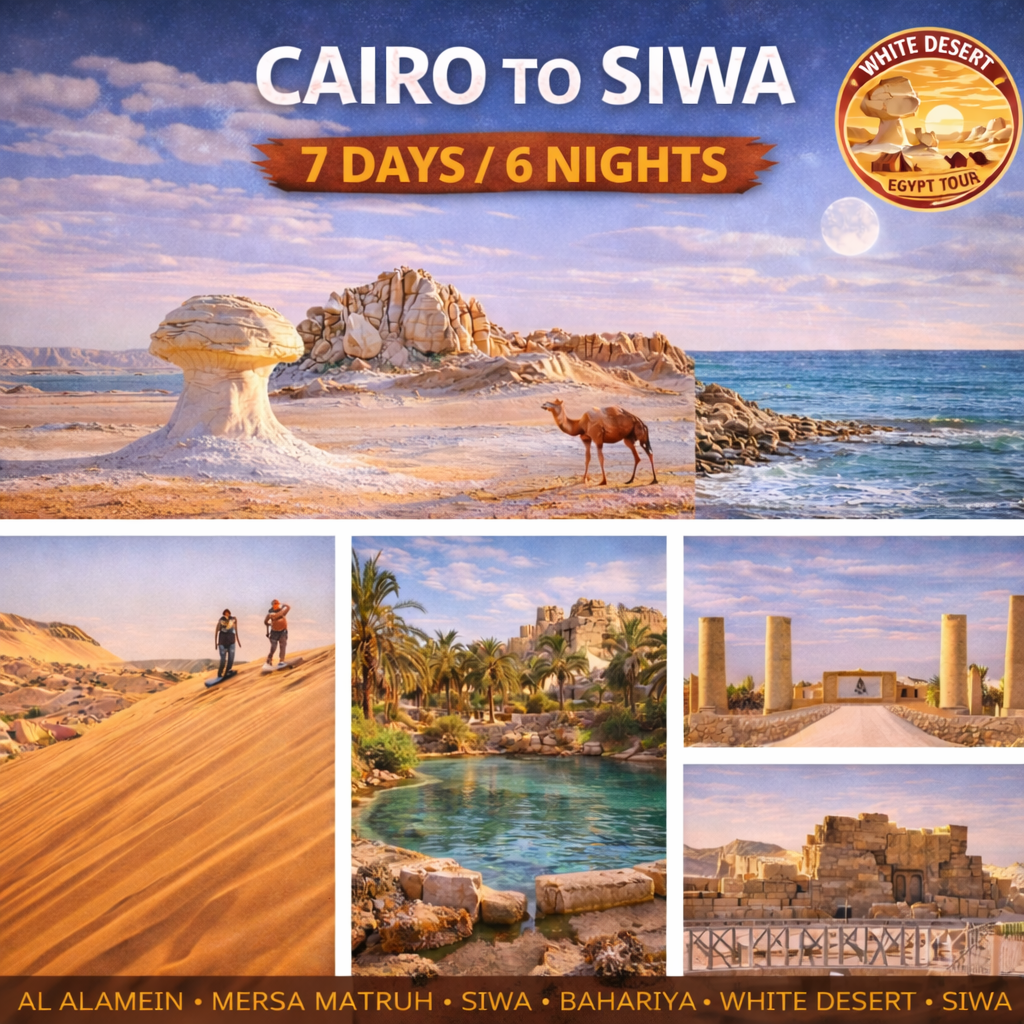
7 Days Siwa & White Desert Tour from Cairo – Ultimate Western Desert Expedition
🏜️ 7 Days Siwa & White Desert Tour from Cairo North Coast – Siwa – Bahariya – White Desert (7…
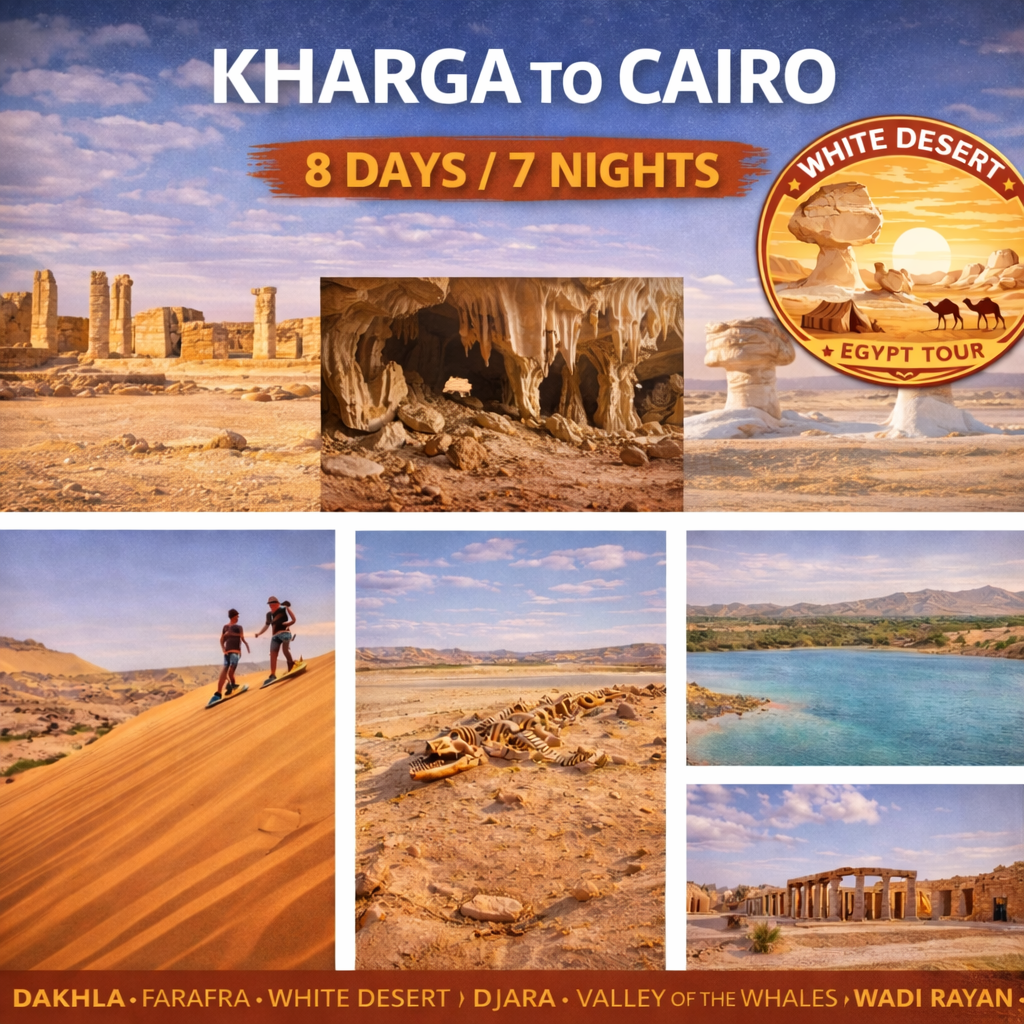
8 Days Western Desert Expedition – Kharga to Cairo Oasis & Desert Adventure
🏜️ 8 Days Western Desert Expedition (Kharga to Cairo) Kharga → Dakhla → Farafra → White Desert → Djara Cave…
Fayoum to White Desert Tour from Cairo – 4 Day Oasis & Desert Safari
Fayoum to White Desert Tour from Cairo Wadi El Rayan + Valley of the Whales + Bahariya + White Desert…
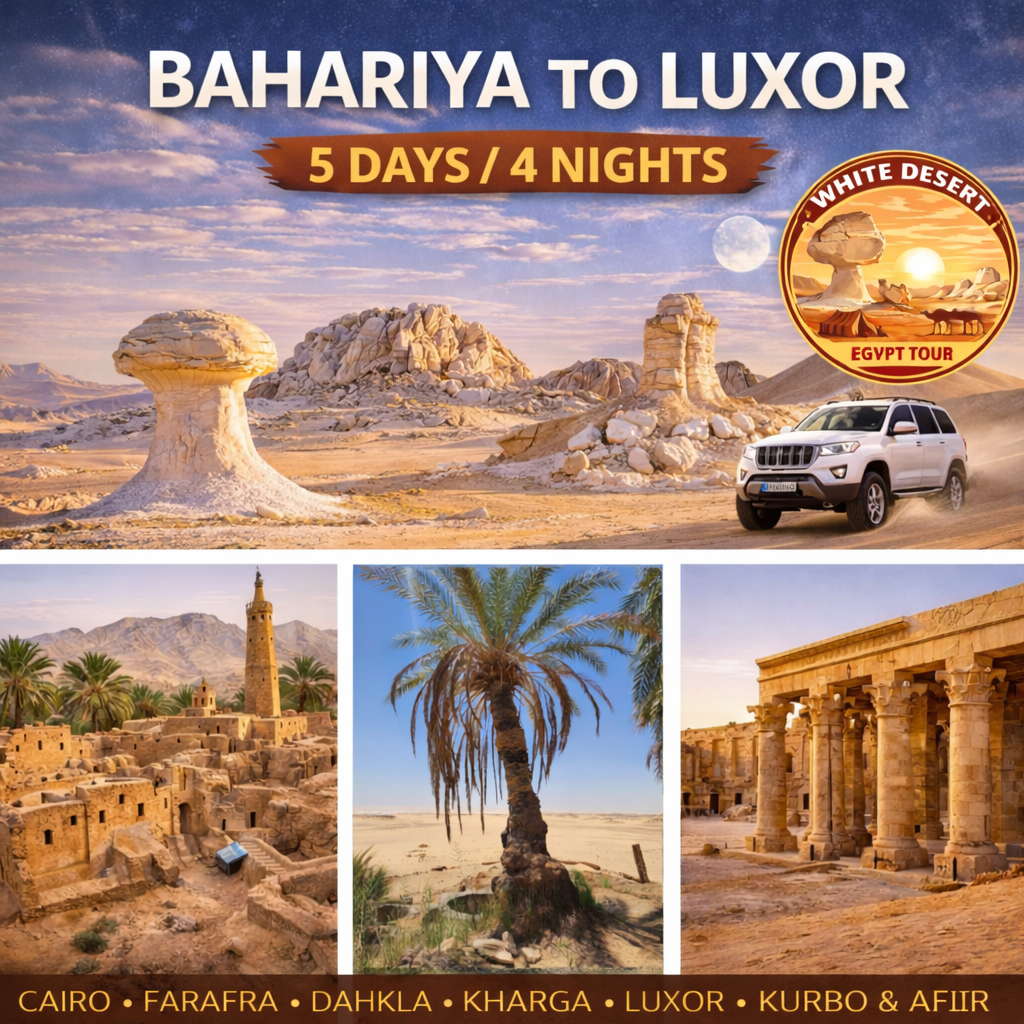
Western Desert Tour from Cairo to Luxor – 5 Day Multi-Oasis Desert Expedition
5 Days / 4 Nights Multi-Oasis Expedition This Western Desert Tour from Cairo to Luxor is a full desert expedition…
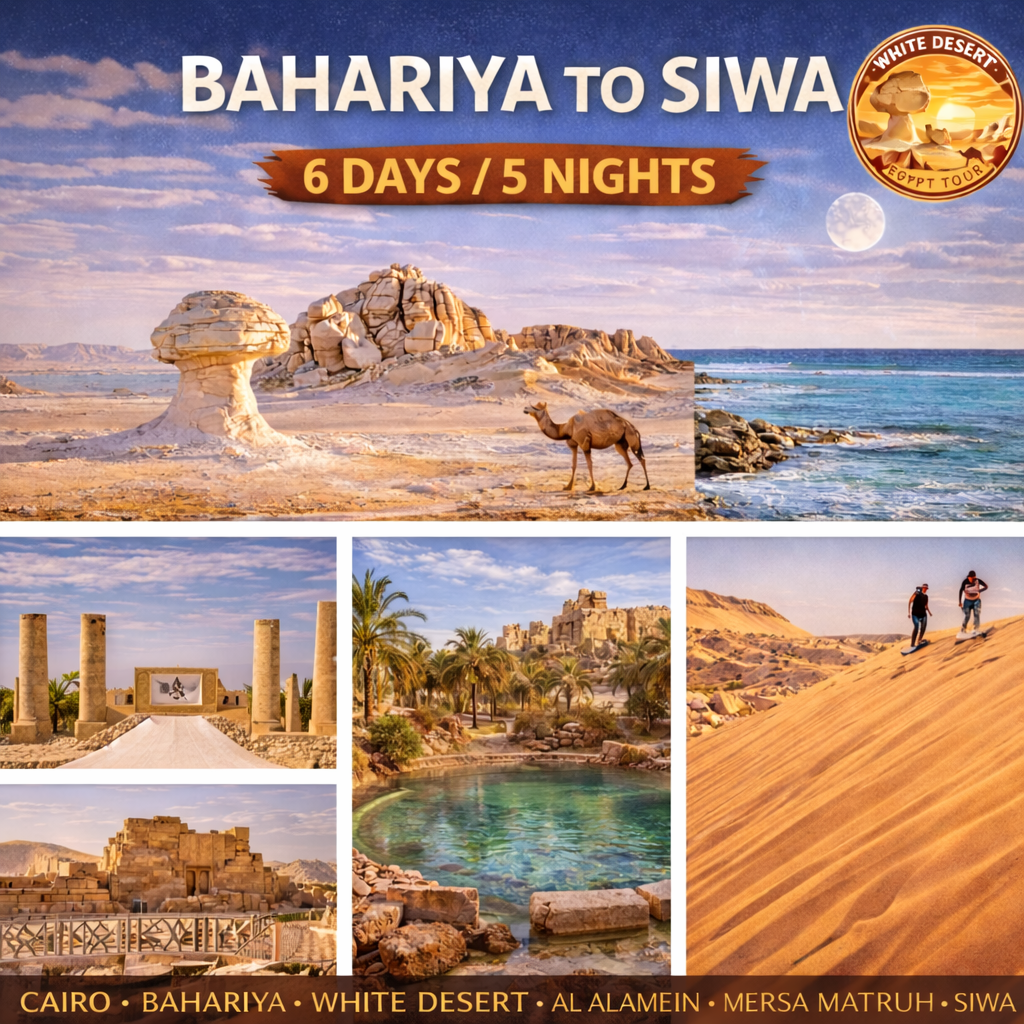
White Desert & Siwa Tour from Cairo – 6 Day Desert & Oasis Expedition
Bahariya + White Desert Camping + El Alamein + Marsa Matrouh + Siwa (6 Days / 5 Nights) If you…
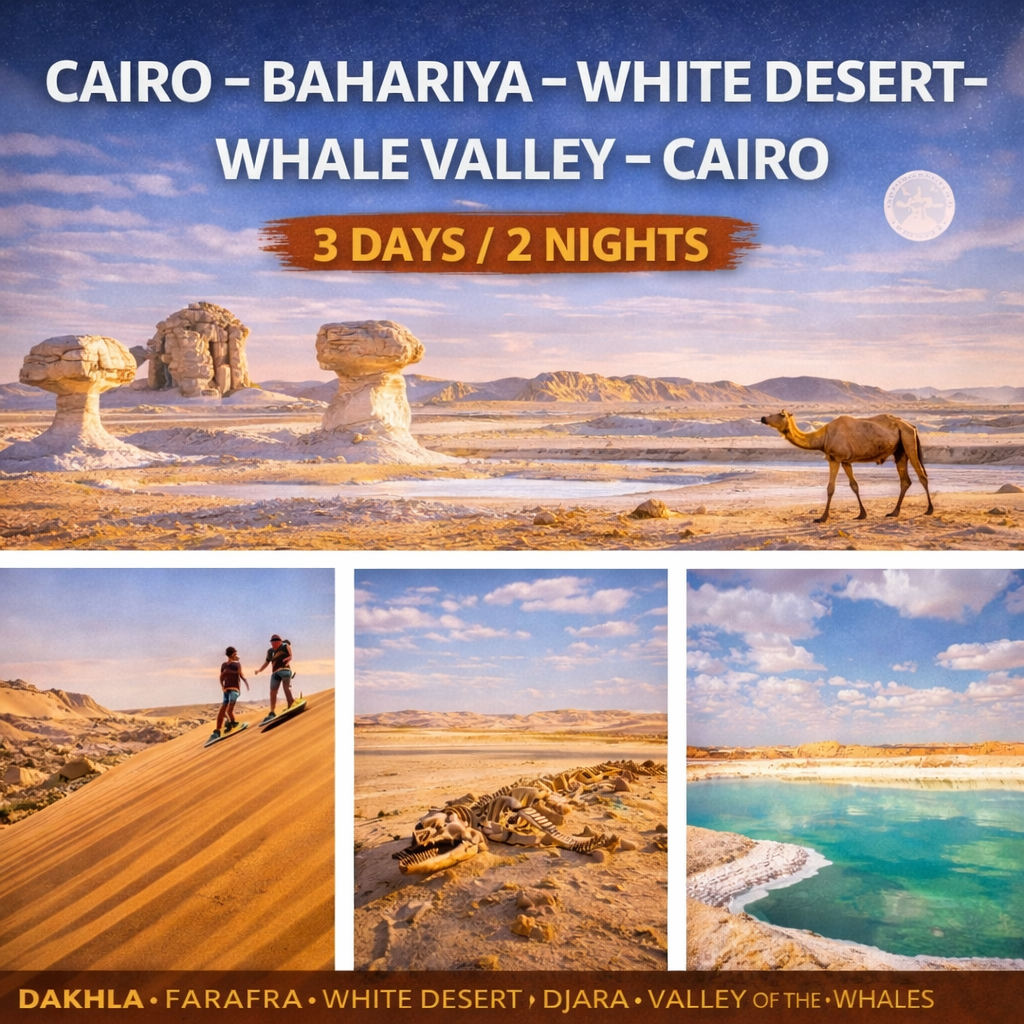
White Desert & Whale Valley Tour from Cairo – 3 Day Desert & Fossil Adventure
🏜️ White Desert & Whale Valley Tour from Cairo Cairo – Bahariya – White Desert – Wadi El Hitan –…
White Desert Tour from Cairo – 2 Day Safari & Desert Camping
White Desert Tour from Cairo – 2 Day Safari & Desert Camping Discover one of Egypt’s most unforgettable adventures with…
White Desert Trekking vs 4x4 Safari: At a Glance
Before exploring the details, here is a practical comparison of the two travel styles.
Feature | White Desert Trekking | White Desert 4×4 Safari |
Main experience | Guided hiking and exploration on foot | Off-road sightseeing and desert driving |
Physical activity | Moderate | Generally low to moderate |
Walking time | Around 2–5 hours on trekking days | Usually shorter walks at stops |
Typical duration | 4 days for the featured trekking itinerary | 2–4 days depending on the package |
Desert camping | 3 nights on the featured trekking trip | 1–3 nights depending on the itinerary |
Transportation | Road transfers plus 4×4 support | Road transfers plus 4×4 safari vehicle |
Pace | Slower and more immersive | Faster, covering more locations |
Photography | More time to explore compositions on foot | Convenient access to multiple viewpoints |
Fitness requirements | Moderate fitness recommended | Suitable for a wider range of activity levels |
Best for | Hikers, active travelers, adventure seekers | First-time visitors, couples, families, photographers |
Main advantage | A deeper walking experience | More sightseeing with less physical effort |
Main limitation | Requires more time and physical effort | Less time walking through remote landscapes |
These are general differences, not guarantees about every tour in Egypt. Specific walking distances, camping arrangements, and available activities depend on the itinerary and operating conditions.
The most important distinction is simple: a trekking expedition makes walking the central activity, while a 4×4 safari makes the vehicle the main way of exploring the desert.
What Is White Desert Trekking?
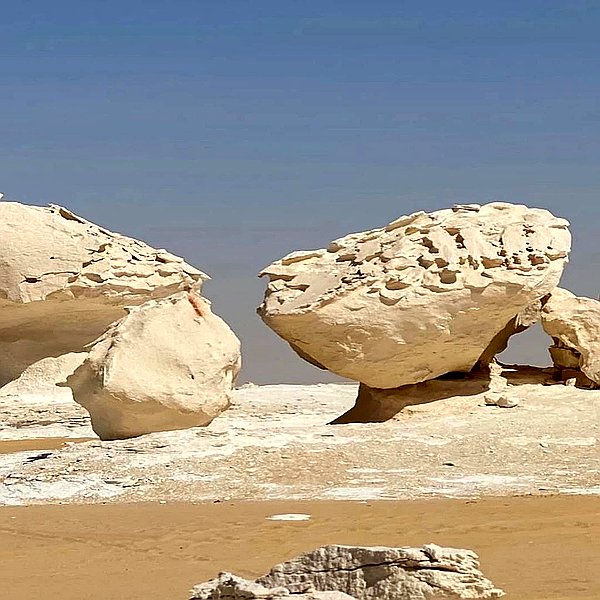
White Desert trekking is a guided hiking experience through the desert landscapes surrounding Bahariya Oasis, Valley of Agabat, and the White Desert.
Instead of spending most of the day inside a vehicle, travelers explore sections of the route on foot.
This slower approach allows you to notice smaller geological details, experience the changing textures of the desert, and spend longer periods away from the vehicle.
Walking through a desert valley feels different from stopping beside it for photographs.
You begin to understand the scale of the landscape, notice changes in the ground beneath your feet, and appreciate how enormous the surrounding rock formations are.
The experience becomes less about visiting a series of attractions and more about traveling through the environment itself.
What Happens During a Trekking Expedition?
A typical supported White Desert trek combines several elements.
The journey begins with transportation from Cairo to Bahariya Oasis.
From Bahariya, a 4×4 vehicle carries travelers and supplies into the desert.
Once the group reaches suitable trekking areas, guided walking becomes the main activity.
The support vehicle handles essential logistics, including camping equipment, food, drinking water, and other expedition supplies.
During the day, travelers hike across designated routes, stop for meals and photographs, and continue toward the next campsite.
Evenings are spent camping in the desert.
This structure makes it possible to experience a multi-day desert journey without carrying a full expedition backpack.
However, it is still an outdoor adventure requiring reasonable physical fitness and preparation.
Where Does White Desert Trekking Take Place?
The featured trekking itinerary follows a route through several distinctive areas:
Cairo → Bahariya Oasis → Black Desert → Crystal Mountain → El Agabat → Small Valley → Big Valley → Ain Khadra → Old White Desert → New White Desert → Bahariya → Cairo.
Some locations are reached primarily by vehicle, while other sections are explored on foot.
The route combines dark hills, open desert valleys, pale geological formations, and remote camping locations.
For a broader explanation of the destination, explore our White Desert Egypt travel guide.
What Is a White Desert 4x4 Safari?
A White Desert 4×4 safari is a guided off-road journey through the Western Desert, typically starting from Cairo and passing through Bahariya Oasis.
The vehicle allows travelers to move between attractions that are separated by substantial distances.
A classic safari may include the Black Desert, Crystal Mountain, Valley of Agabat, sand dunes, and the famous chalk formations of the White Desert.
Travelers stop at selected locations to walk, explore, rest, and take photographs.
Unlike a trekking expedition, walking is usually a supporting activity rather than the central purpose of the trip.
How Does a 4x4 Safari Work?
A typical two-day White Desert safari starts with an early departure from Cairo.
Travelers drive to Bahariya Oasis before continuing into the desert using a suitable 4×4 vehicle.
The safari follows an off-road itinerary through several landscapes, stopping at viewpoints and geological attractions.
Depending on the tour, the afternoon may include exploring rock formations, visiting scenic valleys, and enjoying the desert scenery before sunset.
The evening is spent at a desert camp, where travelers can enjoy dinner, watch the stars, and experience the quiet atmosphere.
The following morning, the group returns through Bahariya Oasis to Cairo.
Longer 4×4 safaris offer more opportunities to explore additional areas and spend extra nights camping.
Why Do Travelers Choose 4x4 Safaris?
The greatest advantage of a 4×4 safari is efficiency.
The Western Desert covers an enormous area, and many famous attractions are too far apart to visit entirely on foot during a short trip.
A safari vehicle connects these locations while reducing the amount of physical effort required.
This makes 4×4 tours particularly attractive for travelers who have limited time or want to enjoy desert scenery without committing to several hours of daily hiking.
A 4×4 safari is not necessarily less adventurous.
Driving through sandy tracks, rocky valleys, and remote open landscapes can be an exciting experience in its own right.
The difference is that the adventure centers more on off-road travel and scenic exploration than sustained walking.
If that sounds appealing, explore our 4×4 desert safari guide.
1. Trekking vs 4x4 Safari: Which Offers the Better Desert Experience?
This is the most important question when choosing between the two experiences.
The answer depends on what you want to feel during your journey.
Trekking Offers a Stronger Sense of Immersion
Walking allows you to experience the desert at a natural pace.
You hear the wind moving through the valley.
You notice the shifting colors of the landscape.
You can stop to study unusual rock formations or watch how sunlight changes their appearance.
The lack of constant vehicle movement creates a different atmosphere.
For travelers who enjoy hiking, this can become the most rewarding part of visiting the White Desert.
A valley that appears impressive from a viewpoint can feel even more extraordinary when you walk through it.
The formations become larger, distances become more noticeable, and the landscape begins to reveal details that are easy to miss from a vehicle.
Trekking also introduces a stronger physical connection to the journey.
You remember the walk between camps, the changing terrain, the quiet rest stops, and the satisfaction of reaching your destination.
A 4×4 Safari Offers Greater Variety in Less Time
A 4×4 safari provides a different advantage.
You can visit multiple locations without spending most of your available time walking between them.
On a short itinerary, this can be extremely valuable.
You may see the dark hills of the Black Desert, the sparkling formations at Crystal Mountain, the dramatic scenery of Agabat, and the White Desert’s chalk sculptures within the same journey.
Each location offers something different.
A safari therefore works especially well for people visiting the White Desert for the first time.
It provides a broad introduction to the region and its most recognizable attractions.
Our Recommendation
Choose trekking when the journey on foot is an important part of the experience you want.
Choose a 4×4 safari when your priority is visiting the major desert attractions efficiently.
If you have never visited the Western Desert before and are unsure about your physical fitness, a vehicle-based safari may be the more comfortable introduction.
If you already enjoy multi-hour hikes and want something beyond conventional sightseeing, trekking is likely to be more rewarding.
2. Which Tour Is More Physically Demanding?
Trekking requires more physical effort.
The featured four-day White Desert trekking expedition is described as having moderate difficulty, with approximately two to five hours of walking depending on the day’s route.
That does not mean you walk continuously for four days.
The first day includes substantial travel and vehicle transfers, while the final day focuses on returning to Cairo.
The main walking sections take place during the middle of the expedition.
What Makes Desert Trekking Challenging?
Desert hiking is different from walking through a city or following a paved nature trail.
The ground can be sandy, stony, uneven, or firm depending on the location.
Walking on soft sand can require more effort than walking the same distance on stable ground.
Even relatively gentle terrain becomes more demanding under strong sunlight.
Temperature changes, limited shade, and the need to walk for several hours also influence the experience.
A traveler who comfortably walks for two hours in a city may find a similar period in the desert more tiring.
That does not necessarily make the trek extreme.
It means that travelers should prepare realistically.
Do You Need Previous Trekking Experience?
Previous hiking experience is helpful but is not necessarily essential for the published moderate-difficulty itinerary.
If you regularly walk, enjoy outdoor activities, and can comfortably spend several hours on your feet, trekking may be suitable.
However, fitness varies significantly between individuals.
The ability to walk comfortably over uneven terrain is more important than simply being enthusiastic about adventure.
If you are uncertain, explain your usual activity level to the tour operator.
You should also mention any mobility limitations or other considerations affecting your ability to hike.
The operator can then explain whether the planned route is appropriate and whether adjustments are feasible.
What About the 4×4 Safari?
A traditional 4×4 safari generally requires less walking.
You still need to enter and exit the vehicle, move over uneven ground at viewpoints, and possibly climb small dunes or rock features if you choose.
Off-road driving can also be bumpy and uncomfortable for some travelers.
However, the main sightseeing route does not usually require several hours of continuous hiking.
For people who prefer flexibility around physical activity, the 4×4 safari has a clear advantage.
Important: Neither option should be selected solely from a difficulty label. Ask for the expected daily walking time, terrain, rest opportunities, and vehicle arrangements before booking.
3. Which Tour Lets You Explore More Attractions?
The answer depends on how you define exploration.
A 4×4 safari usually makes it easier to visit more geographically separated locations in a shorter time.
Trekking generally offers more time exploring selected areas on foot.
Attractions Commonly Featured on a 4×4 Safari
A classic White Desert safari from Cairo can include several well-known destinations.
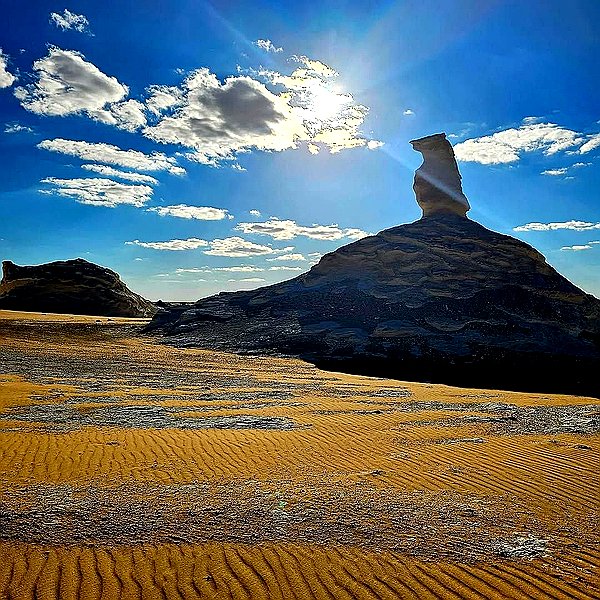
The Black Desert is recognized for its dark-colored hills and dramatic contrast with the surrounding sand.
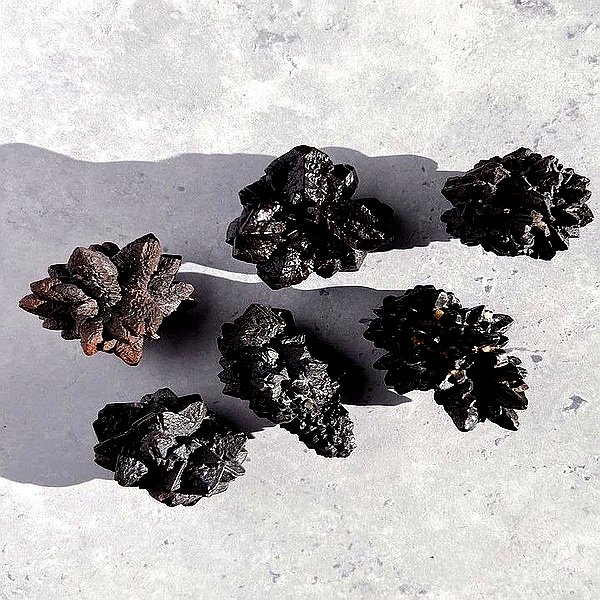
Crystal Mountain offers unusual sparkling mineral formations and a distinctive geological landscape.
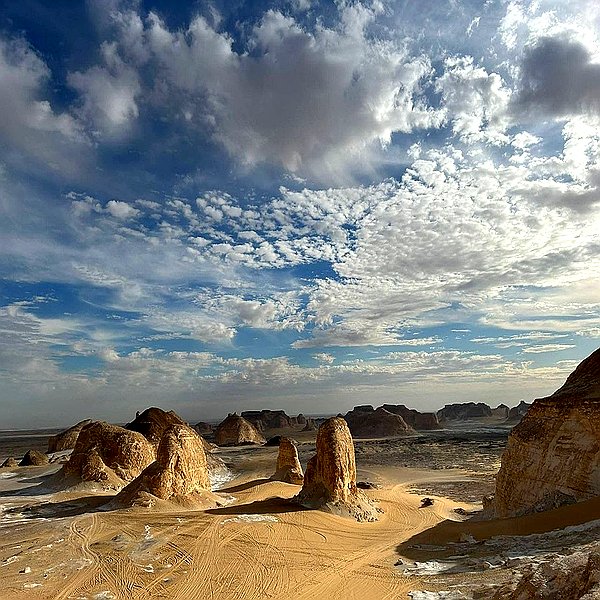
The Valley of Agabat is famous for its broad desert valleys, steep pale formations, and striking views.
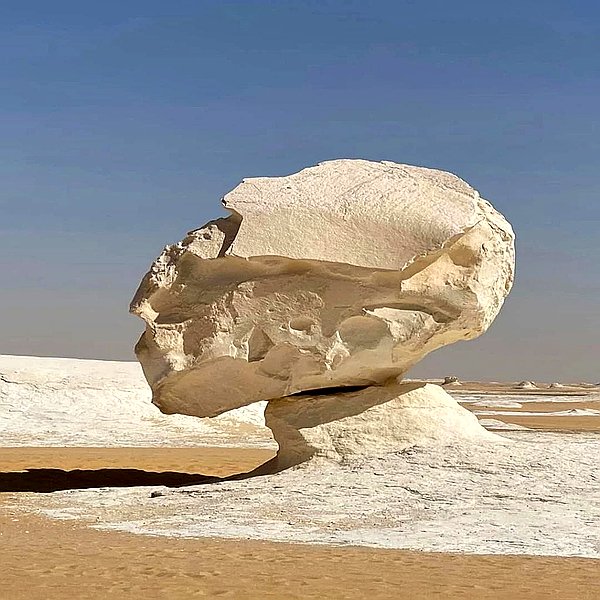
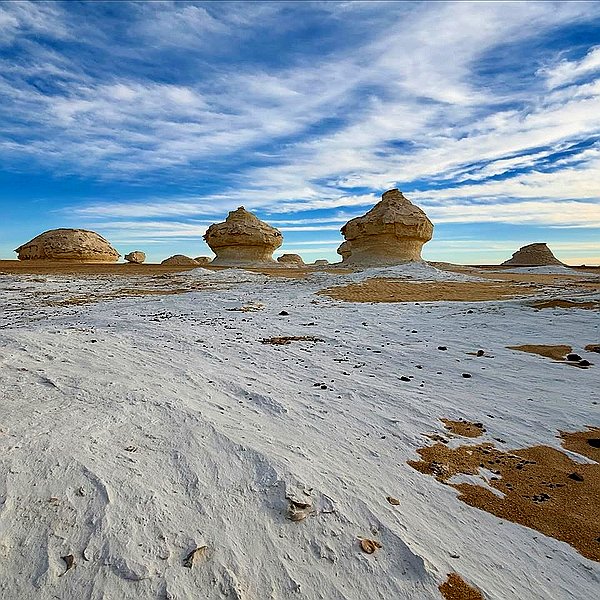
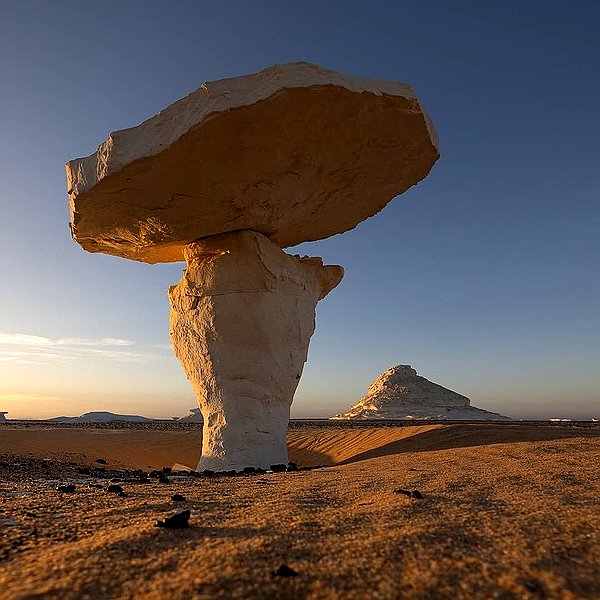
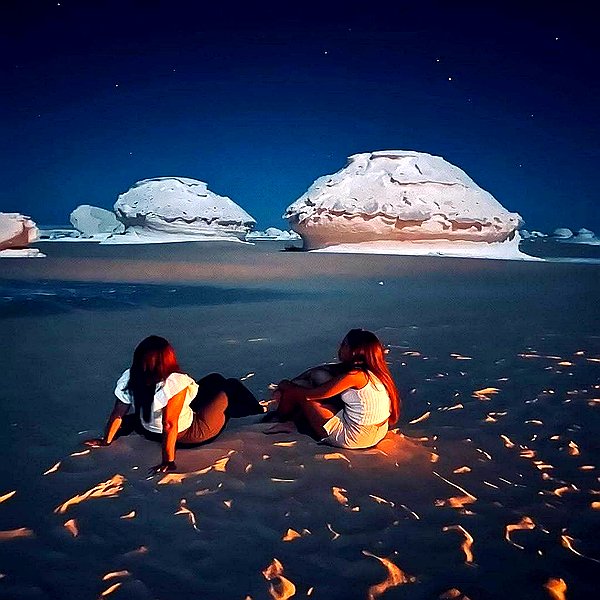
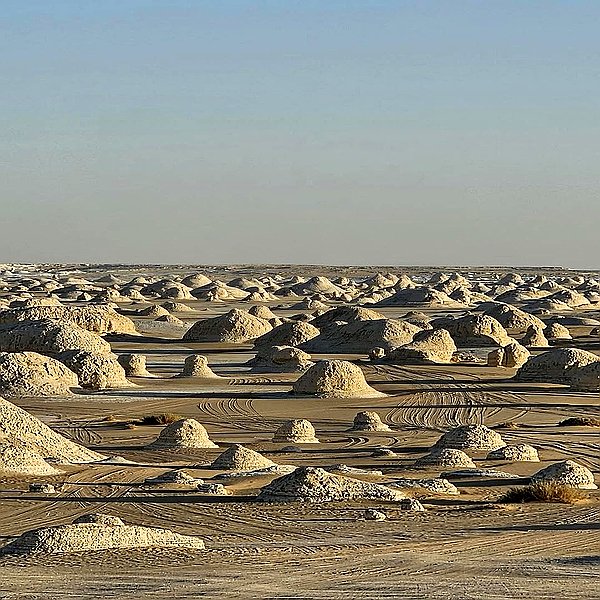
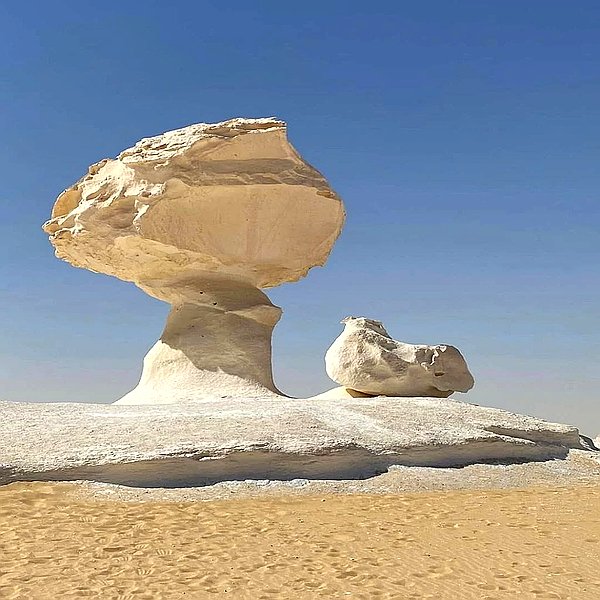
The White Desert itself provides the extraordinary chalk formations that make the destination internationally recognizable.
Some safari itineraries also include sand dunes, springs, fossil areas, and additional viewpoints.
However, not every activity is included in every package.
Check the actual program instead of assuming all tours visit identical attractions.
Attractions Featured on a Trekking Route
A trekking expedition may include some of the same landmark stops before moving into more walking-focused sections.
The featured four-day trek includes travel through El Agabat, Small Valley, Big Valley, Ain Khadra, the Old White Desert, and the New White Desert.
These areas provide opportunities for walking through changing scenery rather than simply stopping at viewpoints.
The emphasis is on experiencing the terrain, not collecting the largest possible number of sightseeing stops.
The Difference Between Seeing and Experiencing
Imagine arriving at a dramatic desert valley.
On a 4×4 safari, you may stop, walk to a viewpoint, take photographs, and continue toward the next attraction.
On a trekking tour, that same type of landscape may become part of the walking route.
You notice how the valley changes as you move through it.
You experience the distance between formations and the textures of the ground.
You spend longer in one environment.
Neither approach is wrong.
A traveler who enjoys variety may prefer the safari.
A traveler who values depth and immersion may prefer trekking.
4. What Is the Difference in Camping Experience?
Camping is a major attraction of both White Desert trekking and 4×4 safari tours.
However, the number of nights and daily routine can differ significantly.
Camping on a 4×4 Safari
A classic two-day White Desert safari usually includes one camping night.
After exploring the main attractions, the group reaches its camping area in time for the evening.
The crew prepares the camp and dinner.
Travelers can enjoy the changing colors of the landscape at sunset, relax after the safari, and spend the night in the desert.
The following morning typically includes breakfast and the return journey toward Cairo.
This arrangement gives visitors a genuine overnight desert experience without requiring several days away from conventional accommodation.
Longer 4×4 tours may include two or more camping nights.
Camping During a Trekking Expedition
The published four-day trekking itinerary includes three nights of desert camping.
The first camp is planned around El Agabat.
The second follows the trekking route toward Ain Khadra.
The third is in the White Desert.
This creates a different rhythm.
Camping becomes part of the expedition routine rather than a single overnight highlight.
You wake up, eat breakfast, prepare for the day’s walk, explore the terrain, stop for lunch, and continue toward another campsite.
By the second or third night, the experience often feels less like an isolated tourist activity and more like a continuous outdoor journey.
Which Camping Style Is More Comfortable?
Comfort depends on the facilities supplied, the weather, and your expectations.
The trekking package lists camping equipment, meals, water, and camp setup among its inclusions.
The classic safari also includes camping equipment and a desert camping night.
However, do not assume that a support vehicle means hotel-style facilities.
Ask about mattresses, bedding, tent sharing, toilets, washing arrangements, and any optional comfort upgrades.
If sleeping outdoors is a new experience for you, the shorter safari may be a sensible introduction.
If you already enjoy camping and are comfortable spending multiple nights outside, trekking can provide a deeper experience.
For more information, read our White Desert camping guide.
5. Trekking vs 4x4 Safari: Which Is Better for Photography?
Both experiences offer excellent photographic opportunities, but they suit different approaches.
Why Photographers May Prefer Trekking
Trekking gives photographers more time to study smaller details within the landscape.
Instead of relying primarily on vehicle stops, you can explore changing angles as the walking route progresses.
This is particularly useful for photographing rock textures, abstract shapes, footprints, winding valleys, and the relationship between people and enormous geological formations.
Walking can also help photographers notice scenes that do not immediately appear impressive from a distance.
A small formation, natural curve, or unusual combination of shadows might become an interesting composition when approached on foot.
The slower rhythm encourages observation.
However, photography time still needs to fit the guided route and the group’s walking schedule.
A trekking itinerary is not automatically a dedicated photography workshop.
Why Photographers May Prefer a 4×4 Safari
A 4×4 safari is useful when you want to photograph several locations during a shorter trip.
The vehicle can connect contrasting environments and provide access to different viewpoints.
For photographers interested in wide landscape collections, this variety can be especially appealing.
The vehicle also reduces the physical effort involved in transporting personal equipment between major stops.
You may be able to bring a larger camera bag than you would comfortably carry on a long hike, although luggage capacity and safe storage should be confirmed.
What About Sunrise and Sunset?
Both types of trips can include sunrise and sunset photography when the itinerary and conditions allow.
The important factors are the campsite location, the timing of activities, and the operator’s flexibility.
If photography is your main reason for visiting, ask whether the schedule allows time for carefully planned compositions.
You should also consider the direction of the light and the amount of movement required between locations.
For practical camera advice, explore our White Desert photography tips.
6. Which Experience Offers More Adventure?
Adventure means different things to different travelers.
For some people, adventure is the excitement of traveling over remote desert tracks in a 4×4.
For others, it is the challenge of walking through unfamiliar landscapes and reaching a new campsite on foot.
The Adventure of Trekking
A White Desert trek offers a sense of physical accomplishment.
You participate actively in the journey.
The scenery changes gradually rather than passing by through a vehicle window.
The walking sections create opportunities to appreciate the desert’s scale and remoteness.
Longer periods outdoors also encourage a different daily routine.
Instead of organizing your day around scheduled sightseeing stops, the walk, the weather, the terrain, and the next campsite become central parts of the experience.
This can be particularly rewarding for experienced hikers.
It can also appeal to travelers who want to spend less time using their phones and more time focusing on the natural surroundings.
However, a trekking tour should not be presented as a survival challenge.
The featured route is a supported, guided expedition with transport, meals, water, and camping equipment provided.
The Adventure of a 4×4 Safari
A 4×4 safari offers adventure through movement and variety.
Traveling between remote valleys, crossing sandy areas, and exploring dramatic desert scenery can be memorable even when you are not walking for hours.
You can combine off-road exploration with short hikes, scenic stops, and camping.
For many travelers, this balance is ideal.
It delivers a sense of adventure without requiring a trekking-focused holiday.
The important thing is to choose an appropriate vehicle and a professionally organized route.
A good safari should prioritize responsible driving and passenger safety rather than risky maneuvers.
7. Is White Desert Trekking More Expensive Than a 4x4 Safari?
The cost depends on the duration, group size, services, and route.
A four-day trekking expedition will often involve more days of guiding, camping, meals, and support logistics than a two-day safari.
That can increase the total trip cost.
However, it would be misleading to say trekking is always more expensive.
A luxury or highly customized 4×4 safari could cost more than a standard supported trek.
Similarly, a private expedition for two travelers may cost more per person than a larger group sharing some of the same operating expenses.
What Affects Trekking Tour Prices?
Several factors influence the cost of a supported walking expedition.
The duration matters because the team needs to provide accommodation, meals, guiding, and logistical support across multiple days.
Group size also matters because some costs can be shared.
The support vehicle is another important component.
Even though walking is the central activity, vehicles are still required for desert transfers, supplies, and the planned expedition logistics.
Travel dates and customization requests can also change the final price.
What Affects 4×4 Safari Prices?
A conventional safari has its own cost factors.
These include the number of days, the number of travelers, vehicle requirements, camping nights, meals, accommodation standards, and any optional activities.
A private 4×4 tour generally offers more flexibility than a shared departure, but the total cost may be different.
Are National Park Entrance Fees Included?
The current White Desert Egypt Tour trekking and classic two-day safari pages list entrance fees among their exclusions.
The Egyptian Environmental Affairs Agency publishes information about protected-area entrance, vehicle, and camping fees.
These charges can change, and the relevant amount may depend on nationality, vehicle type, camping arrangements, and the protected areas visited.
Request an updated fee estimate before booking.
How Should You Compare Prices?
Do not compare a four-day trekking expedition with a two-day 4×4 safari using only the total price.
Compare the duration and what is included.
A useful quotation should explain the transport, guide arrangements, camping equipment, meals, drinking water, accommodation, entrance fees, and any additional services.
Most importantly, compare the experience you are buying.
If your main objective is a multi-day hike, a cheaper vehicle-based safari may not satisfy that goal.
If you simply want to visit the famous White Desert landscapes, paying for a longer trekking expedition may be unnecessary.
8. What Is a 4-Day White Desert Trekking Itinerary Like?
To understand the difference between trekking and a conventional safari, it helps to look at a real walking itinerary.
The published 4-day White Desert trekking expedition starts and finishes in Cairo and includes three camping nights.
The itinerary is structured around two main trekking days, with vehicle transfers and sightseeing on the first and final days.
Day 1: Cairo to Bahariya and El Agabat
The journey begins with an early departure from Cairo toward Bahariya Oasis.
After arriving in the oasis and stopping for lunch, the group continues into the Western Desert using 4×4 transportation.
The planned route includes the Black Desert, Crystal Mountain, and El Agabat.
This first day introduces travelers to the changing landscape.
The scenery transitions from the oasis environment to darker hills, exposed formations, and open desert valleys.
The first campsite is established in the El Agabat area.
Dinner and an evening in the desert provide an introduction to the camping routine before the main walking sections begin.
Day 2: El Agabat, Small Valley, Big Valley and Ain Khadra
The second day focuses on trekking.
After breakfast, the group begins walking toward Small Valley.
The published schedule indicates approximately two hours for this first section.
After a lunch break, the route continues through Big Valley for approximately another two hours.
The final walking section toward Ain Khadra is listed at approximately one hour.
This makes the second day the most substantial scheduled walking day of the expedition.
A support vehicle carries the camping equipment and supplies.
The day finishes with another desert campsite and an overnight stay.
Actual walking time can vary according to the terrain, weather, group pace, and operational decisions.
Day 3: Ain Khadra to the Old and New White Desert
The third day continues the walking experience.
The published itinerary begins with a morning walk of approximately one hour from Ain Khadra.
The route then passes through the Old White Desert formations.
After lunch, another walking section of approximately two hours leads toward the New White Desert.
This part of the trip brings travelers into the region’s famous pale rock formations.
Walking through the scenery gives you opportunities to appreciate the shapes, textures, and scale of the landscape.
The final night is spent camping in the White Desert.
For travelers who enjoy photography, this can be a memorable conclusion to the walking sections.
Day 4: Bahariya Oasis and Return to Cairo
After breakfast at camp, the group returns toward Bahariya Oasis.
From there, the journey continues by road to Cairo.
The published program indicates an afternoon or evening return, depending on road conditions and stops.
Avoid scheduling a tightly timed international flight immediately after the return journey.
The key benefit of this itinerary is the combination of guided walking, changing scenery, and three nights of camping.
It provides more time on foot than the classic short safari while retaining logistical support.
9. What Does a 2-Day White Desert 4x4 Safari Look Like?
A two-day safari follows a different structure.
Rather than dedicating the middle days to trekking, the itinerary concentrates on exploring the main attractions efficiently.
Day 1: Cairo, Bahariya Oasis and the White Desert
The trip begins with pickup from a Cairo hotel.
The road journey to Bahariya generally takes several hours.
After reaching Bahariya, travelers begin the 4×4 safari section.
The current two-day program includes destinations such as the Black Desert, El Haize Valley, Crystal Mountain, Valley of Agabat, and the White Desert.
There may also be opportunities for short walks and optional sandboarding, depending on the itinerary.
The group reaches the camping area before the evening.
After dinner, travelers can enjoy the atmosphere of the desert camp.
Day 2: Sunrise and Return to Cairo
The second day usually begins with breakfast and an opportunity to enjoy the morning scenery.
The group then returns toward Bahariya Oasis before traveling back to Cairo.
This is the main difference between the experiences.
The two-day safari provides a concentrated introduction to the Western Desert.
The four-day trek creates a slower journey involving sustained walking and additional camping nights.
Neither itinerary should be judged only by the number of places listed.
The right choice depends on what you want from the trip.
10. Should You Choose a Longer 4x4 Safari Instead of Trekking?
One important option is often overlooked.
You do not necessarily have to choose between a two-day 4×4 safari and a four-day trekking expedition.
Longer vehicle-based safaris are also available.
For example, the 3-day White Desert safari from Cairo includes two desert camping nights and more time to explore the Western Desert.
The itinerary features Agabat, dunes, geological attractions, and the White Desert.
This option may suit travelers who want an extended camping experience without making trekking the main activity.
Similarly, the 4-day White Desert tour from Cairo is designed around a longer, vehicle-supported safari program.
Its published accommodation structure includes two desert camping nights and a third night that can be arranged at a Bahariya hotel or dunes camp.
When Is a Longer 4×4 Tour Better?
Choose a longer safari when you have three or four days but prefer sightseeing, photography, and varied stops over daily hiking.
It can also be a good choice when the group includes travelers with different fitness levels.
A vehicle-based itinerary may make it easier for everyone to enjoy the same journey without expecting every participant to complete extended walks.
When Is Trekking Still the Better Choice?
Choose trekking when walking is not simply an optional activity but one of your main reasons for traveling.
The dedicated expedition includes specific trekking sections through valleys and White Desert landscapes.
A longer safari may provide more time outdoors, but it does not automatically provide the same hiking experience.
Ask for the actual amount of scheduled walking rather than relying on the tour duration alone.
11. Which Option Is Better for Couples?
Both trekking and 4×4 safaris can be excellent experiences for couples.
The most important factor is whether both travelers share similar expectations.
Choose Trekking as a Couple If:
You both enjoy outdoor activities, walking, camping, and quiet natural environments.
A multi-day trekking expedition can create shared memories through the journey itself.
You spend time exploring together, adjusting to the rhythm of desert travel, and enjoying evenings away from busy tourist areas.
This can be particularly appealing to adventurous couples who already enjoy hiking holidays.
However, a trek is less suitable if one person expects a relaxed sightseeing experience while the other wants several hours of hiking each day.
Choose a 4×4 Safari as a Couple If:
You want scenic variety, photography, and a desert camping night without a demanding walking schedule.
A private 4×4 tour may also provide flexibility around rest stops and the amount of sightseeing.
For a short romantic getaway from Cairo, the classic overnight safari can be an attractive option.
For adventurous couples, the trekking expedition offers something more physically involved.
Our advice: Choose the experience that suits both people, not just the more adventurous traveler.
12. Which Experience Is Better for Families?
For many families, a 4×4 safari is the more practical choice.
Children and adults with different fitness levels may find several hours of trekking challenging.
A vehicle-focused safari allows the group to explore the desert while choosing shorter walks appropriate to their abilities.
However, that does not mean every safari is automatically suitable for every child.
Parents should ask about journey duration, seat arrangements, overnight facilities, temperatures, and the suitability of off-road driving.
The same applies to older family members.
A shorter walking schedule may be easier, but long vehicle transfers and uneven off-road travel still require consideration.
Can Families Book a Trekking Tour?
Potentially, depending on the children’s ages, the experience of the group, the route, and the operator’s assessment.
An active family with older children who regularly hike may be comfortable with a suitable walking itinerary.
However, the standard moderate-difficulty expedition should not be assumed appropriate for young children.
If you are considering trekking as a family, request a realistic assessment of the walking sections and possible adjustments.
For families mainly interested in the famous formations and camping, a 4×4 itinerary will often be more straightforward.
13. Is White Desert Trekking Suitable for Solo Travelers?
Solo travelers can enjoy either experience.
The important considerations are departure availability, price, group arrangements, and personal travel preferences.
Trekking for Solo Travelers
A supported trek can appeal to solo adventurers who enjoy hiking and would like to experience the desert without organizing an independent expedition.
You travel with a guide and the support arrangements associated with the tour.
However, shared departures should not be assumed.
Ask whether the operator has a confirmed departure that accepts individual travelers or whether a private quotation is required.
Also confirm accommodation arrangements and any single-person supplement.
4×4 Safaris for Solo Travelers
A classic 4×4 safari may be easier to fit into a short travel schedule.
If shared departures are available, they may also provide an opportunity to travel with other visitors.
However, a shared tour is not guaranteed on every date.
Solo travelers should compare the total price and actual departure arrangements rather than relying on advertised group options.
In either case, avoid independently entering remote desert areas without the necessary local arrangements and authorizations.
14. What Should You Pack for White Desert Trekking?
Packing appropriately makes a substantial difference to comfort.
Even when a support vehicle carries camping equipment, you still need suitable personal clothing and a comfortable day bag.
Walking Shoes
Choose comfortable, well-fitting walking shoes with reliable grip.
Lightweight hiking boots or sturdy trail shoes may be appropriate depending on your preferences and the expected terrain.
Avoid using brand-new footwear for the first time during a multi-day trek.
Blisters can turn an otherwise enjoyable walking holiday into a difficult experience.
Clothing for Different Temperatures
Bring lightweight clothing suitable for daytime activity.
Long sleeves can help protect against the sun.
For evenings and early mornings, pack warm layers appropriate to the season.
Desert conditions can vary considerably between daytime and nighttime.
Ask the operator about expected temperatures before choosing your clothing.
Sun Protection
A sun hat, sunglasses, and sunscreen are essential personal items.
Shade can be limited during desert walks.
Protecting your skin and eyes helps make the experience more comfortable.
Personal Day Bag
A small, comfortable backpack is useful for carrying items you need while walking.
These may include drinking water, snacks, sunscreen, a camera, medication, and additional clothing.
Confirm how much drinking water you will need to carry between support stops.
Headlamp and Power Bank
A headlamp can be useful around camp after sunset.
A power bank helps keep essential personal electronics charged where conventional electricity is unavailable.
Bring suitable protection for devices exposed to dust.
Personal Medication and Toiletries
Carry any personal medication you require.
If you have particular health needs, discuss the logistics with the operator before confirming your trip.
Do not assume that remote camps have the same facilities as a hotel.
What Does the Support Vehicle Carry?
The published trekking package includes camping equipment, meals, mineral water, and a 4×4 support vehicle.
That reduces the amount of equipment travelers need to carry themselves.
However, ask whether there are any personal sleeping items or other supplies you should bring.
For a broader preparation checklist, read our White Desert Egypt packing guide.
15. When Is the Best Time for Trekking or a 4x4 Safari?
Weather is important for both experiences, but it matters especially when walking for several hours.
Many travelers find the cooler months more comfortable for outdoor activities in Egypt’s Western Desert.
However, desert weather can vary significantly by season and between day and night.
Trekking During Cooler Months
Cooler daytime conditions can make extended walking more comfortable.
However, evenings and early mornings can be cold, particularly during overnight camping.
Bring suitable layers and confirm the expected sleeping arrangements.
Trekking During Hot Weather
Hot weather makes walking more physically demanding.
Strong sunlight and limited shade can increase the risk of dehydration and heat-related illness.
A guided trek should be planned according to actual weather conditions rather than treating the advertised walking schedule as fixed.
The US National Park Service provides general desert hiking safety guidance, including advice on hydration, sun protection, and avoiding strenuous activity during extreme heat.
Although the guidance is not specific to Egypt, the principles are useful for understanding the demands of hot desert environments.
Are 4x4 Safaris Easier in Warmer Weather?
A vehicle-based safari reduces the amount of walking, but that does not remove the risks associated with heat.
Travelers still spend time outdoors at viewpoints and camps.
Vehicle reliability, available drinking water, and appropriate route planning remain important.
For either experience, confirm the operator’s arrangements for your actual travel dates.
Learn more in our best time to visit White Desert Egypt guide.
16. Which Experience Is Safer?
Safety depends on the quality of planning, the operating conditions, the guide, and the suitability of the route.
Neither trekking nor 4×4 travel should be described as completely risk-free.
Safety Considerations for Trekking
Walking involves exposure to sun, wind, changing temperatures, and uneven terrain.
Travelers should follow the guide’s instructions, remain with the group, and communicate immediately if they feel unwell.
The support vehicle is an important logistical component, but travelers should not assume it can reach every walking location immediately.
Ask how the team manages communication, navigation, rest breaks, and emergency situations.
Safety Considerations for 4×4 Safaris
Off-road travel introduces different risks.
Driving conditions can vary according to sand, rock, visibility, and weather.
Vehicles should be suitable for the route and operated by experienced drivers.
Passengers should follow safety instructions and use seat belts where fitted.
Avoid operators who treat dangerous driving as entertainment.
Travel Advice and Permits
Some Western Desert locations have specific access and permit requirements.
The UK Foreign, Commonwealth & Development Office’s Egypt travel advice specifically discusses the Western Desert and states that tourists visiting Bahariya, Farafra, the White Desert, and the Black Desert need advance permits and an official guide.
Travelers should also check the latest advice from their own governments.
Insurance conditions may differ depending on nationality, destination, and travel activities.
Before booking, confirm that the operator can arrange the necessary permissions and legally conduct the proposed itinerary.
For more practical information, see our White Desert Egypt safety guide.
17. Environmental Responsibility: Trekking vs 4x4 Safari
The White Desert is a protected natural landscape.
Its unusual geological formations are part of what makes the destination special.
Responsible tourism helps preserve the environment for future visitors.
Responsible Trekking
Walking may seem less intrusive than driving, but hikers still need to follow designated or guide-approved routes.
Avoid climbing fragile formations, damaging natural features, disturbing wildlife, or removing rocks and fossils.
Carry personal rubbish back to camp or to appropriate disposal facilities.
Even small actions matter in remote landscapes where waste collection and restoration can be difficult.
Responsible 4×4 Travel
A responsible safari should avoid unnecessary damage to sensitive terrain.
Drivers should follow applicable access rules and use permitted routes.
Visitors should not request risky driving across fragile geological areas simply for photographs.
The aim is to explore the landscape while minimizing unnecessary disturbance.
Respecting Campsites
The same principles apply to both travel styles.
Avoid leaving rubbish, damaging formations, or disturbing wildlife.
Follow local instructions regarding campfires and protected-area rules.
A responsible trip should leave the campsite in a condition suitable for the next visitors and the surrounding environment.
18. How Do You Choose the Right White Desert Tour for Your Travel Style?
The easiest way to decide is to identify your main priority.
Choose White Desert Trekking If You:
- Enjoy hiking and outdoor adventures.
- Have four days available.
- Are comfortable with multiple camping nights.
- Want to spend more time exploring on foot.
- Prefer slower travel through valleys and rock formations.
- Have reasonable physical fitness.
- Want a supported expedition rather than a conventional sightseeing tour.
The dedicated 4-day White Desert trekking expedition is designed around these preferences.
Choose a 2-Day White Desert Safari If You:
- Have limited travel time.
- Want to see the most recognizable White Desert attractions.
- Prefer shorter walks.
- Want one overnight camping experience.
- Are visiting the desert for the first time.
- Prefer a vehicle-focused itinerary.
Explore the 2-day White Desert safari from Cairo for the classic route.
Choose a 3-Day Safari If You:
- Want more time in the desert than a short overnight trip allows.
- Enjoy camping but do not want sustained trekking.
- Prefer several different sightseeing stops.
- Want a more relaxed schedule.
The 3-day White Desert safari may provide a suitable alternative.
Choose a Longer 4×4 Tour If You:
- Have four days but prefer less walking.
- Want additional sightseeing opportunities.
- Enjoy photography and desert camping.
- Are traveling with people who have different activity levels.
- Prefer a varied safari over a trekking-focused program.
A longer vehicle-based safari can offer the additional time you want without requiring the same walking commitment.
19. Common Mistakes When Choosing Between Trekking and a 4x4 Safari
Travelers sometimes book the wrong experience because they focus on the destination rather than the itinerary.
Mistake 1: Assuming All White Desert Tours Are the Same
Two trips with similar names can offer very different experiences.
Compare the actual route, activities, accommodation, and duration.
Mistake 2: Choosing Trekking Without Considering Fitness
Enjoying beautiful landscapes does not automatically mean you will enjoy several hours of walking in the desert.
Be realistic about your usual activity level.
Mistake 3: Expecting a 4×4 Safari to Include Long Hiking Sections
A standard safari may include walking at sightseeing stops, but it is not necessarily a trekking expedition.
If you want several hours of hiking each day, choose an itinerary that specifically includes them.
Mistake 4: Comparing Prices Without Comparing Duration
A four-day trekking trip and a two-day safari involve different amounts of accommodation, guiding, and logistics.
Compare the value of the experiences rather than only the headline price.
Mistake 5: Ignoring the Camping Arrangements
Sleeping in the desert is a major part of both experiences.
Confirm the number of nights, bedding, tent arrangements, and available facilities.
Mistake 6: Overpacking
A supported trek does not necessarily require carrying a large expedition backpack.
Ask which equipment the operator provides.
Mistake 7: Assuming a Support Vehicle Eliminates All Physical Demands
A support vehicle is helpful, but the main walking sections still require personal effort.
The route must suit your abilities.
Mistake 8: Booking Without Checking Access Requirements
Desert areas may require official permissions and guided access.
Confirm operational arrangements before paying.
20. How to Book the Right White Desert Adventure from Cairo
Once you know which travel style you prefer, the next step is choosing an itinerary that meets your expectations.
Begin by deciding how many days you have available.
If you have only two days, a conventional safari is likely to be the most practical choice.
If you have four days and want a walking-focused experience, a supported trekking expedition becomes a strong option.
Next, consider your fitness level and camping preferences.
Be realistic about how much walking and outdoor time you want.
Then ask the tour operator to confirm the itinerary, group arrangements, and what is included in the quoted price.
Questions to Ask Before Booking
Ask the operator:
- How many hours will we walk on each trekking day?
- Is a 4×4 support vehicle included?
- What camping equipment is provided?
- How many nights will we spend in the desert?
- Are all meals and drinking water included?
- What entrance fees must we pay separately?
- Can the itinerary be adjusted for our fitness level?
- Are the necessary desert permissions arranged?
- Is the departure private or shared?
- What are the payment and cancellation conditions?
For a trekking tour, the most important questions concern daily walking, support logistics, and camping arrangements.
For a 4×4 safari, focus on the exact sightseeing route, vehicle arrangements, and the amount of time available at each location.
Both experiences benefit from clear communication before departure.
21. Why Choose a Supported White Desert Trekking Expedition?
A supported trekking expedition offers a balance between active exploration and organized logistics.
You still get the experience of walking through remote desert scenery.
However, the trip is not designed as an independent wilderness journey where travelers must carry every supply.
The published White Desert Egypt Tour trekking program includes:
- Cairo hotel pickup and return.
- An English-speaking desert guide.
- A 4×4 support vehicle.
- Camping equipment.
- Three nights of desert camping.
- Meals during the expedition.
- Mineral water and tea.
- Guided trekking through selected desert areas.
Entrance fees, tips, alcoholic beverages, airport transfers, and personal purchases are excluded from the standard package.
The route can also be discussed with the operator if you have customization requests.
That makes the itinerary worth considering for travelers who want an organized walking expedition without arranging transport, camping equipment, and desert logistics independently.
Recommended Tour: 4-Day White Desert Trekking Expedition
Duration: 4 Days / 3 Nights
Starting Point: Cairo
Main Experience: Desert trekking and camping
Difficulty: Moderate
Transport: Private transport and 4×4 support
Best For: Active travelers, hikers, and adventure enthusiasts
The expedition combines Valley of Agabat, Small Valley, Big Valley, Ain Khadra, and the White Desert.
It is particularly suitable for travelers who want walking to be the central experience rather than a short activity added to a vehicle safari.
Explore the 4-Day White Desert Trekking Expedition & Request Availability
Final Verdict: Is White Desert Trekking Better Than a 4x4 Safari?
White Desert trekking is the better choice for travelers who want an active, slower, walking-focused desert expedition. A 4×4 safari is the better choice for travelers who want to explore major attractions efficiently with less physical effort.
Both experiences reveal the extraordinary landscapes of Egypt’s Western Desert.
Both can include desert camping, scenic viewpoints, and visits to remarkable geological formations.
The difference is how you experience the journey.
A 4×4 safari connects the highlights.
Trekking gives you more time to explore selected landscapes on foot.
If you have only two days, prefer shorter walks, or are visiting the White Desert for the first time, a classic safari may offer the right balance.
If you have four days, enjoy hiking, and want to experience the desert through a longer outdoor journey, trekking may be more rewarding.
The White Desert does not have one perfect itinerary for everyone.
The best experience is the one that matches your fitness level, schedule, interests, and expectations.
Ready to explore the White Desert on foot?
Discover our 4-Day White Desert Trekking Expedition from Cairo and request a personalized quote for your preferred dates.
3 Days Siwa Oasis Tour from Cairo – Great Sand Sea Safari & Oasis Experience
3 Days / 2 Nights Siwa Oasis Tour from Cairo This 3-day Siwa Oasis tour from Cairo is perfect for…
3 Days White Desert & Djara Cave Safari
3 Days White Desert & Djara Cave Safari Discover the beauty of Egypt’s Western Desert on a 3-day, 2-night safari…
3 Days White Desert Safari from Cairo – Desert Camping & Adventure
🏜️ 3 Days White Desert Safari from Cairo This 3 Days White Desert Safari from Cairo is designed for travelers…
3 Days White Desert Tour from Cairo – Bahariya Oasis & Desert Safari
🏜️ 3 Days White Desert Tour from Cairo Experience the best of Egypt’s Western Desert with our 3 Days White…
4 Days White Desert Tour from Cairo – Ultimate Bahariya Oasis & Desert Safari
🏜️ 4 Days White Desert Tour from Cairo Our 4 Days White Desert Tour from Cairo is designed for travelers…
4 Days White Desert Trekking Expedition – Hiking Adventure in Egypt’s Western Desert
🏜️ 4 Days White Desert Trekking Expedition Cairo – Bahariya – El Agabat – White Desert – Cairo This 4-day…
5 Days Siwa Oasis Tour from Cairo – Marsa Matrouh & Great Sand Sea Safari
🏜️ Cairo – Marsa Matrouh – Siwa – Cairo 5 Days / 4 Nights Siwa Oasis Tour from Cairo This…
5-Night Camel Safari in the White Desert
5-Night Camel Safari in the White Desert Experience the magic of Egypt’s desert on a five-night camel safari in the…
6 Days Western Desert Expedition – Cairo to Luxor Oasis & Desert Safari
🏜️ 6 Days Western Desert Expedition Cairo → Fayoum → White Desert → Dakhla → Kharga → Luxor This 6-day…
7 Days Siwa & White Desert Tour from Cairo – Ultimate Western Desert Expedition
🏜️ 7 Days Siwa & White Desert Tour from Cairo North Coast – Siwa – Bahariya – White Desert (7…
8 Days Western Desert Expedition – Kharga to Cairo Oasis & Desert Adventure
🏜️ 8 Days Western Desert Expedition (Kharga to Cairo) Kharga → Dakhla → Farafra → White Desert → Djara Cave…
Fayoum to White Desert Tour from Cairo – 4 Day Oasis & Desert Safari
Fayoum to White Desert Tour from Cairo Wadi El Rayan + Valley of the Whales + Bahariya + White Desert…
Western Desert Tour from Cairo to Luxor – 5 Day Multi-Oasis Desert Expedition
5 Days / 4 Nights Multi-Oasis Expedition This Western Desert Tour from Cairo to Luxor is a full desert expedition…
White Desert & Siwa Tour from Cairo – 6 Day Desert & Oasis Expedition
Bahariya + White Desert Camping + El Alamein + Marsa Matrouh + Siwa (6 Days / 5 Nights) If you…
White Desert & Whale Valley Tour from Cairo – 3 Day Desert & Fossil Adventure
🏜️ White Desert & Whale Valley Tour from Cairo Cairo – Bahariya – White Desert – Wadi El Hitan –…
White Desert Tour from Cairo – 2 Day Safari & Desert Camping
White Desert Tour from Cairo – 2 Day Safari & Desert Camping Discover one of Egypt’s most unforgettable adventures with…
White Desert Egypt Tour TripAdvisor reviews
A Serious Adventure, Done Properly - Having guides who were actually raised in the desert changed the whole experience for me. Their stories and knowledge weren't things you could get from simply reading a guidebook. You... read more could feel that this wasn't just a workplace for them—it was home.
August 28, 2026
3 Day and 2 Nights of Fun and Knowledge - This was one of the best experiences of my life. Our guides, Anas and Kareem, were so kind, helpful, and fun. From the food, sites, and experience everything was ABSOLUTELY... read more PERFECT. 100/10 would do again and recommend to any one.
jakewP7022KTOctober 15, 2026
Highly recommended! - We had a great time with Mohammed and his compagnon. The welcome was very warm and we had a great lunch at the house before going to the desert. Nothing... read more is rushed and everything is taken care off in a friendly manner. Highly recommended!
October 14, 2026
Frequently Asked Questions About White Desert Trekking vs. 4x4 Safari
Compare White Desert trekking and 4x4 safaris, including hiking difficulty, tour length, support vehicles, camping, packing essentials, safety, photography and costs.
White Desert trekking is better for travelers who enjoy hiking and want to explore desert landscapes on foot. A 4x4 safari is better for travelers who want to visit more attractions in less time with less physical effort. The best option depends on your fitness, travel schedule, and preferred experience.
The published 4-day White Desert trekking expedition is rated moderate. The main trekking sections involve approximately two to five hours of walking, depending on the day. Travelers should be comfortable walking on uneven desert terrain and spending several hours outdoors.
Previous hiking experience is helpful but not necessarily essential for a moderate supported trek. Travelers should have reasonable physical fitness and be comfortable walking for several hours. Discuss your activity level and any limitations with the operator before booking.
The featured White Desert trekking expedition takes four days and three nights. It includes transportation from Cairo, guided walking through selected desert valleys, and three camping nights. Shorter or customized experiences may be possible depending on the operator and route.
Yes. The published 4-day trekking itinerary includes a 4x4 support vehicle that carries camping equipment, food, water, and other supplies. Travelers can therefore focus on hiking without carrying a full expedition load.
A guided 4x4 safari is generally a more accessible option for first-time desert visitors because it requires less sustained walking. However, travelers should still be comfortable with long vehicle transfers, uneven off-road driving, and the camping conditions of their chosen itinerary.
Trekking is ideal for photographers who prefer exploring landscapes slowly and discovering different compositions on foot. A 4x4 safari is useful for reaching multiple viewpoints efficiently. Both experiences can offer excellent sunrise, sunset, and desert landscape photography.
Not necessarily. Prices depend on trip duration, group size, camping arrangements, support vehicles, travel dates, and customization. A four-day trekking expedition may cost more overall than a two-day safari because it includes additional days and camping nights. Request comparable, itemized quotations.
Yes, subject to availability and the operator's arrangements. Solo travelers can request a private trekking expedition or ask whether a suitable shared departure is available. Confirm the total price, guiding arrangements, and accommodation details before booking.
Bring comfortable walking shoes, lightweight clothing, warm layers, sun protection, personal medication, a headlamp, and a small day backpack. The published trekking package includes camping equipment, meals, water, and vehicle support, but travelers should confirm any additional personal equipment requirements.
Safety depends on proper planning, experienced guides, suitable equipment, weather conditions, and compliance with official access requirements. Travelers should use an authorized operator, follow guide instructions, and check current government travel advice before visiting remote desert areas.
A two-day White Desert 4x4 safari is generally the more practical choice. It allows travelers to visit Bahariya Oasis, the Black Desert, Crystal Mountain, Valley of Agabat, and the White Desert, with one camping night, depending on the confirmed itinerary.