Temple of the Oracle Siwa: Alexander the Great & the Oracle of Amun
Few places in Egypt connect an ancient religious sanctuary, a remote desert oasis and one of history’s most famous conquerors as dramatically as the Temple of the Oracle in Siwa Oasis.
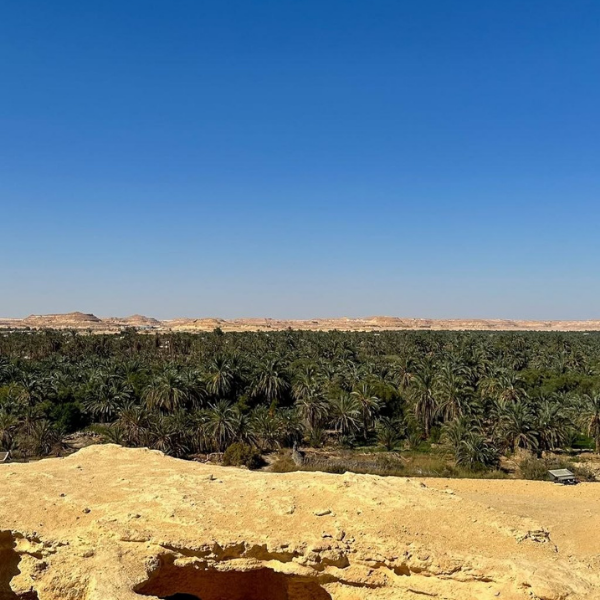
The temple stands at Aghurmi, close to modern Siwa town, overlooking a landscape of palms, springs, salt lakes and desert.
Today, the surviving structure may appear modest compared with Karnak, Luxor Temple or Abu Simbel.
But its historical importance is enormous.
The temple was dedicated to Amun, one of ancient Egypt’s most important gods, and became famous as the home of an oracle whose reputation extended far beyond the Western Desert.
Then came the event that transformed Siwa into part of the story of Alexander the Great.
In 331 BC, after his conquest of Egypt, Alexander traveled through the desert to Siwa and consulted the Oracle of Amun.
Egypt’s Ministry of Tourism and Antiquities identifies the site as the Temple of the Oracle, also known as the Temple of Amun, dates it to Egypt’s 26th Dynasty and attributes its construction to King Ahmose II, better known as Amasis II. The ministry also specifically connects the temple with Alexander’s visit to Siwa in 331 BC.
The story is famous.
The details are much more complicated.
Ancient sources agree that Alexander traveled to the oracle, but the precise questions he asked and the exact answers he received were never reliably preserved. Britannica notes that Alexander kept the oracle’s reply private, while later traditions connected the visit with his recognition as a son of Amun.
That combination of documented history and unresolved mystery is exactly what makes the Temple of the Oracle one of Siwa’s most fascinating archaeological sites.
If you are building your first itinerary, combine this guide with our Siwa Oasis Egypt Travel Guide and Things to Do in Siwa Oasis.
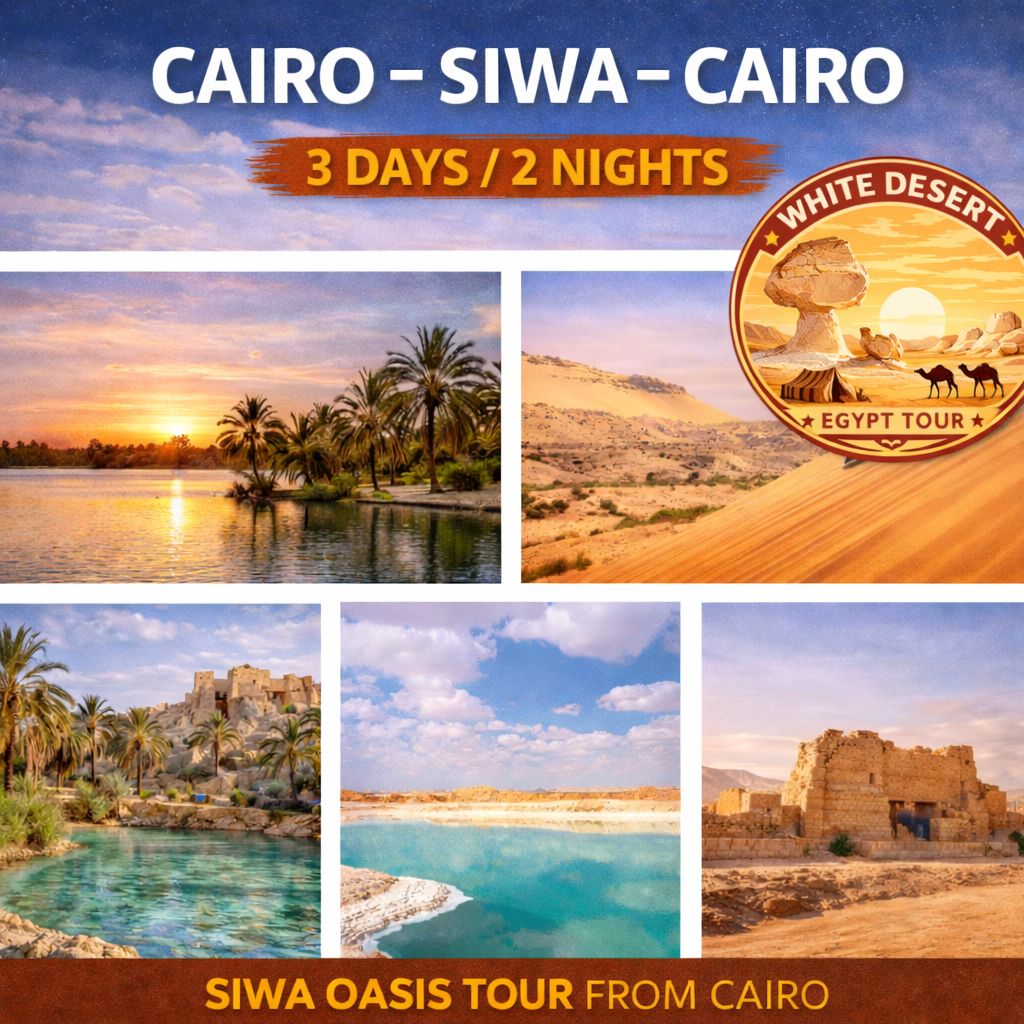
3 Days Siwa Oasis Tour from Cairo – Great Sand Sea Safari & Oasis Experience
3 Days / 2 Nights Siwa Oasis Tour from Cairo This 3-day Siwa Oasis tour from Cairo is perfect for…
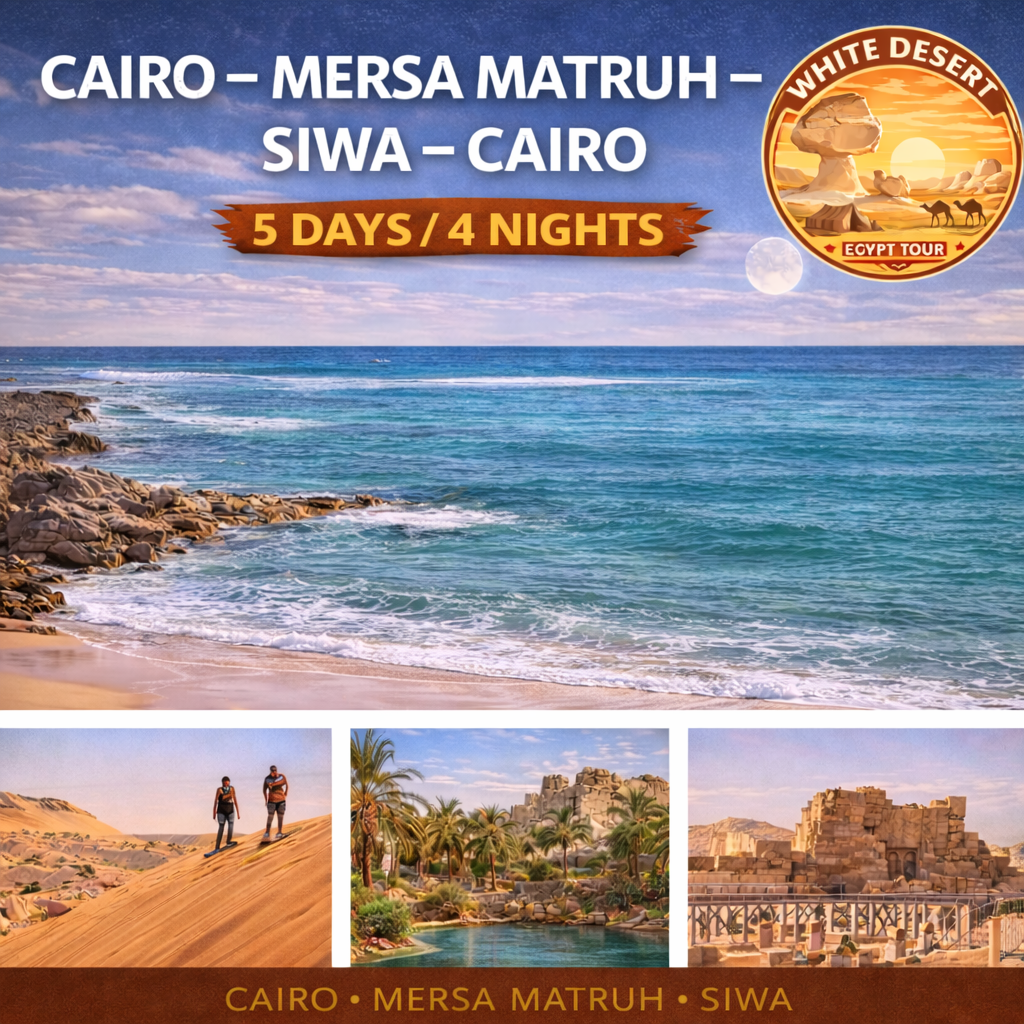
5 Days Siwa Oasis Tour from Cairo – Marsa Matrouh & Great Sand Sea Safari
🏜️ Cairo – Marsa Matrouh – Siwa – Cairo 5 Days / 4 Nights Siwa Oasis Tour from Cairo This…
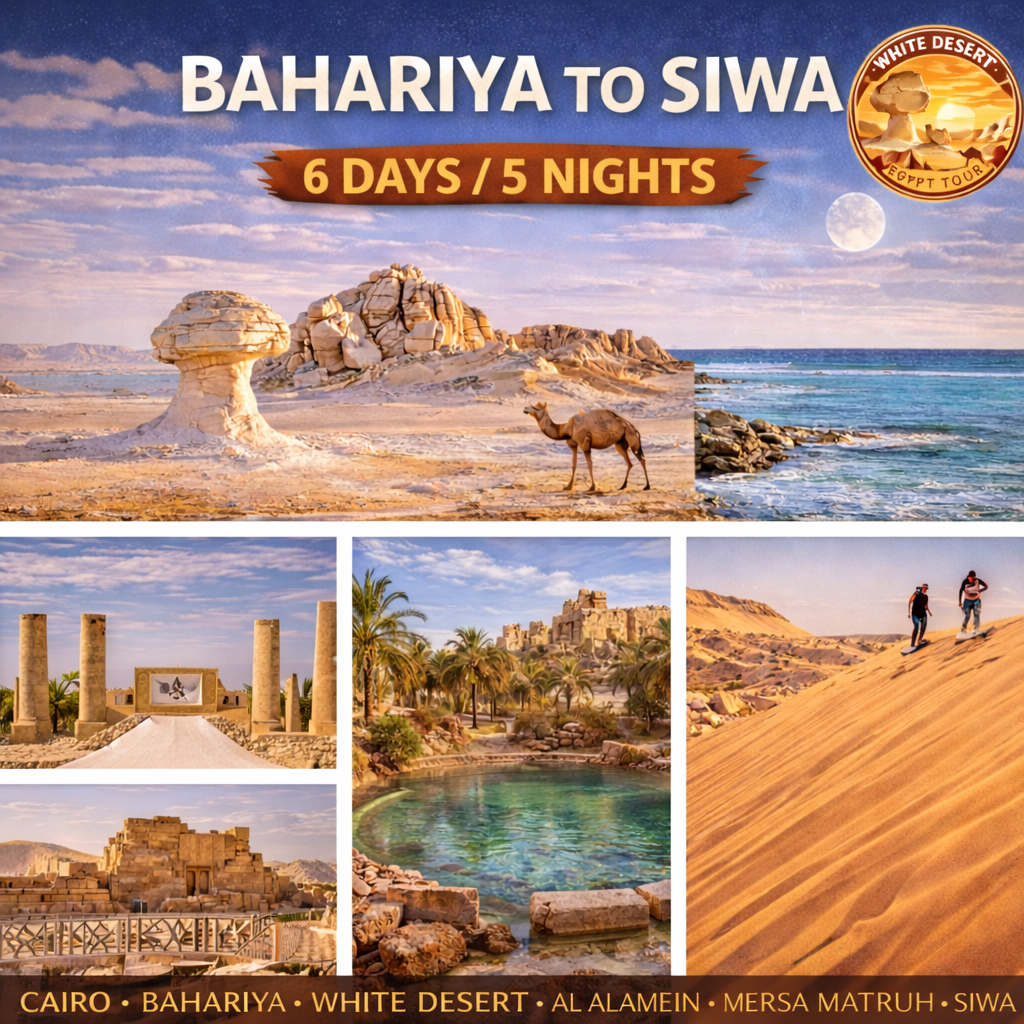
White Desert & Siwa Tour from Cairo – 6 Day Desert & Oasis Expedition
Bahariya + White Desert Camping + El Alamein + Marsa Matrouh + Siwa (6 Days / 5 Nights) If you…
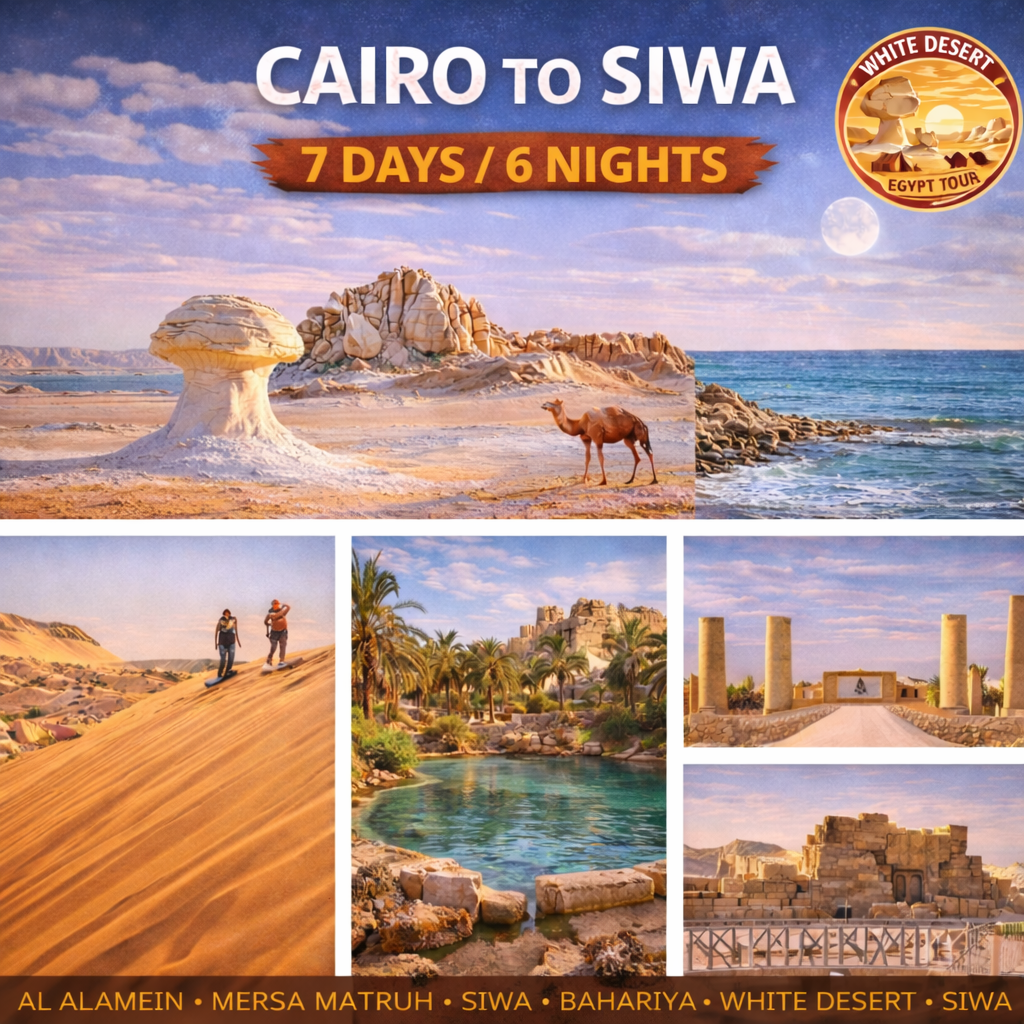
7 Days Siwa & White Desert Tour from Cairo – Ultimate Western Desert Expedition
🏜️ 7 Days Siwa & White Desert Tour from Cairo North Coast – Siwa – Bahariya – White Desert (7…
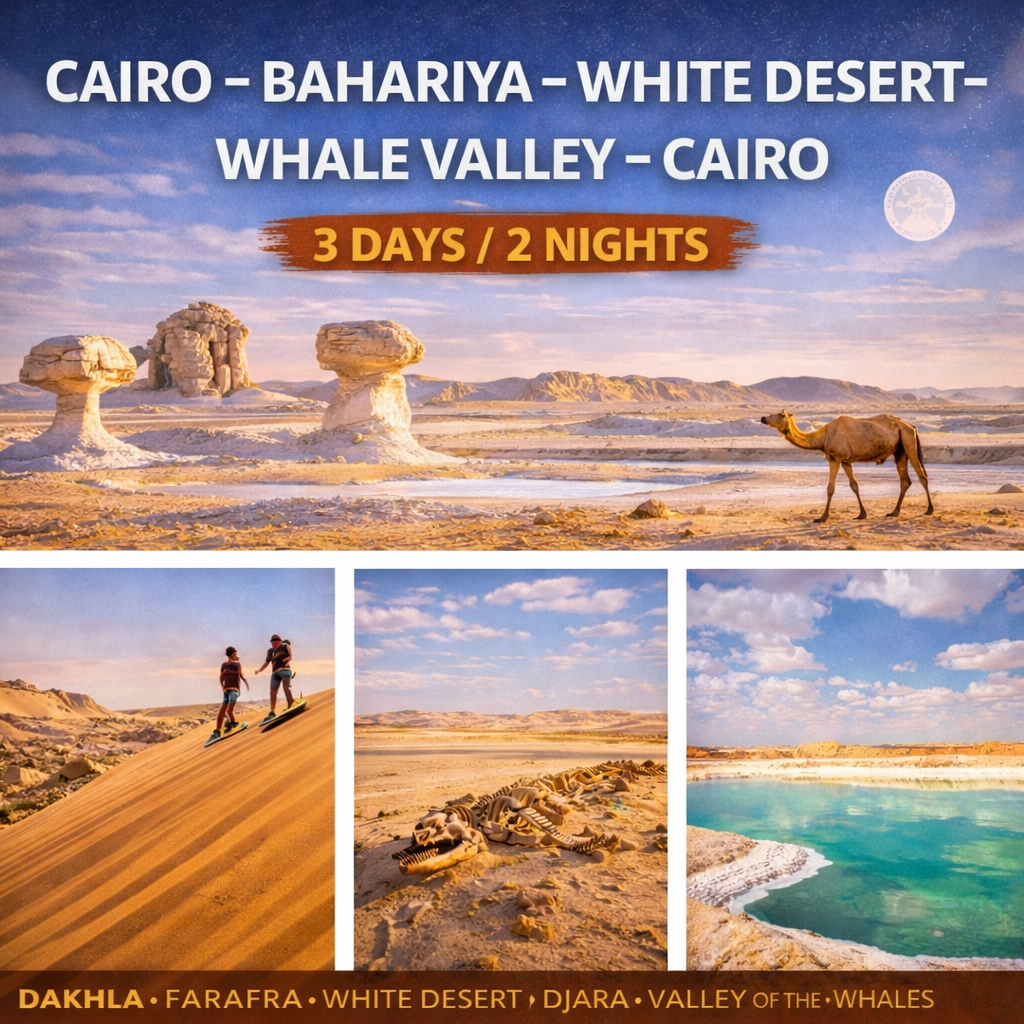
White Desert & Whale Valley Tour from Cairo – 3 Day Desert & Fossil Adventure
🏜️ White Desert & Whale Valley Tour from Cairo Cairo – Bahariya – White Desert – Wadi El Hitan –…
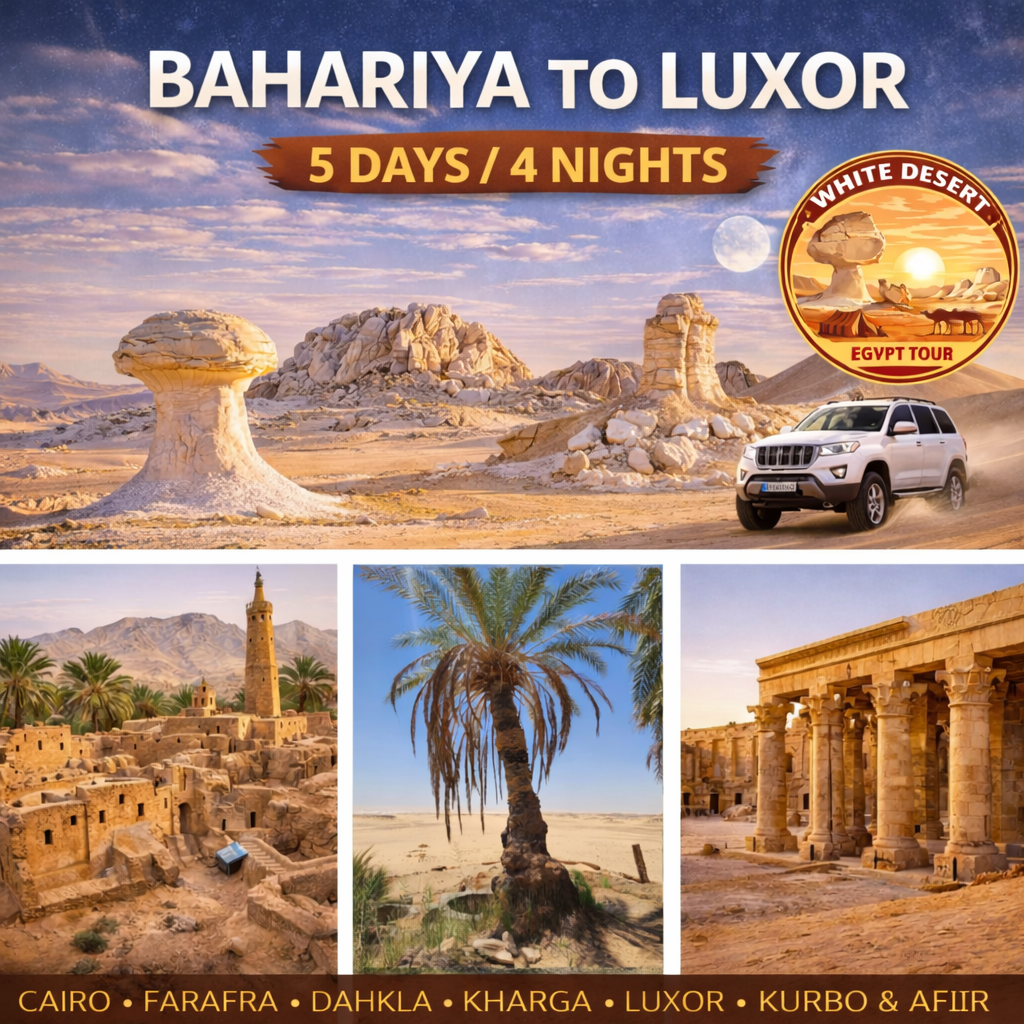
Western Desert Tour from Cairo to Luxor – 5 Day Multi-Oasis Desert Expedition
5 Days / 4 Nights Multi-Oasis Expedition This Western Desert Tour from Cairo to Luxor is a full desert expedition…
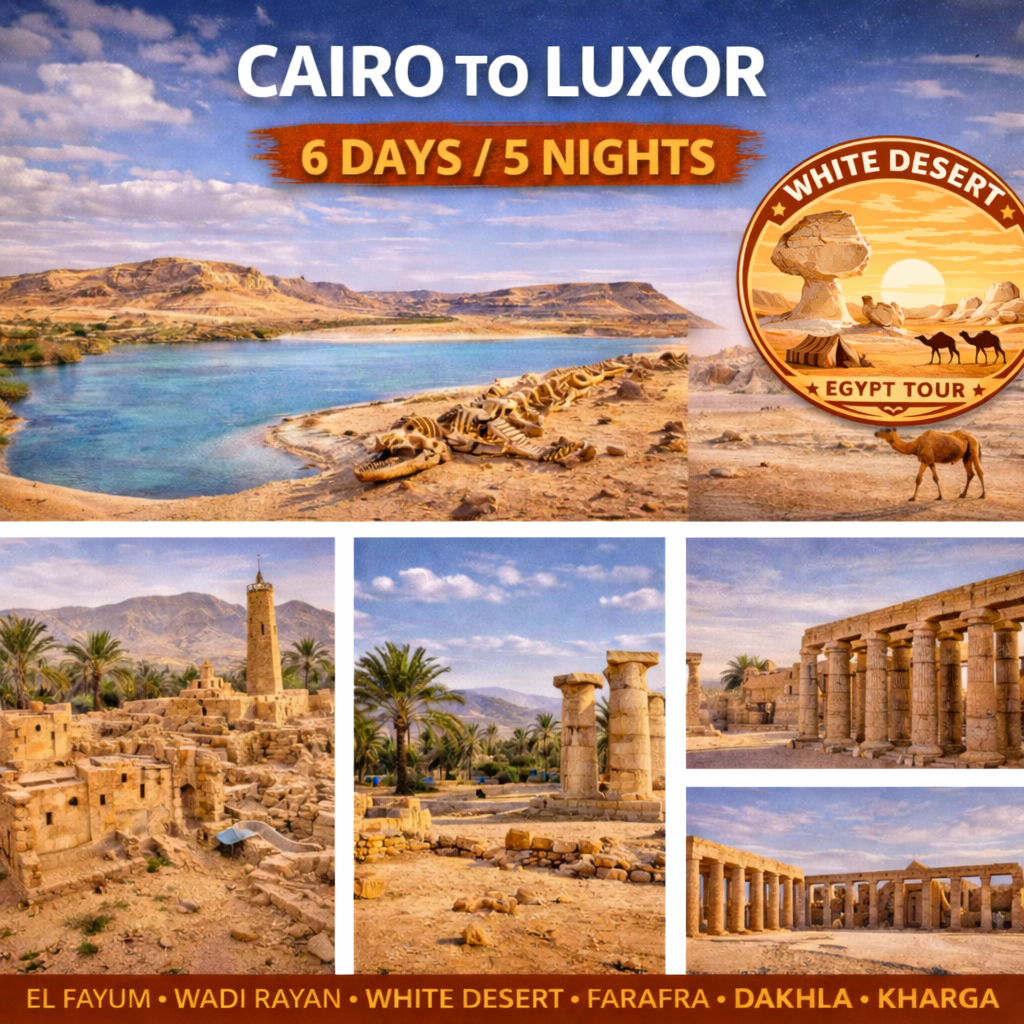
6 Days Western Desert Expedition – Cairo to Luxor Oasis & Desert Safari
🏜️ 6 Days Western Desert Expedition Cairo → Fayoum → White Desert → Dakhla → Kharga → Luxor This 6-day…
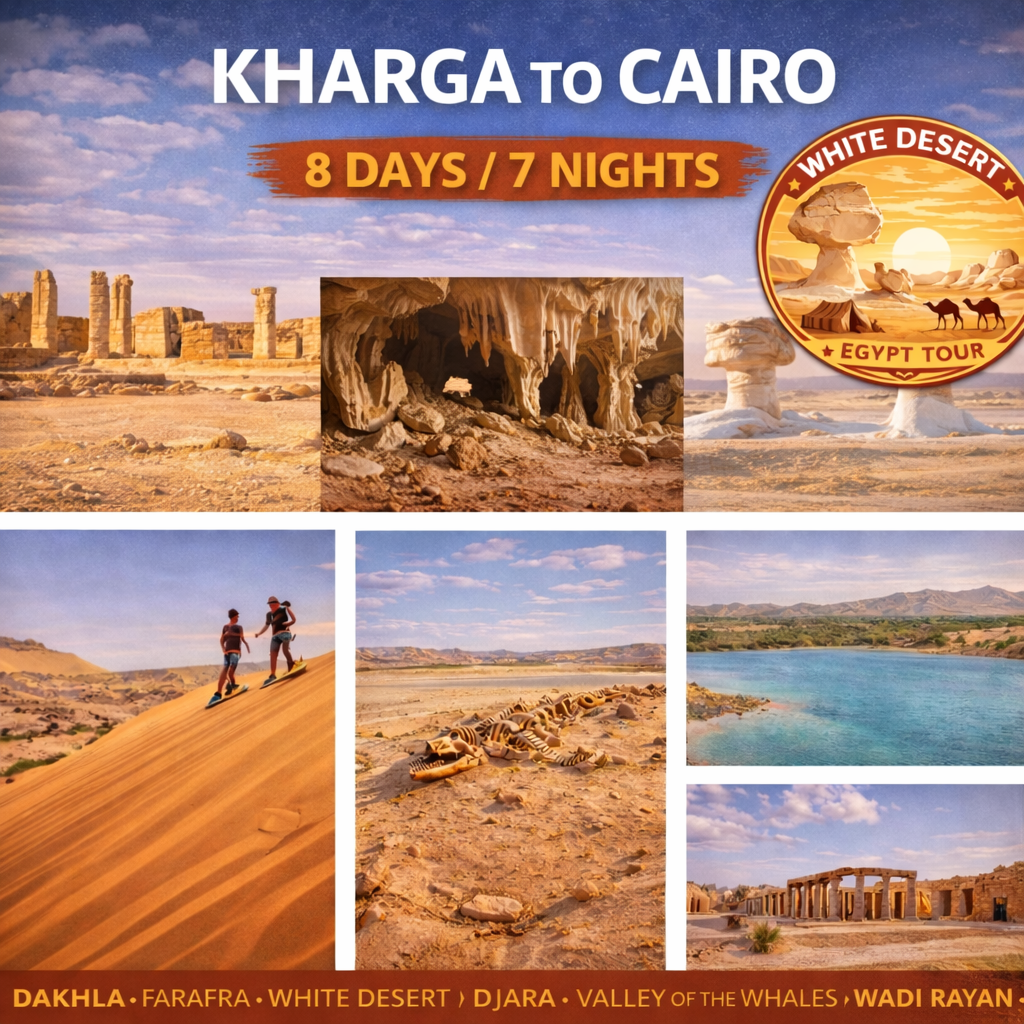
8 Days Western Desert Expedition – Kharga to Cairo Oasis & Desert Adventure
🏜️ 8 Days Western Desert Expedition (Kharga to Cairo) Kharga → Dakhla → Farafra → White Desert → Djara Cave…
Quick Answer: What Is the Temple of the Oracle in Siwa?
The Temple of the Oracle in Siwa Oasis is an ancient sanctuary dedicated to Amun at Aghurmi. Egypt’s Ministry of Tourism and Antiquities dates it to the 26th Dynasty and attributes it to Pharaoh Ahmose II.
Its fame comes primarily from the Oracle of Amun and the visit of Alexander the Great in 331 BC.
Alexander crossed the desert to consult the oracle after taking control of Egypt. Ancient accounts indicate that the encounter strengthened the association between Alexander and Amun, although Alexander did not publicly reveal the full response he received.
Today, visitors can explore the surviving temple rooms, ancient stonework and the elevated Aghurmi setting while learning about one of the most debated episodes in Alexander’s Egyptian story.
Temple of the Oracle at a Glance
Detail | Answer |
Location | Aghurmi, Siwa Oasis |
Other name | Temple of Amun |
Period | 26th Dynasty |
Builder | Ahmose II / Amasis II |
Main deity | Amun |
Famous visitor | Alexander the Great |
Alexander’s visit | 331 BC |
Main significance | Prophecy and divine oracle |
Current official opening hours | 8:00 AM–5:00 PM |
Ramadan hours | 9:00 AM–4:00 PM |
Best combined with | Mountain of the Dead, Shali, Cleopatra’s Spring |
Recommended time | Around 45–90 minutes |
The official Ministry of Tourism and Antiquities page currently lists the site as open from 8:00 AM to 5:00 PM, with Ramadan hours of 9:00 AM to 4:00 PM, and notes that final admission is one hour before closing. Hours can change, so check again close to your travel date.
Where Is the Temple of the Oracle?
The temple is located at Aghurmi village in Siwa Oasis, in Egypt’s Western Desert.
This is important because people sometimes search simply for:
“Alexander Temple Siwa”
or
“Temple of Amun Siwa”
without realizing that Siwa contains more than one ancient site associated with Amun.
Aghurmi sits within the wider oasis environment rather than inside modern central Siwa.
The site rises above the surrounding landscape, which helps explain why a visit feels different from walking through an archaeological complex on the Nile.
Around you are:
palm groves,
oasis settlements,
springs,
salt landscapes,
and desert.
The setting is part of the experience.
Temple of the Oracle vs Temple of Amun: Are They the Same Place?
This can become confusing online.
The Temple of the Oracle at Aghurmi is also commonly called the Temple of Amun, including by Egypt’s Ministry of Tourism and Antiquities.
However, Siwa also contains the remains of another Amun sanctuary associated with Umm Ubayda/Ubaydah.
UNESCO’s Tentative List entry for the Siwa archaeological area specifically distinguishes the Temple of the Oracle from the Temple of Amun at Ubaydah.
So when researching Siwa, you may encounter several names:
Oracle Temple
Temple of Amun
Aghurmi Temple
Temple of Amun at Umm Ubayda
They do not always refer to exactly the same archaeological structure.
For first-time visitors interested in Alexander the Great, the key site is the Oracle Temple at Aghurmi.
Who Was Amun?
To understand the oracle, first understand the god.
Amun became one of ancient Egypt’s most important deities.
His cult was particularly powerful at Thebes, where the enormous Karnak temple complex became his greatest religious center.
Over time, Amun was closely associated with royal power.
This makes Alexander’s journey to a remote Amun oracle much more significant than if he had simply visited a minor local shrine.
Alexander had taken Egypt.
But kingship in Egypt was not purely military.
Pharaohs operated inside a religious system in which divine legitimacy mattered.
The oracle at Siwa offered Alexander something conquest alone could not:
religious recognition connected to Amun.
Why Was the Oracle of Amun Famous?
Oracles were places where rulers, states and individuals sought divine guidance.
The Oracle of Amun at Siwa had a reputation beyond Egypt itself.
Greeks associated Egyptian Amun with Zeus, creating the combined Greco-Egyptian concept commonly called Zeus-Ammon.
By Alexander’s lifetime, consulting the oracle therefore had meaning across both Egyptian and Greek religious traditions.
This cultural overlap helps explain why the site could matter so deeply to a Macedonian king ruling Egypt.
He was not simply visiting a mysterious desert fortune teller.
He was engaging with a religious institution capable of speaking simultaneously to different traditions within his expanding empire.
When Was the Oracle Temple Built?
Egypt’s Ministry of Tourism and Antiquities attributes the temple to King Ahmose II, or Amasis II, and dates it to the 26th Dynasty.
Amasis ruled Egypt during the sixth century BC.
That means the surviving temple predates Alexander’s arrival by roughly two centuries.
Alexander therefore did not build the temple.
He visited a sanctuary that was already established and respected.
This is an important distinction because some tourist descriptions accidentally make the temple sound as though it was created for Alexander.
It was not.
Alexander became the temple’s most famous visitor.
Alexander the Great Comes to Egypt
To understand why Alexander went to Siwa, we need to look briefly at what was happening elsewhere.
Alexander entered Egypt during his war against the Persian Empire.
Persian control of Egypt collapsed without the kind of major battlefield confrontation he experienced elsewhere.
Alexander then organized his authority in Egypt and founded Alexandria on the Mediterranean coast.
During the winter of 332–331 BC, he made the extraordinary journey west toward the Oracle of Amun.
Britannica describes Alexander traveling along the coast to Paraetonium — modern Marsa Matrouh — before turning inland toward Siwa.
Today, the journey from Egypt’s coast to Siwa is a road trip.
For Alexander and his companions, crossing that desert was a completely different undertaking.
Why Did Alexander the Great Go to Siwa?
There is no single universally accepted explanation.
Several motives may have overlapped.
Alexander may have wanted religious legitimacy as ruler of Egypt.
He may have been personally curious about his divine ancestry.
He may have wanted guidance about his future campaigns.
And he was visiting an oracle already famous in the Mediterranean world.
What we should not do is pretend that historians know exactly what Alexander was thinking.
Even ancient accounts do not fully agree.
The safest conclusion is that the Oracle of Amun had enough political, religious and personal importance for Alexander to justify a difficult journey through the Western Desert.
When Did Alexander Visit the Oracle?
Egypt’s Ministry of Tourism and Antiquities gives the date as 331 BC.
This occurred after Alexander had taken Egypt and before he resumed the campaign that would eventually lead him toward his decisive confrontation with Darius III at Gaugamela later that year.
That timing is important.
Alexander was already a conqueror.
But the largest part of his eastern campaign still lay ahead.
The Siwa consultation occurred at a moment when questions about rule, divine favor and future victory could hardly have been more relevant.
What Did the Oracle Tell Alexander the Great?
This is the most famous question.
It is also where travel writing often becomes too confident.
We do not know exactly.
Britannica states that the priest greeted Alexander with the traditional pharaonic recognition as a son of Amun, but Alexander did not reveal the actual answer to his consultation. Later traditions greatly expanded the story.
Various ancient writers preserved different versions.
Some stories focus on Alexander’s divine parentage.
Others claim he asked about the murderers of his father, Philip II.
Others connect the oracle with his future conquest.
The problem is that the surviving literary accounts were written later and are not identical.
So a responsible guide should distinguish between:
what is historically secure
and
what belongs to later tradition.
Was Alexander Declared the Son of Amun?
The association is ancient and important.
Egypt’s Ministry of Tourism and Antiquities states that Alexander’s visit was connected with his being recognized at the temple as a son of Amun.
Britannica explains that the priest greeted him according to pharaonic tradition as a son of Amun and that the episode later contributed to broader stories about Alexander’s divine parentage.
But the historical context matters.
Egyptian kings already occupied a religious role connecting them with the gods.
So “son of Amun” did not necessarily mean the same thing to an Egyptian priest that later stories about Alexander being literally fathered by a god might imply.
That is where religion, kingship and later legend become intertwined.
Was Alexander Crowned Pharaoh at the Temple?
You’ll sometimes read that Alexander was “crowned Pharaoh” at Siwa.
That wording needs care.
Egypt’s official Ministry of Tourism and Antiquities describes his 331 BC visit as an occasion in which he was recognized at the temple as a son of Amun.
The broader history of Alexander’s Egyptian kingship is more complicated than a single coronation ceremony at Aghurmi.
So for travel content, avoid presenting the Oracle Temple as though we possess a detailed record of a conventional coronation ceremony taking place there.
A better description is:
Alexander visited the Oracle of Amun at Siwa in 331 BC, where his divine and royal legitimacy became strongly associated with Amun.
What Is the “Coronation Hall of Alexander the Great”?
Some Siwa itineraries and local tourism descriptions use terms such as Alexander’s Coronation Hall when describing the Oracle Temple area.
Our own current 3-Day Siwa Oasis Tour includes the Temple of Amun/Oracle Temple and references the Alexander-associated area within the visit.
For SEO accuracy, however, the primary archaeological entity should remain:
Temple of the Oracle at Aghurmi
rather than creating the impression that there is a completely separate monumental palace called “Alexander’s Coronation Hall.”
This keeps the historical geography clear.
What Happened Inside the Oracle?
We cannot reconstruct the ceremony with certainty.
Ancient oracular consultation could involve priests interpreting the will of the deity through ritual procedures rather than a simple conversation in which the god literally spoke from behind a curtain.
Alexander’s meeting was also treated as unusually private.
According to the surviving historical tradition summarized by Britannica, Alexander did not disclose the oracle’s complete response.
That secrecy is part of why the visit became so powerful later.
When the answer is not preserved, later generations can fill the silence with legends.
Alexander's Journey Through the Desert
The journey itself became legendary.
Ancient writers told stories about Alexander becoming lost, miraculous rain providing water and animals or divine signs guiding his party through the desert.
These stories should not automatically be treated as literal travel records.
Britannica notes that the difficult journey was later embellished by flattering legends.
But even after removing the supernatural elements, the achievement remains remarkable.
Alexander deliberately diverted through a remote desert to consult this particular oracle.
That tells us something about Siwa’s prestige.
The Lost Army of Cambyses and the Oracle Temple
Alexander is not the only great historical name connected with the shrine.
Egypt’s Ministry of Tourism and Antiquities also links the temple with the famous story of Cambyses II’s lost army.
According to the tradition, Persian king Cambyses sent an army toward Siwa in 525 BC with the intention of destroying the oracle, but the force disappeared in the desert.
The Lost Army of Cambyses remains one of Egypt’s enduring archaeological mysteries.
Different theories have been proposed about what happened.
But no tourist guide should tell you that the mystery has been conclusively solved.
Treat it as an ancient historical tradition associated with the oracle rather than established proof that an entire Persian army lies beneath one particular dune.
What Does the Temple Look Like Today?
Travelers expecting Karnak may initially be surprised.
The Oracle Temple is much smaller.
There are no giant pylons on the scale of Luxor.
No enormous avenue of sphinxes.
No colossal statues dominating the horizon.
Instead, the appeal comes from:
ancient stone chambers,
doorways,
surviving walls,
reliefs and inscriptions,
the elevated Aghurmi setting,
and the knowledge of what happened here.
This is a place where historical context matters more than monument size.
What Can You See Inside the Temple?
Visitors can explore the surviving areas of the temple and look closely at its architectural remains.
Experience Egypt’s tourism material describes surviving walls with reliefs and inscriptions and notes the archaeological significance of the sanctuary.
Do not rush through looking only for an “Alexander room.”
Instead, pay attention to:
the doorways,
the alignment of chambers,
the stone construction,
surviving decoration,
and views from the temple hill.
A good guide can transform what looks like a small set of ruins into one of Siwa’s most meaningful sites.
The View from Aghurmi
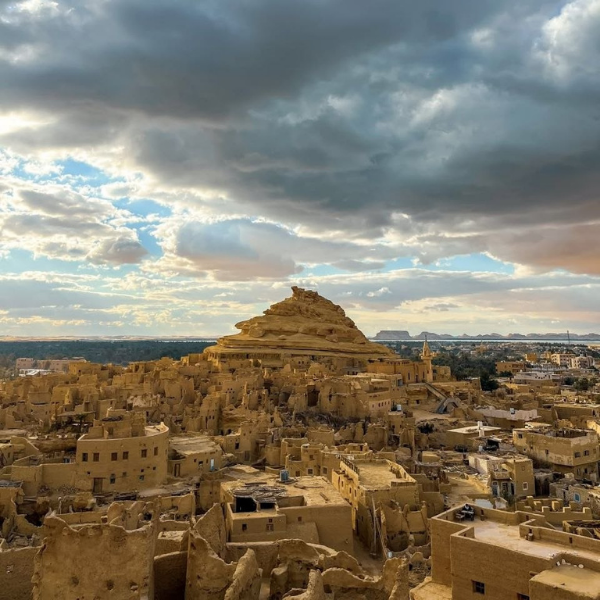
Like Shali Fortress, Aghurmi benefits from elevation.
The temple’s setting allows you to understand how the ancient sanctuary relates to the oasis around it.
From elevated areas, the landscape combines:
palm groves,
settlements,
springs,
salt environments,
and the vast desert beyond.
That contrast explains why Siwa felt extraordinary to ancient travelers.
The sanctuary was not located beside the Nile or inside one of Egypt’s great cities.
It stood inside a remote green oasis surrounded by desert.
Is the Temple of the Oracle a UNESCO World Heritage Site?
No.
This is another point where SEO content frequently gets sloppy.
The Siwa archaeological area is on Egypt’s UNESCO Tentative List, and UNESCO’s entry specifically mentions both the Temple of the Oracle and the Temple of Amun at Ubaydah. It has been on the Tentative List since 1994.
A Tentative List site is not the same as an inscribed UNESCO World Heritage Site.
So write:
“The Temple of the Oracle is part of the Siwa archaeological area included on Egypt’s UNESCO Tentative List.”
Do not write:
“The Oracle Temple is a UNESCO World Heritage Site.”
How Long Do You Need at the Temple?
For most travelers, 45–90 minutes is enough.
A guide-focused historical visit may take longer.
A fast photography stop can take less.
But this is one attraction where spending a little extra time learning the story pays off.
Unlike the salt lakes, the experience isn’t primarily physical.
It is intellectual.
Without context, you see ruins.
With context, you stand where one of history’s most consequential rulers deliberately traveled hundreds of kilometers into the desert seeking divine guidance.
Best Time of Day to Visit
Morning is usually excellent.
The air is cooler.
The stone is easier to photograph before stronger midday light.
And you can continue naturally toward other archaeological sites afterward.
Late afternoon can also be attractive for softer light, but the official site currently closes at 5:00 PM, and final entry is listed as one hour before closing.
Do not plan your entire visit around sunset without checking current operating hours.
Current Opening Hours
Egypt’s Ministry of Tourism and Antiquities currently publishes:
Normal hours: 8:00 AM–5:00 PM
Ramadan: 9:00 AM–4:00 PM
Final admission: one hour before closing.
Because archaeological-site schedules can change, verify the official listing shortly before travel.
We deliberately do not publish a fixed entrance price here because ticket prices are more likely to change than the historical content of this guide.
What Should You Wear?
The temple is an archaeological site inside a traditional oasis community.
Wear comfortable walking shoes.
The ground can be uneven.
Bring sun protection and water.
Modest clothing is also appropriate throughout Siwa.
During winter, morning temperatures can be much cooler than travelers expect from the word “desert,” so layering is useful.
For a full trip checklist, use What to Pack for Siwa Oasis Egypt.
Do You Need a Guide?
You can visit the site without needing somebody to physically lead you through every doorway.
But this is one place where a knowledgeable guide adds enormous value.
The architecture itself is relatively compact.
The story is enormous.
A good explanation helps separate:
Amun from Zeus-Ammon,
historical Alexander from later legend,
Aghurmi from Umm Ubayda,
the 26th Dynasty temple from Alexander’s later visit,
and genuine archaeology from stories repeated simply because they sound dramatic.
For history-focused travelers, interpretation is worth having.
Is the Oracle Temple Good for Children?
Yes, particularly older children interested in Alexander the Great or ancient Egypt.
The visit is short enough that it does not usually become exhausting.
However, parents should expect:
uneven surfaces,
strong sun,
and archaeological areas where climbing fragile ruins is inappropriate.
The story of Alexander’s journey can actually make this site easier for children to engage with than a temple presented only through dynasties and architectural terminology.
For a complete family route, see Siwa Oasis Tour for Families.
Is the Temple Good for Photographers?
Yes, although the opportunity is different from the Siwa Salt Lakes or Great Sand Sea.
The strongest compositions include:
temple doorways,
ancient stone,
architectural layers,
palm trees,
human scale,
and views from Aghurmi across the oasis.
Morning and late-afternoon light generally give the ruins more texture than flat midday sun.
Respect any current photography rules displayed at the archaeological site.
Temple of the Oracle vs Shali Fortress
These two attractions should not compete.
They explain different Siwas.
Temple of the Oracle
Ancient religious history.
26th Dynasty.
Amun.
Alexander the Great.
Oracle tradition.
Shali Fortress
Medieval Siwan history.
Kershef architecture.
Fortified settlement.
Local community.
Panoramic views.
Together, they show why Siwa Oasis cannot be reduced to salt lakes and dune safaris.
Temple of the Oracle vs Mountain of the Dead
The Oracle Temple represents religion and political legitimacy.
Mountain of the Dead represents burial traditions and funerary archaeology.
The latter contains rock-cut tombs from different periods, including the 26th Dynasty and later Graeco-Roman eras.
A well-designed historical day includes both because the two sites answer completely different questions about ancient Siwa.
Temple of the Oracle vs Cleopatra's Spring
Cleopatra’s Spring is a natural/cultural stop rather than an archaeological temple.
Despite its famous name, travelers should be careful about taking every Cleopatra association in Egypt literally.
The Oracle Temple has a much stronger documented connection with its famous visitor: Alexander’s journey to Siwa is part of the historical tradition preserved by ancient sources and acknowledged by Egypt’s archaeological authority.
Temple of the Oracle and Siwa Salt Lakes
These experiences show just how varied one Siwa day can become.
Morning:
ancient religion,
Alexander,
Amun,
archaeology.
Later:
floating in highly saline water at the Siwa Salt Lakes.
Afternoon:
4×4 adventure in the desert.
Very few oasis destinations offer that level of contrast within such a compact sightseeing area.
Temple of the Oracle and the Great Sand Sea
The Great Sand Sea gives physical context to Alexander’s journey.
When you drive into the dunes, you begin to understand what “crossing the desert to Siwa” actually means.
Modern visitors travel in 4×4 vehicles.
Alexander’s party entered a landscape without paved roads, modern navigation or roadside services.
The desert safari therefore adds unexpected historical context to the archaeological visit.
Best Historical Half-Day in Siwa
For travelers with limited time, a strong sequence is:
Shali Fortress → Mountain of the Dead → Temple of the Oracle → Cleopatra’s Spring
Then keep the salt lakes and Great Sand Sea for the nature/adventure part of your itinerary.
This creates a much cleaner travel experience than rushing randomly between archaeological sites and swimming stops.
Can You Visit the Temple on a 3-Day Siwa Tour?
Yes.
The Oracle Temple is currently one of the core historical stops on the 3-Day Siwa Oasis Tour from Cairo.
The current itinerary combines:
Shali Fortress,
Mountain of the Dead,
Temple of Amun / Oracle Temple,
Cleopatra’s Spring,
Siwa Salt Lakes,
and a Great Sand Sea 4×4 safari.
Three days is therefore enough to visit the temple.
It is simply a compact trip.
Is the 5-Day Siwa Tour Better for History?
Yes.
The 5-Day Siwa Oasis Tour from Cairo currently gives Siwa’s historical landmarks a dedicated day, including the Mountain of the Dead and Oracle Temple, instead of forcing archaeology, salt lakes and the desert safari into one overloaded schedule.
That makes five days stronger for:
history lovers,
families,
photographers,
couples,
and travelers who like asking questions rather than racing through sites.
3 Days vs 5 Days
If You Have | Recommendation |
3 days | Temple + main Siwa highlights |
4 days | Better pace |
5 days | Best for history + nature + safari |
7 days | Combine Siwa with White Desert |
For the complete comparison, read 3-Day vs 5-Day Siwa Oasis Tour.
Can You Combine Alexander's Temple with the White Desert?
Yes.
For travelers with a week, the 7-Day Siwa & White Desert Tour from Cairo creates a much larger Western Desert journey.
This combination is especially interesting because the two destinations tell completely different stories.
Siwa: Alexander, Amun, oasis culture, salt lakes and Great Sand Sea.
White Desert: chalk formations, Bahariya, Agabat, 4×4 exploration and camping.
For someone interested in both history and desert landscapes, the combination is much stronger than repeating similar sightseeing days in one location.
Best Time to Visit the Temple of the Oracle
For the wider Siwa journey, October through April is generally the easiest period for most travelers.
The cooler season makes:
archaeological walking,
Great Sand Sea safari,
Shali exploration,
and other outdoor activities more comfortable.
Summer visits are possible but stronger midday heat makes archaeological sightseeing harder.
During hotter months, visit early in the day.
Use our Best Time to Visit Siwa Oasis Egypt guide to compare seasons.
How to Get to the Temple of the Oracle
The difficult journey is Cairo to Siwa, not Siwa town to Aghurmi.
Once you are staying in the oasis, the Oracle Temple fits easily into a local sightseeing day by private vehicle, tuk-tuk arrangement or guided tour depending on your program.
If you’re still planning the main journey, read How to Get to Siwa Oasis from Cairo.
Because Cairo–Siwa is a long overland journey, we generally recommend staying at least two nights rather than traveling all this way for a single archaeological attraction.
How Many Days Do You Need in Siwa?
Do not plan Siwa exclusively around Alexander.
The Oracle Temple may be the oasis’s most internationally famous ancient site, but the complete destination also contains:
Shali Fortress,
Mountain of the Dead,
Cleopatra’s Spring,
salt lakes,
Fatnas,
palm groves,
Great Sand Sea,
hot springs,
and living Siwan culture.
For most travelers:
3 days = minimum complete trip from Cairo
4 days = comfortable
5 days = strongest first visit
Read How Many Days Do You Need in Siwa Oasis? for the full breakdown.
How Much Does It Cost to Visit the Oracle Temple?
We deliberately do not publish a fixed entrance price here.
Archaeological ticket prices can change.
Instead, check the Ministry of Tourism and Antiquities’ current ticketing information close to your visit or ask your tour operator to confirm whether archaeological entrance fees are included.
The much larger cost of a Siwa trip is determined by:
Cairo transportation,
number of days,
hotel category,
private vehicle,
guiding,
Great Sand Sea safari,
and group size.
For those costs, use our Siwa Oasis Tour Cost Guide.
Is the Temple of the Oracle Worth Visiting?
Yes.
But not because it is the largest or best-preserved temple in Egypt.
It isn’t.
Visit because this small sanctuary occupies an extraordinary position in Mediterranean and Egyptian history.
The oracle was already respected before Alexander arrived.
Then a young Macedonian king who had just conquered Egypt crossed the desert to consult it.
What happened inside became part of the political and religious mythology surrounding one of history’s most famous rulers.
And the fact that we do not know exactly what the oracle told him makes the site more interesting, not less.
Common Mistakes When Visiting the Oracle Temple
The most important mistake is expecting a monument on the scale of Karnak. Judge Aghurmi by historical importance, not architectural size.
Do not repeat every Alexander legend as verified history.
Do not claim historians know exactly what the oracle told him.
Do not confuse the Aghurmi Oracle Temple with the separate Amun sanctuary at Umm Ubayda.
Do not call it a UNESCO World Heritage Site; Siwa’s archaeological area is currently on Egypt’s Tentative List.
And do not schedule the site so late that you reach it after final admission.
The best experience comes from arriving with enough time and enough historical context.
Best Way to Include the Oracle Temple in Your Siwa Itinerary
For a first visit, we recommend putting the temple within a dedicated history and culture sequence.
Start with Shali or Mountain of the Dead.
Continue to Aghurmi and the Oracle Temple.
Then stop at Cleopatra’s Spring.
Keep the salt lakes and Great Sand Sea for another part of the day or, ideally, another day.
That separation makes the story easier to follow.
You move from:
Siwan settlement → ancient burial → ancient religion → oasis water
before moving into:
salt lakes → dunes → safari → sunset.
That is a much stronger Siwa itinerary than collecting attractions randomly.
Temple of the Oracle Siwa: Final Verdict
The Temple of the Oracle at Aghurmi is one of those archaeological places where the story is larger than the ruins.
The surviving temple dates to Egypt’s 26th Dynasty and is associated with Pharaoh Ahmose II.
It was dedicated to Amun.
It served as an oracle.
It became linked with the famous Lost Army of Cambyses tradition.
And in 331 BC, Alexander the Great deliberately crossed the desert to consult it.
What exactly happened during Alexander’s private consultation is still uncertain.
Later writers built layers of legend around it.
But the core event remains remarkable.
Alexander reached Siwa.
He consulted the Oracle of Amun.
And the encounter became tied to his identity and legitimacy as ruler of Egypt.
That makes the temple essential for anyone interested in:
Alexander the Great,
ancient Egyptian religion,
Siwa history,
or the meeting point between Greek and Egyptian culture.
Visit Shali to understand medieval Siwa.
Visit Mountain of the Dead to understand ancient burial traditions.
Visit the Great Sand Sea to understand the desert.
But visit the Temple of the Oracle to understand why Siwa once mattered far beyond the oasis itself.
Visit the Temple of the Oracle on a Siwa Tour
Short Siwa Tour
3-Day Siwa Oasis Tour from Cairo
Best if you have limited time and want the Oracle Temple, Shali, Mountain of the Dead, salt lakes and Great Sand Sea in one compact trip.
Best Relaxed Option
5-Day Siwa Oasis Tour from Cairo
Best if history matters and you want a separate historical sightseeing day.
Siwa + White Desert
7-Day Siwa & White Desert Tour
Best for a complete Western Desert journey combining Siwa’s ancient history with White Desert camping.
3 Days Siwa Oasis Tour from Cairo – Great Sand Sea Safari & Oasis Experience
3 Days / 2 Nights Siwa Oasis Tour from Cairo This 3-day Siwa Oasis tour from Cairo is perfect for…
5 Days Siwa Oasis Tour from Cairo – Marsa Matrouh & Great Sand Sea Safari
🏜️ Cairo – Marsa Matrouh – Siwa – Cairo 5 Days / 4 Nights Siwa Oasis Tour from Cairo This…
White Desert & Siwa Tour from Cairo – 6 Day Desert & Oasis Expedition
Bahariya + White Desert Camping + El Alamein + Marsa Matrouh + Siwa (6 Days / 5 Nights) If you…
7 Days Siwa & White Desert Tour from Cairo – Ultimate Western Desert Expedition
🏜️ 7 Days Siwa & White Desert Tour from Cairo North Coast – Siwa – Bahariya – White Desert (7…
White Desert & Whale Valley Tour from Cairo – 3 Day Desert & Fossil Adventure
🏜️ White Desert & Whale Valley Tour from Cairo Cairo – Bahariya – White Desert – Wadi El Hitan –…
Western Desert Tour from Cairo to Luxor – 5 Day Multi-Oasis Desert Expedition
5 Days / 4 Nights Multi-Oasis Expedition This Western Desert Tour from Cairo to Luxor is a full desert expedition…
6 Days Western Desert Expedition – Cairo to Luxor Oasis & Desert Safari
🏜️ 6 Days Western Desert Expedition Cairo → Fayoum → White Desert → Dakhla → Kharga → Luxor This 6-day…
8 Days Western Desert Expedition – Kharga to Cairo Oasis & Desert Adventure
🏜️ 8 Days Western Desert Expedition (Kharga to Cairo) Kharga → Dakhla → Farafra → White Desert → Djara Cave…
White Desert Egypt Tour TripAdvisor reviews
An amazing adventure - An amazing experience! The White Desert tour with Western Desert travel Company was beyond wonderful. The rest at the camp was relaxing, and the meals were delicious. The activities were... read more fun, like sandboarding and camping under the stars. The guides were professional and very helpful. I highly recommend this tour to adventure and nature lovers! 🌟
January 21, 2026
A perfect adventure for us - As soon as we left Cairo behind and entered the vast expanse of the Western Desert, it felt like stepping into another dimension. The landscape slowly transformed from the bustling... read more cityscape into endless golden dunes, rugged rock formations, and an overwhelming sense of serenity. Our first stop was Bahariya Oasis, a lush haven in the middle of the arid desert, where palm trees swayed gently in the breeze, and natural hot springs promised relaxation after a long journey.
February 28, 2025
Frequently Asked Questions
Everything you need to know about the Temple of the Oracle in Siwa, including Alexander the Great, Amun, Aghurmi, opening hours, archaeology and nearby Siwa attractions.
The Temple of the Oracle is an ancient sanctuary of Amun at Aghurmi in Siwa Oasis. It became famous as the oracle visited by Alexander the Great in 331 BC.
The Oracle Temple at Aghurmi is commonly called the Temple of Amun. However, Siwa also contains a separate Amun sanctuary associated with Umm Ubayda, so the names can cause confusion.
Egypt's Ministry of Tourism and Antiquities dates the temple to the 26th Dynasty and attributes it to King Ahmose II, or Amasis II.
It was an important sanctuary of Amun and became internationally famous because Alexander the Great traveled to Siwa to consult its oracle in 331 BC.
His motives are debated, but the visit likely involved a combination of religious consultation, royal legitimacy and questions about his relationship with Amun and his future campaigns.
The exact answer is not known. Ancient traditions differ, and Alexander reportedly did not publicly reveal the complete response he received.
Ancient tradition and Egypt's archaeological authority connect Alexander's visit with recognition as a son of Amun, although later stories expanded the episode considerably.
Alexander's Siwa visit became strongly connected with his divine and royal legitimacy, but the historical evidence does not provide a simple detailed record of a conventional pharaonic coronation ceremony at the temple.
The temple is located at Aghurmi in Siwa Oasis, Egypt's Western Desert.
Around 45 to 90 minutes is enough for most visitors, depending on whether you use a guide and how much time you spend on photography.
Egypt's Ministry of Tourism and Antiquities currently lists normal opening hours as 8:00 AM to 5:00 PM, with different Ramadan hours. Always recheck before visiting.
No. It is part of the Siwa archaeological area on Egypt's UNESCO Tentative List, which is different from World Heritage inscription.
A famous ancient tradition says Persian king Cambyses II sent an army toward the Siwa oracle in 525 BC and that the force disappeared in the desert. Its fate remains debated.
Yes. Although smaller than Egypt's great Nile temples, its connection with Amun, Alexander the Great and ancient Mediterranean history makes it one of Siwa's most important archaeological sites.
A guide is not essential for access, but historical interpretation makes the relatively compact ruins much more meaningful.
Yes. The current 3-day Siwa itinerary includes the Oracle Temple alongside Shali Fortress, Mountain of the Dead, salt lakes and Great Sand Sea safari.
Major Siwa attractions include Shali Fortress, Mountain of the Dead, Cleopatra's Spring, Siwa Salt Lakes, Fatnas and the Great Sand Sea.
A 5-day Siwa itinerary is generally stronger for history lovers because it allows the Oracle Temple, Mountain of the Dead and other historical sites to be explored without rushing them into the same day as the salt lakes and desert safari.